

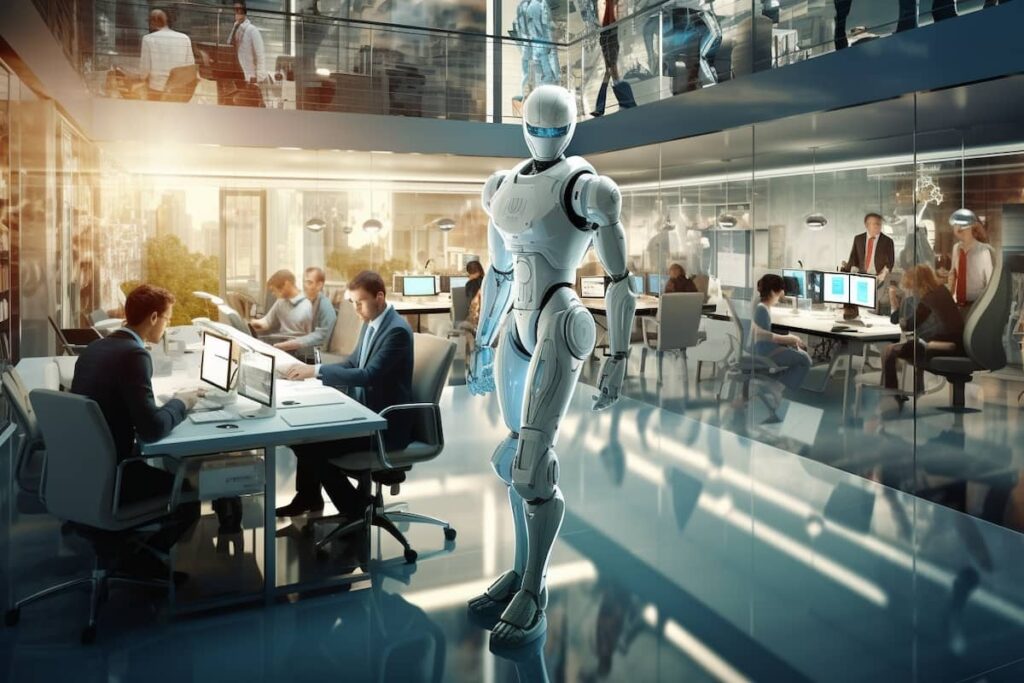
Artificial Intelligence (AI) is transforming the world of work in ways few technologies have before. From automating routine tasks to augmenting complex decision-making, AI is reshaping how companies operate and what skills employees need to thrive. Yet this transformation isn’t a simple story of jobs disappearing; it’s a shift toward new ways of working and new opportunities—if you know how to prepare.
In this article, we explore the realities of AI’s impact on employment, what roles are most at risk, and practical steps you can take to future-proof your career in a rapidly evolving job market.
Understanding AI’s Impact on Jobs
What Automation Means for Work
AI systems are increasingly capable of automating tasks that involve pattern recognition, repetitive processes, and data handling. Traditional automation replaced physical tasks on factory floors; modern AI extends this into cognitive work—sorting information, generating text, even assisting in medical diagnosis and legal research.
This doesn’t mean wholesale job elimination. According to the OECD, jobs with a high risk of automation account for about 27–28 % of roles across advanced economies, but many occupations will instead see task-level change rather than full replacement.
Roles Most and Least At Risk
Jobs involving repetitive and predictable tasks—such as data entry, routine customer service, and basic administrative functions—are more exposed to AI substitution. Meanwhile, roles requiring deep human judgment, creativity, empathy, and complex interpersonal skills remain difficult for AI to replicate effectively.
It’s also worth noting that AI doesn’t replace entire jobs as often as it automates subsets of tasks within jobs, meaning many workers will find themselves using AI as a tool rather than being replaced by it.
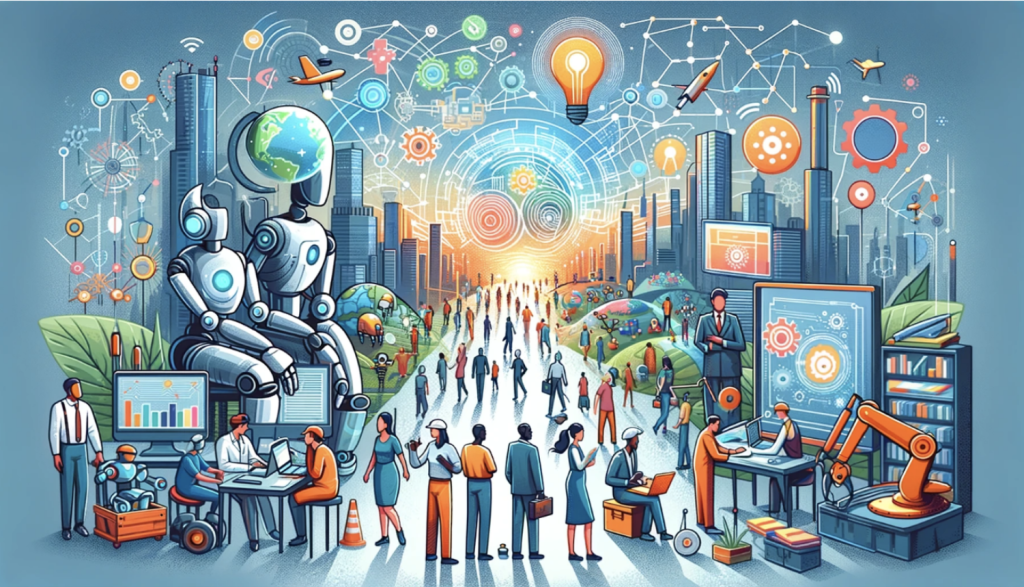
Why AI Isn’t Just a Job Killer
Augmentation Over Replacement
A growing body of research suggests that AI often augments human work more than it displaces it. In many industries, AI handles routine elements of a job, freeing people to focus on strategic, creative, or relational aspects.
For example, in healthcare, AI can assist with diagnostic imaging or predictive analytics, while clinicians continue to provide judgment and patient interaction. In finance, tools can automate data processing, while human analysts interpret insights and make decisions.
This shift alters the nature of work rather than eliminating it.
New Jobs and Emerging Fields
While some roles become less central, entirely new occupations are emerging around AI itself—like AI ethicists, machine learning specialists, prompt engineers, and data strategists. Employers increasingly value skills that help them integrate AI into business processes, driving demand for talent with both technical and domain expertise.
Strategies to Future-Proof Your Career
1. Focus on Human-Centric Skills
AI excels at structured tasks, but it struggles where humans naturally excel:
- Creativity and innovation
- Emotional intelligence
- Complex problem-solving
- Leadership and collaboration
Investing in these capabilities makes you less replaceable and more valuable in AI-enabled environments.
2. Embrace Lifelong Learning
The only constant in today’s job market is change. Regularly updating your skills—whether through online courses, professional certificates, or hands-on projects—keeps you competitive. Technical skills like data literacy, digital tools proficiency, and basic AI understanding are foundation stones in many fields.
3. Combine Domain Expertise with AI Fluency
People who deeply understand their industry and know how to apply AI tools strategically are in high demand. Whether you’re in marketing, education, healthcare, or finance, blending domain knowledge with AI literacy positions you to lead transformation rather than be disrupted by it.
4. Adapt and Evolve with Tech Trends
Look beyond your current role. Fields like sustainability, renewable energy, mental healthcare, and cybersecurity are growing and often require human judgment that AI can’t easily replace. Investing time in adjacent fields can expand your career options.
Putting It All Together
AI is indisputably changing the job market, but it isn’t an existential threat to all employment. Instead, it’s accelerating shifts that were already underway—requiring workers to be more adaptable, skilled, and creative. By understanding the nuanced impact of AI and intentionally building capabilities that machines can’t duplicate, you can make yourself indispensable in the workforce of tomorrow.
Whether it’s strengthening human-centric skills, pursuing continued learning, or combining your industry expertise with AI tools, future-proofing is a strategic and achievable process rooted in lifelong growth and adaptability.
