

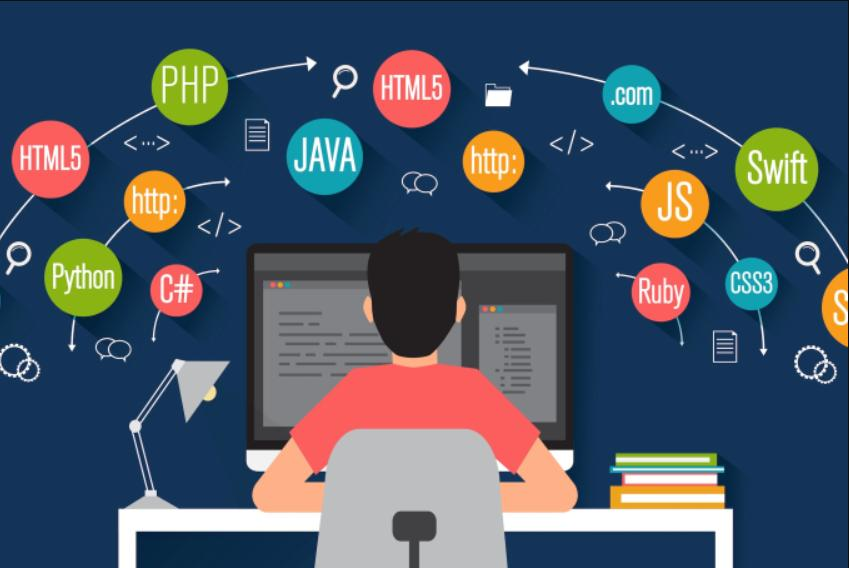
Choosing the best programming language to learn depends less on finding a single “best” option and more on matching a language to your goals. Web development, artificial intelligence, mobile apps, enterprise software, game development, and systems programming all favor different tools.
For beginners, the most useful approach is to choose one language, learn programming fundamentals thoroughly, and then build practical projects. Languages such as Python and JavaScript offer accessible starting points, while Java, C#, C++, Go, Rust, and Swift provide strong paths into specialized areas of software development.
What Makes a Programming Language Worth Learning?
A good language to learn should have a clear practical purpose, strong documentation, an established ecosystem, and opportunities to apply what you learn. You should also consider the type of work you want to do.
For example, someone interested in data analysis may benefit greatly from Python, while an aspiring web developer will likely need JavaScript. A developer interested in systems software may eventually choose C++ or Rust.
1. Python: Best for Beginners, AI and Data
Python is one of the most approachable languages for people starting programming. Its relatively clean syntax allows learners to focus on programming concepts rather than complicated syntax.
Python is widely used for automation, web development, data analysis, scientific computing, testing, and artificial intelligence. Python’s official documentation highlights applications ranging from web development to software development and business applications.
Practical Example
A beginner can use Python to create a program that automatically renames hundreds of files, analyzes a spreadsheet, collects data from an API, or builds a simple web application.
Best for: Beginners, AI/ML, automation, data science, scripting, backend development.
2. JavaScript: Best for Web Development
JavaScript is fundamental to modern interactive web development. It can run inside browsers and is also used in server-side and other environments. MDN documents JavaScript’s support for multiple programming paradigms, modules, asynchronous programming, and web APIs.
JavaScript becomes particularly powerful when combined with modern frameworks and tools such as React, Vue, Angular, and Node.js.
Practical Example
A developer can use JavaScript to create interactive forms, dashboards, shopping carts, real-time interfaces, browser applications, and backend services.
Best for: Front-end development, full-stack development, web applications, interactive websites.
3. TypeScript: Best for Large JavaScript Projects
TypeScript builds on JavaScript by adding static typing and other development features. It is particularly useful when applications become large and multiple developers need to maintain the same codebase.
Because TypeScript integrates closely with JavaScript, learning JavaScript fundamentals first is a practical path for beginners.
Best for: Large web applications, enterprise development, full-stack projects.
4. Java: Best for Enterprise Software
Java has been used for decades across enterprise applications, backend systems, financial technology, and large-scale software projects.
Its mature ecosystem, object-oriented design, tooling, and long-term industry adoption make it a valuable language for developers interested in enterprise software.
Best for: Enterprise applications, backend systems, large organizations, Android-related development.
5. C#: Best for Microsoft Ecosystems and Games
C# is a general-purpose language strongly associated with the Microsoft ecosystem and the .NET platform. It is also widely used with Unity for game development.
For developers interested in building desktop applications, APIs, enterprise systems, or games, C# can provide a versatile development path.
Best for: .NET development, enterprise applications, desktop software, game development.
6. C++: Best for Performance-Critical Software
C++ provides extensive control over system resources and is widely associated with performance-sensitive applications.
It can be found in areas such as game engines, embedded systems, desktop applications, high-performance computing, and systems software. However, its complexity makes it less suitable as a first language for many beginners.
Best for: Game development, systems programming, embedded software, high-performance applications.
7. Go: Best for Cloud and Backend Systems
Go, also known as Golang, was designed with simplicity, efficient compilation, concurrency, and large-scale software development in mind.
It is a strong option for developers interested in backend services, cloud infrastructure, networking tools, and distributed systems.
Best for: Cloud applications, APIs, backend services, DevOps tooling.
8. Rust: Best for Modern Systems Programming
Rust focuses heavily on performance and memory safety. It is increasingly relevant to developers working on systems software where reliability and efficient resource management are important.
Its learning curve can be significant, but developers who want deeper knowledge of systems programming may find it valuable.
Best for: Systems programming, performance-sensitive applications, security-focused software.
9. Swift: Best for Apple App Development
Swift is Apple’s modern programming language for developing applications across its ecosystem. Developers building native applications for platforms such as iOS and macOS commonly use Swift alongside Apple’s development frameworks.
Best for: iPhone, iPad, macOS, and Apple-platform development.
10. SQL: Essential for Working With Data
SQL is technically a declarative database language rather than a general-purpose programming language, but it deserves a place on almost every practical developer’s learning roadmap.
Understanding SQL helps developers retrieve, organize, update, and analyze information stored in relational databases.
Practical Example
A developer might use SQL to find customers who purchased a product during the previous month, calculate sales totals, or retrieve information for a web application’s dashboard.
Best for: Databases, analytics, backend development, business intelligence.
How Should Beginners Choose?
A simple roadmap is:
- AI, automation, or data: Start with Python.
- Web development: Start with JavaScript, then consider TypeScript.
- Enterprise software: Consider Java or C#.
- Game development: Consider C# or C++.
- Cloud and backend systems: Consider Go.
- Systems programming: Consider C++ or Rust.
- Apple development: Learn Swift.
- Database-driven applications: Learn SQL alongside your primary language.
The most important lesson is not to chase every new language. Strong programming fundamentals—variables, functions, data structures, algorithms, debugging, version control, testing, and software design—transfer between languages.
Conclusion
The best programming language to learn is ultimately the one that aligns with what you want to build. Python is an excellent starting point for many beginners, JavaScript is central to web development, Java and C# remain valuable for enterprise environments, while C++, Rust, Go, and Swift provide specialized opportunities.

1 Comment
Pingback: The Essential Tools for Productive, Secure Distributed Teams