
Python has become one of the most popular programming languages in the world—and for good reason. Its clean syntax, readability, and versatility make it an ideal starting point for beginners while remaining powerful enough for professionals. From web development and data analysis to automation and artificial intelligence, Python is used across industries. This guide introduces Python from a beginner’s perspective, focusing on clarity, real-world relevance, and practical understanding.
What Is Python and Why Is It So Popular?
Python is a high-level, interpreted programming language designed to emphasize code readability. Unlike languages that rely heavily on symbols and complex syntax, Python uses plain English–like statements, which makes it easier to learn and maintain.
Key Reasons Beginners Choose Python
- Simple syntax: Fewer lines of code to achieve more
- Versatile applications: Web, data science, automation, AI, scripting
- Strong community: Extensive libraries, tutorials, and forums
- Cross-platform: Runs on Windows, macOS, and Linux
In practice, this means beginners can focus on learning programming concepts instead of fighting the language itself.
Setting Up Python: Your First Steps
Before writing code, you need a Python environment. Python can be downloaded from its official website and installed in minutes. Many beginners also use code editors or integrated development environments (IDEs) like VS Code or PyCharm to make coding easier.
Writing Your First Python Program
A traditional starting point is the “Hello, World!” program:
print(“Hello, World!”)
This simple line demonstrates how Python executes instructions sequentially and outputs text to the screen.
Core Python Concepts Explained Simply
Variables and Data Types
Variables store data for later use. Python automatically detects the data type.
age = 25 # integer
name = “Suraj” # string
price = 99.99 # float
This flexibility helps beginners avoid unnecessary complexity.
Control Flow: Making Decisions
Python uses if, elif, and else statements for decision-making.
if age >= 18:
print(“Eligible to vote”)
else:
print(“Not eligible”)
Clear indentation is critical in Python—it defines the structure of your program.
Loops: Automating Repetitive Tasks
Loops allow you to repeat actions efficiently.
for i in range(5):
print(i)
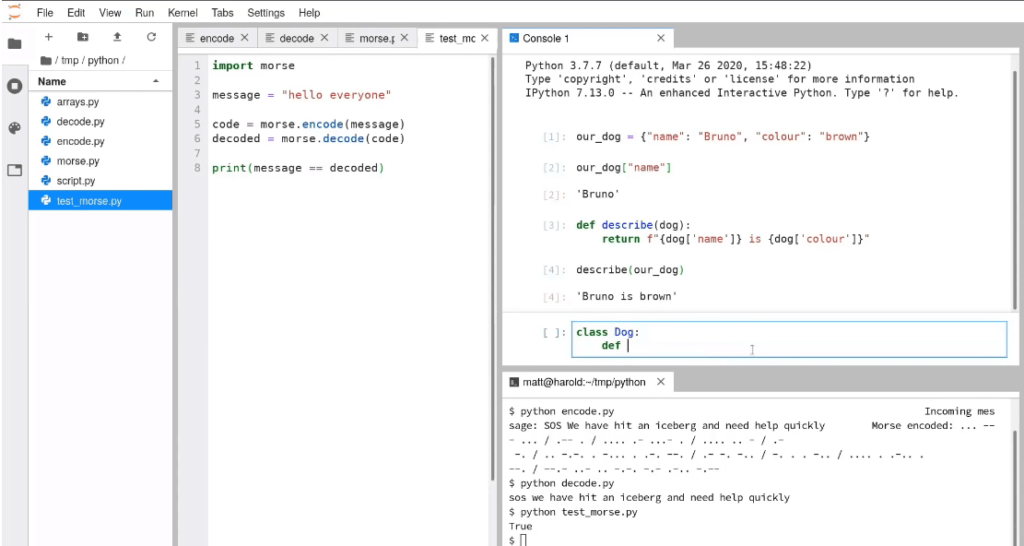
This concept is widely used in real-world tasks like processing files or analyzing datasets.
Practical Applications of Python in the Real World
Python’s strength lies in how easily it translates into practical solutions.
Web Development
Frameworks like Django and Flask help developers build secure, scalable websites quickly.
Data Analysis and Visualization
Python libraries such as pandas and matplotlib are commonly used by analysts to clean data and create insights.
Automation and Scripting
Python is often used to automate repetitive tasks like renaming files, sending emails, or generating reports—saving hours of manual work.
Learning Python the Right Way as a Beginner
Best Practices to Follow
- Start with small programs and build gradually
- Practice writing code daily, even for 20–30 minutes
- Read error messages carefully—they are learning tools
- Focus on understanding concepts, not memorization
Structured learning combined with hands-on practice leads to long-term success.
Trusted Resources for Learning Python
To deepen your learning, rely on authoritative and well-maintained resources:
- Official Python Documentation – Comprehensive and accurate reference for all Python features:
https://docs.python.org - freeCodeCamp Python Tutorials – Beginner-friendly lessons with hands-on examples:
https://www.freecodecamp.org
These resources are widely recognized and trusted by educators and professionals.
Conclusion: Why Python Is the Perfect First Language
Python lowers the barrier to entry for coding while opening doors to advanced technologies and career opportunities. Its simplicity, real-world relevance, and strong ecosystem make it an excellent first programming language for beginners. By understanding the fundamentals and practicing consistently, learners can confidently progress from simple scripts to meaningful applications. Python isn’t just easy to learn—it’s a skill that continues to grow with you.
