







A powerful morning routine can set the tone for your entire day. Research and success stories from high-performing individuals consistently show that how you begin your morning strongly influences productivity, focus, energy, and long-term goal achievement. This article breaks down the elements of an effective morning routine, explains why they work, and offers practical guidance you can apply immediately.
Why Your Morning Matters
The hours after waking are a psychological and physiological reset point. Mornings offer a unique window of minimal distractions, when your cognitive resources are most available. Elite performers, from CEOs to athletes, use deliberate morning practices to build momentum and foster consistent habits.
According to research, habits formed through regular morning routines can promote better mental health, increased productivity, and improved focus throughout the day — making mornings a strategic launching pad for success. Learn more about the science of routines and habit formation at the American Psychological Association.
Core Components of a Successful Morning Routine
Every effective morning routine supports physical, mental, and emotional well-being. Below are the key stages you can adapt to your goals and lifestyle.
1. Wake Up with Purpose
Successful mornings often begin before the rush of daily obligations.
Consistent Wake Time
Setting a steady wake-up time aligns your body clock and improves sleep quality. Try waking up 15–30 minutes earlier than usual to create space for intentional activities.
Gentle Wake Up
Avoid checking your phone or email immediately. Instead, use a calm transition such as soft lighting or quiet breathing to signal your brain it’s time to start the day.
Example:
Instead of hitting snooze, place your alarm across the room so you physically get up to turn it off.
2. Move Your Body
Movement boosts endorphins and primes your brain for clearer thinking.
Light Stretching or Yoga
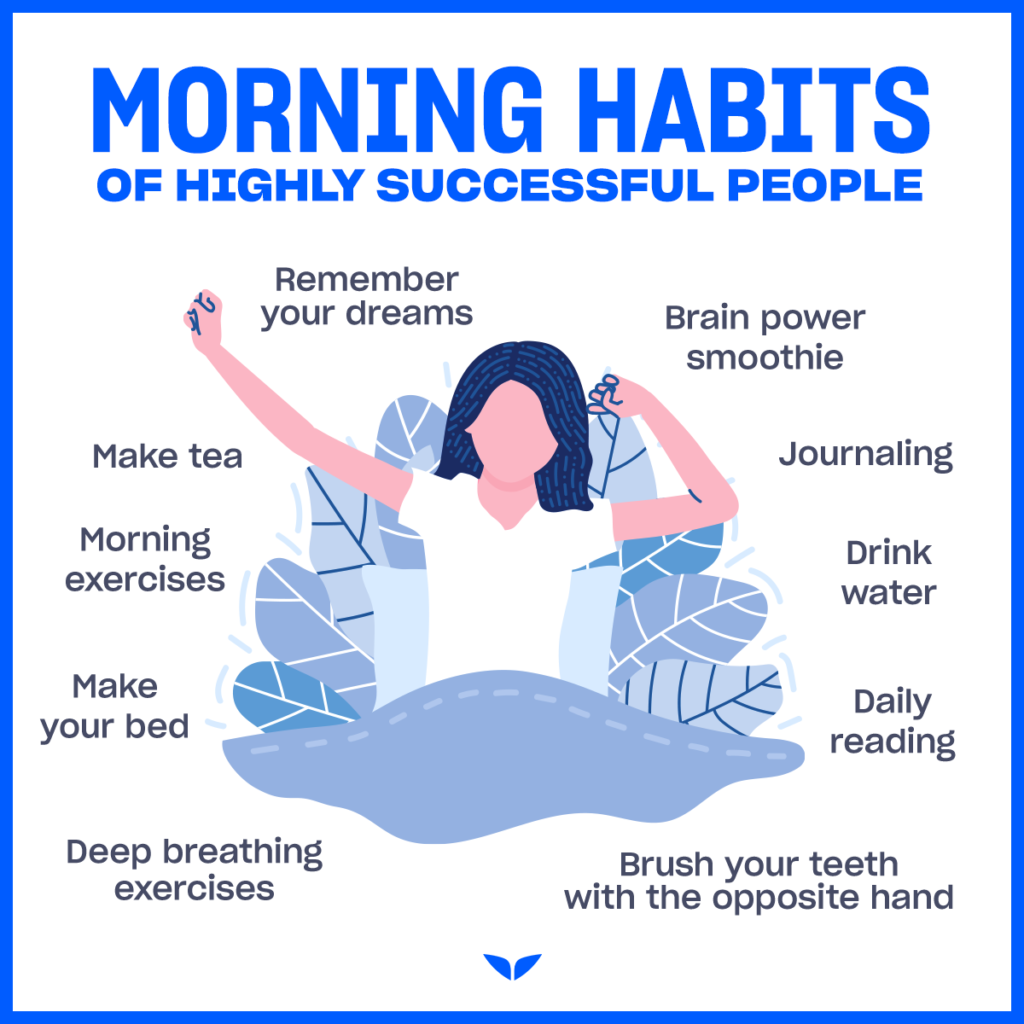
Even five minutes can reduce stiffness and improve circulation.
Short Workout
A brisk walk, run, or brief HIIT session increases energy and enhances focus.
Practical Tip:
Choose a consistent, enjoyable activity — forcing exercise is less sustainable than fun, habitual movement.

3. Fuel and Hydrate
What you consume in the morning impacts mental clarity and metabolism.
Hydration First
After hours without water, your body needs hydration for optimal brain function. Start with a glass of water.
Balanced Breakfast
Include proteins, healthy fats, and complex carbohydrates to sustain energy. Examples include Greek yogurt with fruit, eggs and avocado toast, or a smoothie with greens and protein.
Caffeine with Intention
If you drink coffee or tea, pair it with a moment of presence rather than distraction.
4. Mindfulness & Reflection
Incorporating mental resets can keep stress low and focus high.
Journaling
A 5–10 minute morning journaling habit can clarify goals, process emotions, and cultivate gratitude.
Meditation
Even a short meditation session supports emotional regulation and mental clarity.
Practical Example:
Spend two minutes writing three things you’re grateful for and one short intention for your day.
Designing Your Personalized Routine
There is no universal morning routine that fits everyone — the best routine is sustainable and tailored to your goals.
Step-by-Step Time Block Example
| Time | Activity |
| 6:00 • Wake up | Gentle rise and hydrate |
| 6:05 • Movement | Stretch or light exercise |
| 6:15 • Mindful Pause | Meditation or journaling |
| 6:30 • Nourish | Eat a balanced breakfast |
| 6:45 • Plan | Review goals and priorities |
This example is illustrative; adapt according to your schedule and energy rhythms.

Tracking & Adjusting What Works
Success routines evolve. Regularly review what’s working and what isn’t.
- Weekly Review: Reflect on how your mornings influence your productivity.
- Swap Activities: If an activity doesn’t feel energizing, test another.
- Keep a Journal: Track mood, focus, and accomplishments tied to your morning habits.
Real-World Applications
Corporate Leaders
Many CEOs start with quiet reflection, exercise, and priority setting before meetings begin. These habits help with decision-making and emotional balance under pressure.
Students & Creatives
A structured morning that includes planning, hydration, and focused study blocks can reduce procrastination and improve retention.
Avoiding Common Morning Pitfalls
Here are habits that can undermine your morning success:
- Checking messages immediately upon waking distracts and fragments attention.
- Skipping breakfast contributes to energy crashes and poor concentration.
- Neglecting rest — routines only work when supported by adequate sleep.
Focus on building one new habit at a time to avoid overwhelm.
Success Beyond the Morning
A strong morning routine isn’t a magic bullet — it lays the groundwork for consistent, purposeful days. What you do after your routine matters: guard your focus, set boundaries, and connect deeply with priority tasks.
For additional proven strategies on productivity and habit development, check out the advice from the Harvard Business Review.
Conclusion
Your morning routine is more than a series of tasks. It’s a foundation for intentional living, improved focus, and sustained success. By designing practices that nourish your body, calm your mind, and align with your goals, you can transform how you approach each day.
Start small, remain consistent, and let your morning routine evolve as your priorities grow. With structure and intention, your mornings can become your most powerful competitive advantage.


