






An organized home isn’t just visually pleasing — it boosts productivity, reduces stress, and makes everyday life smoother. Whether you’re tackling a full-house overhaul or just trying to get a cluttered closet under control, thoughtful organization strategies can transform your space and your routine. In this guide, we break down practical, expert-backed tips that help you create and maintain a home that works for you.
Why Home Organization Matters
Before we get into specific strategies, it helps to understand why organization is worth your time:
- Reduces stress and decision fatigue.
- Saves time — you spend less time searching for things.
- Improves safety — fewer tripping hazards and misplaced items.
- Maximizes space, especially in small homes and apartments.
If you’re ready to make real progress, start with systems that fit your lifestyle, not someone else’s.
Getting Started: Your Step-by-Step Plan
Assess Your Space
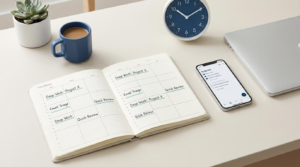
Begin by walking through each room with a notebook:
- What works well?
- What feels chaotic?
- What items are rarely used?
This initial audit helps you prioritize where to start and where to invest effort.
Set Achievable Goals
Instead of tackling everything at once, break your home into zones — kitchen, bedroom, bathroom — and focus on one at a time. This approach keeps momentum high and prevents burnout.

Decluttering: The First Organizational Step
The 4-Box Method
Use four containers labeled:
- Keep
- Donate
- Sell
- Trash
As you go through items, place each into one of these boxes. This technique forces decisions and prevents holding onto things by default.
Example: In your wardrobe, if you haven’t worn an item in 12 months, ask whether it truly adds value — if not, donate it.
The “One-In, One-Out” Rule
When you bring a new item home, let go of an old one. This keeps accumulation in check and maintains balance.
Real-World Application: If you buy a new pair of shoes, choose one old pair to donate.
Room-by-Room Strategies
Kitchen: Make Every Inch Count
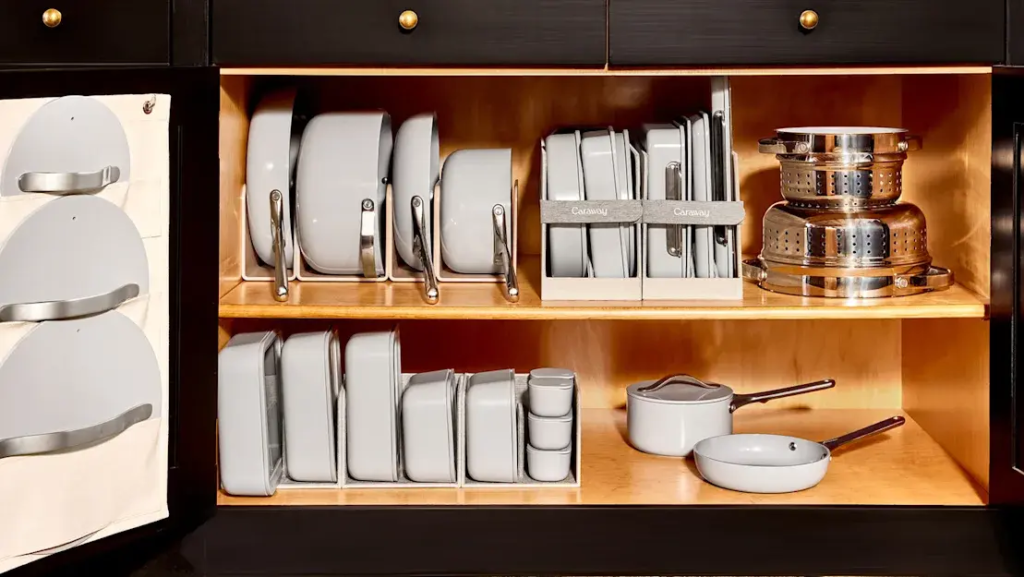
Optimize Cabinets and Drawers
- Use clear, labeled bins for groupings (snacks, baking supplies).
- Add drawer dividers for utensils and tools.
- Place frequently used items at eye level for easier access.
Countertop Solutions
Keep only everyday essentials on the counter (e.g., coffee maker, toaster). Store the rest to maintain a clean, uncluttered look.
Pro Tip: Vertical space is your friend — install shelves or hanging racks to free up surfaces.
Bedroom: Create a Calm Sanctuary
Closet Organization
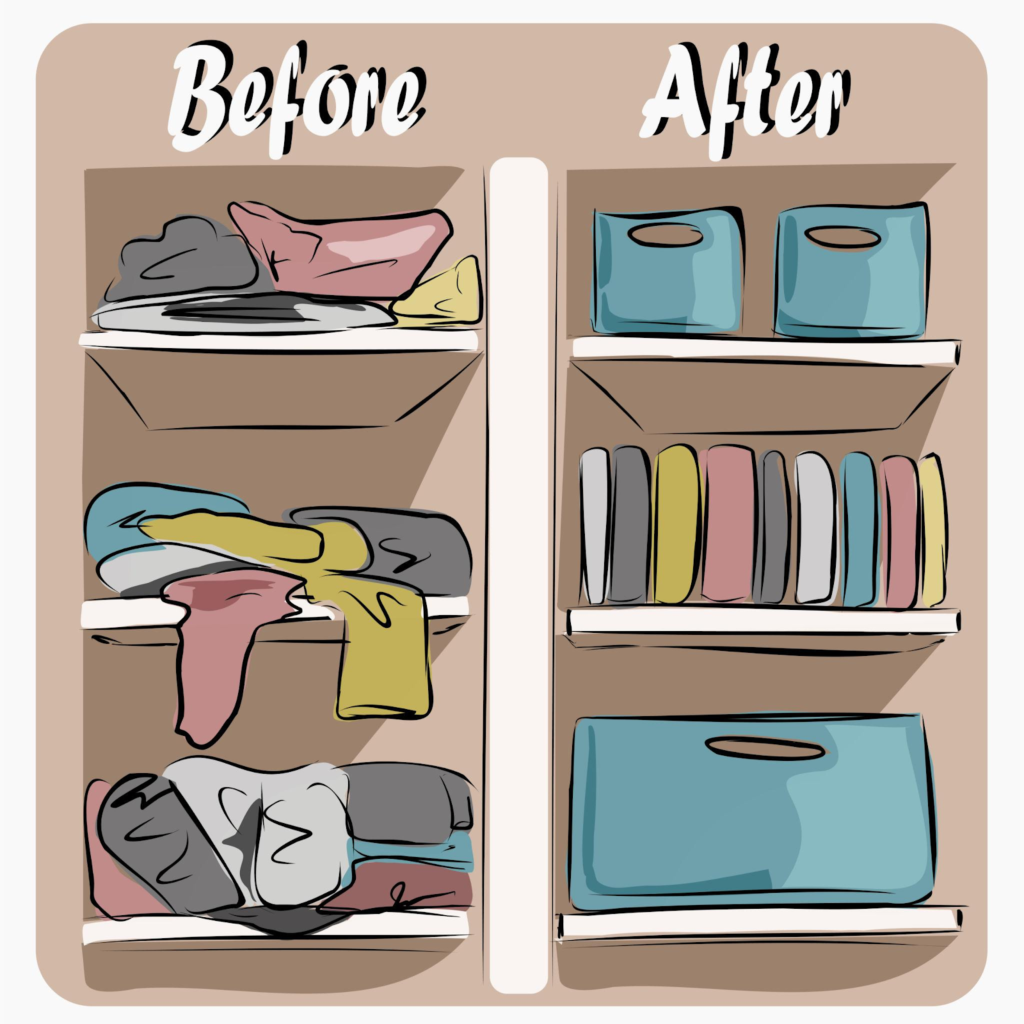
- Sort clothing by category (shirts, pants, outerwear) and color — this simplifies decision-making.
- Use uniform hangers to create visual order.
- Add baskets for accessories like scarves, belts, and socks.
Under-Bed Storage
Ideal for off-season clothes or linens. Choose containers with wheels or easy handles, so you’re more likely to use them.
Bathroom: Small Space, Big Impact
- Invest in clear containers for toiletries — transparency makes it easy to quickly find what you need.
- Use over-door racks or hooks for towels and robes.
- Group like with like — keep all skincare products together, all cleaning supplies together, etc.
Example: A tiered tray on the counter can corral daily items without them feeling cluttered.
Living Areas: Zones for Function
Define Activity Areas
- Relaxation zone: sofa, coffee table, book nook.
- Work zone: desk, charging station, files.
- Play zone (if applicable): toys, storage baskets, play mats.
Arranging furniture and storage by purpose helps the room feel intentional instead of chaotic.
Hidden Storage
Ottomans with storage, baskets under tables, and media consoles with doors keep items out of sight while maintaining easy access.
Tools and Products That Help
Here’s a shortlist of items that elevate organization:
- Stackable bins — for pantries and closets
- Clear shoe boxes — see what you have at a glance
- Label maker or labels — labels increase the chance you’ll put items back in the right place
- Drawer dividers — ideal for small items
For deeper insights into how professional organizers approach home systems, the American Cleaning Institute provides evidence-based recommendations on reducing clutter and maintaining clean spaces. (See Authority Link below.)
Habits That Keep Your Home Organized
Daily Maintenance
Spend 10 minutes a day tidying: put away stray items, wipe counters, and sort mail. Doing a little every day prevents big messes.
Weekly Reset
Choose a weekly ritual — maybe Sunday evening — to:
- Refresh linens
- Sort laundry
- Declutter surfaces
- Wipe down bathrooms
Consistency makes organization a habit, not a chore.
When to Call in Help
If you’ve tried organizing and still feel stuck, hiring a professional organizer can help you:
- Break emotional attachment to items
- Create tailored systems
- Implement strategies quickly
Many organizers also offer virtual consultations if in-person help isn’t available.
Conclusion
Organizing your home doesn’t have to be overwhelming. With a clear plan, intentional habits, and the right tools, you can reclaim your space and make daily life more effortless. Start small, stay consistent, and tailor strategies to suit your routines and needs. Over time, these systems become seamless — and your home becomes a place that supports your best life.


