







Workplace stress erodes productivity, increases turnover, and harms employee well-being. For employers, effective stress management is not an optional “perk” — it’s a strategic necessity. This article gives clear, practical guidance you can implement today: policies, leadership actions, program design, and measurement approaches that reduce stress and improve organizational performance.
Why employers must act
Stress drives absenteeism, presenteeism, lower engagement, and higher healthcare costs. Proactive employer-led programs protect people and the bottom line. For evidence-based guidance, see resources such as the World Health Organization (mental health and the workplace) and Harvard Business Review (research and management practices).
Build stress-reducing policy and culture
Establish clear, supportive policies
Create written policies that address workload expectations, working hours, leave, and psychological safety. Make flexible work, phased returns after leave, and clear boundaries around after-hours communication standard practice rather than exceptions.
Model behaviour from the top
Managers set the tone. Senior leaders should visibly practice healthy work habits (e.g., switching off email after work hours) and speak openly about wellbeing. Leadership modeling reduces stigma and makes programs usable.
Practical programs that work
Job design and workload management
- Audit roles for unrealistic workloads; redistribute or hire where necessary.
- Use job clarity: clearly defined responsibilities and achievable goals reduce role conflict.
- Implement cross-training to prevent single points of failure and burnout.
Real-world example: A mid-size tech firm cut weekly status meetings by 50% and introduced “no-meeting afternoons.” Result: engineers reported faster progress and lower stress on quarterly surveys.
Manager training
Equip managers with skills to spot early signs of stress, conduct supportive conversations, and make reasonable accommodations. Train them in basic psychological first-aid and referral pathways (EAPs, occupational health).
Employee assistance and mental-health access
Offer an Employee Assistance Program (EAP) and clear, confidential routes to counseling. Where possible, provide a limited number of paid therapy sessions and signpost community resources.
Flexible work and autonomy
Allowing choice over where and when work happens improves perceived control — a major buffer against stress. Hybrid schedules, compressed workweeks, and part-time options can be powerful when tied to clear deliverables.

Environmental and operational levers
Workplace environment
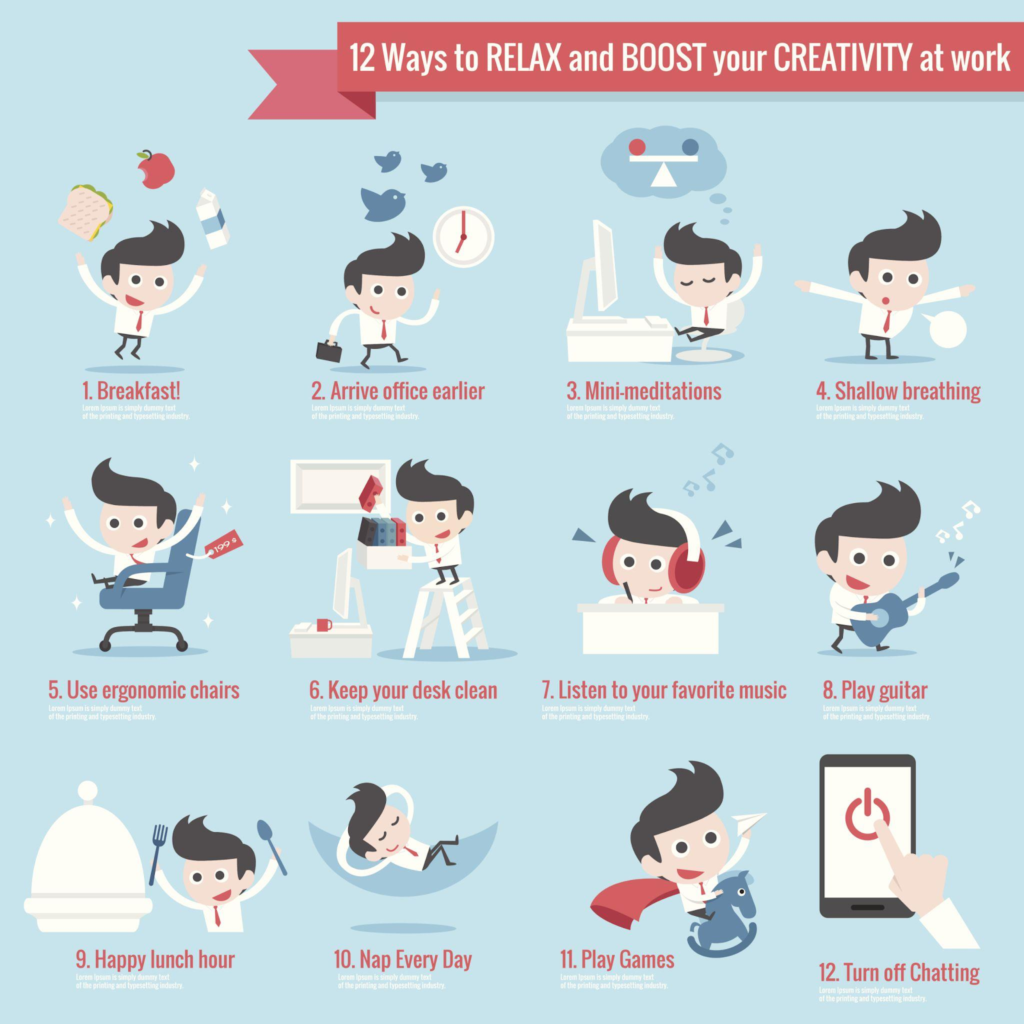
Design quiet spaces, break areas, and access to daylight and greenery. Small changes — ergonomic chairs, noise-reducing panels, and relaxation corners — lower physiological stress and increase comfort.
Breaks, micro-rests, and digital hygiene
Encourage micro-breaks, walking meetings, and screen-free lunch breaks. Introduce policies limiting late-night emails and provide tools or training for digital wellbeing.
Measurement and continuous improvement
Use data to guide action
Regularly collect anonymous pulse surveys that measure workload, support, fairness, and psychological safety. Combine these with objective metrics (turnover, sick days, performance trends) to prioritize interventions.
Practical tip: Run a short quarterly pulse (3–6 questions) and one annual deep survey. Publicize actions taken in response to results — transparency builds trust.
Evaluate program ROI
Track utilization of EAPs, uptake of flexible arrangements, and changes in absenteeism and engagement scores. Use case studies internally to illustrate benefits (e.g., reduced sick days after manager training).
Legal, privacy, and E-E-A-T considerations
Ensure mental health and absence policies comply with employment and disability laws in your jurisdiction. Protect confidentiality when employees access support — breach of privacy undermines trust and can cause harm. Use qualified providers and evidence-based approaches when adopting programs.
Quick implementation checklist (for busy employers)
- Issue a company-wide statement that wellbeing is a priority.
- Train managers in supportive conversations.
- Launch a short pulse survey to identify hotspots.
- Set up or promote an EAP/counseling pathway.
- Pilot flexible-work options in one team and measure results.
- Create quiet spaces or wellbeing rooms.
- Review workload distribution monthly.
Conclusion
Stress management is a strategic investment that preserves human capital and sustains performance. Employers who combine policy, leadership modeling, practical programs, and ongoing measurement create safer, more productive workplaces. Start small, measure what matters, and scale what works — the payoff is healthier employees and a stronger organization.


2 Comments
Online gaming bring participants a superb means to bond and have fun with gamers everywhere.
https://b3.hypebeasts.ru/RBf7lypEhM14/
Digital gaming supply participants the superb chance to unite and unwind with peers globally.
https://optimize-learning.com/best-sweepstakes-casinos-july-2026-200-mr-cashman-pokies/