







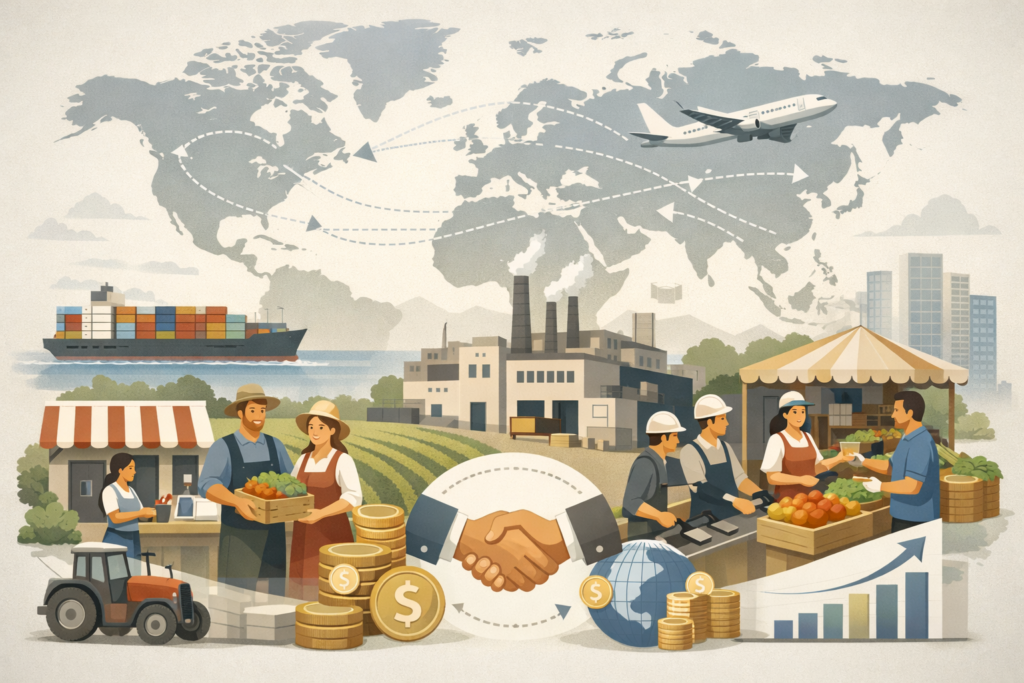
International trade agreements play a central role in shaping how local economies grow, adapt, and compete in an increasingly interconnected world. While these agreements are often negotiated at the national or multinational level, their impacts are felt most directly by local businesses, workers, consumers, and governments. Understanding how trade agreements influence local economic conditions is essential for policymakers, educators, business leaders, and citizens alike.
This article explores the mechanisms through which international trade agreements affect local economies, highlighting both opportunities and challenges, supported by real-world examples and practical insights.
Understanding International Trade Agreements
What Are International Trade Agreements?
International trade agreements are formal arrangements between two or more countries designed to regulate trade flows across borders. These agreements typically address:
- Tariffs and customs duties
- Import and export regulations
- Investment rules
- Intellectual property protections
- Labor and environmental standards
Well-known examples include free trade agreements (FTAs), customs unions, and multilateral agreements under organizations such as the World Trade Organization (WTO).
Why Governments Enter Trade Agreements
Governments pursue trade agreements to expand market access for domestic producers, encourage foreign investment, and promote economic growth. At the national level, these goals often align with broader strategies such as job creation, industrial development, or geopolitical cooperation. However, the outcomes at the local level can vary significantly depending on regional economic structures.
How Trade Agreements Influence Local Economies
Increased Market Access for Local Businesses
One of the most direct benefits of trade agreements is reduced trade barriers. Lower tariffs and simplified customs procedures make it easier for local firms to export goods and services.
Local impact example:
A regional agricultural cooperative may gain access to overseas markets, allowing farmers to sell products at higher volumes and more competitive prices. This can lead to increased income, job creation, and reinvestment within the community.
Competitive Pressure and Market Adjustment
While expanded market access benefits exporters, trade agreements also increase competition from foreign firms. Local businesses that are less efficient or technologically advanced may struggle to compete with imported goods.
Key local effects include:
- Pressure to modernize production methods
- Business consolidation or closures in vulnerable sectors
- Shifts in employment patterns
Regions heavily dependent on a single industry may feel these effects more acutely.
Employment and Labor Market Effects
Job Creation in Export-Oriented Sectors
Trade agreements often stimulate growth in industries with comparative advantages. Manufacturing hubs, logistics centers, and service providers tied to exports may experience job growth.
Example:
A city with a strong automotive supply chain may see increased demand for skilled labor after a trade agreement opens new international markets for vehicles and components.
Job Displacement and Skill Mismatch
At the same time, import competition can lead to job losses in industries unable to compete on price or scale. Workers in these sectors may face unemployment or be forced to transition to new industries.
Local labor markets must often adapt through:
- Workforce retraining programs
- Education and skills development initiatives
- Public-private partnerships
The effectiveness of these measures significantly influences whether local economies recover or stagnate.
Effects on Small and Medium-Sized Enterprises (SMEs)
New Opportunities for Growth
Trade agreements can lower entry barriers for SMEs by standardizing regulations and reducing export costs. Digital trade provisions, in particular, allow small firms to participate in global value chains.
Practical application:
A small software company can sell digital services internationally without establishing a physical presence abroad, expanding revenue streams while remaining locally based.
Unequal Access to Benefits
Despite these opportunities, SMEs often face challenges such as limited access to financing, lack of trade expertise, and compliance costs. Larger firms are typically better positioned to leverage trade agreements, which can widen economic gaps within local economies.
Consumer Impacts at the Local Level
Lower Prices and Greater Product Variety
Trade liberalization generally increases the availability of imported goods, leading to lower prices and more choices for consumers. This improves purchasing power and overall living standards.
Local outcome:
Households benefit from affordable food, clothing, and electronics, freeing income for spending in other parts of the local economy.
Concerns Over Product Standards
Consumers may also raise concerns about product quality, safety, or ethical standards. Trade agreements increasingly address these issues through harmonized regulations, though enforcement remains a key factor in maintaining trust.
Government Revenue and Public Services
Changes in Tax and Tariff Revenue
Reducing tariffs can decrease government revenue, particularly in regions that rely heavily on customs duties. Local governments may face budget constraints affecting public services and infrastructure.
Long-Term Fiscal Benefits
Over time, economic growth stimulated by trade can expand the tax base through higher incomes, business profits, and consumption. The net fiscal impact depends on how effectively governments manage the transition period.
Regional Inequality and Uneven Development
Winners and Losers Within Countries
Trade agreements often benefit regions with:
- Strong infrastructure
- Skilled labor forces
- Access to ports or logistics hubs
Conversely, rural or industrially concentrated regions may struggle to adapt.
Policy Responses to Regional Disparities
To address uneven outcomes, governments may implement:
- Regional development funds
- Investment in infrastructure and education
- Targeted support for affected industries
Such measures are critical to ensuring that trade-driven growth is inclusive and sustainable.
Long-Term Structural Changes in Local Economies
Integration into Global Value Chains
Trade agreements encourage specialization, allowing local economies to focus on specific stages of production rather than entire manufacturing processes. This can increase efficiency but also expose regions to global economic fluctuations.
Innovation and Productivity Gains
Exposure to international competition often drives innovation. Local firms adopt new technologies, improve management practices, and enhance productivity to remain competitive.
Conclusion: Balancing Opportunity and Adjustment
International trade agreements are powerful tools that shape local economic realities in complex and lasting ways. They can drive growth, expand consumer choice, and create new opportunities for businesses and workers. At the same time, they can disrupt established industries, displace jobs, and exacerbate regional inequalities if not managed carefully.
The ultimate impact on local economies depends on factors such as economic diversity, workforce adaptability, infrastructure quality, and public policy responses. When combined with strong local institutions, targeted support measures, and inclusive development strategies, trade agreements can serve as catalysts for sustainable and broadly shared economic prosperity.
Understanding these dynamics enables communities and policymakers to make informed decisions, maximize benefits, and mitigate risks—ensuring that global trade works not just at the international level, but where it matters most: locally.


