







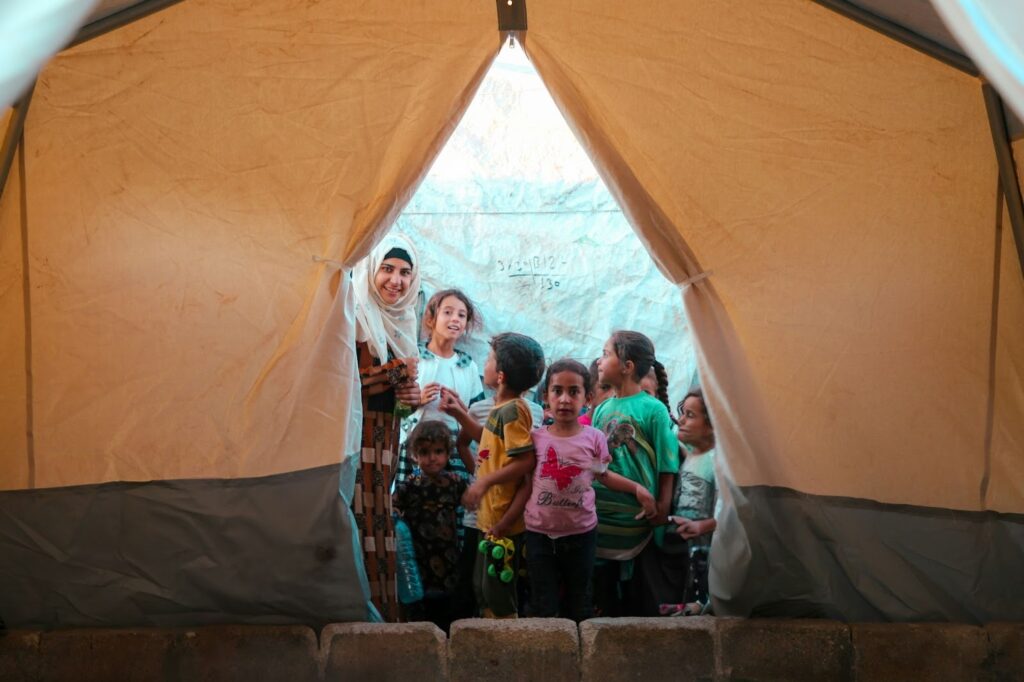
The global refugee crisis is one of the most pressing humanitarian challenges of the 21st century. According to the United Nations, more than 122 million people are forcibly displaced worldwide, including refugees, internally displaced people, and asylum seekers, the highest level on record.
This crisis affects regions and countries unevenly: while low- and middle-income nations host the vast majority of refugees, wealthier states grapple with political pressures over asylum policies and border management. In response, countries have developed a range of strategies — from welcoming refugees with inclusive integration programs to tightening asylum rules. This article explores the diverse approaches to handling displacement, illustrating the complexity and evolution of global refugee policies.
Why the Refugee Crisis Matters
Before looking at how countries respond, it’s essential to understand the scale of the issue:
- Over 42 million people are classified as refugees, forced to flee conflict, persecution, and violence.
- Over 73 million are internally displaced, meaning they remain within their own country’s borders but have lost their homes.
- Most refugees live close to their home countries, often in neighboring states with limited resources.
This imbalance creates enormous pressures on host countries’ infrastructure, social services, and economies — especially when resources are scarce.
1. Inclusive Responses: Protection and Integration
Turkey: Large-Scale Temporary Protection
Turkey hosts more refugees than any other nation, especially Syrians under Temporary Protection. Its approach emphasizes immediate legal protection and access to basic services, including education and healthcare, for registered refugees. This model shows how neighboring states absorb sudden displacement flows due to geographic proximity.
However, integrating refugees into the economy and providing sustainable long-term livelihood opportunities remain ongoing challenges.
Canada and the United States: Resettlement and Legal Pathways
Some countries adopt resettlement as a key strategy — offering refugees a new home when they cannot safely return or integrate locally.
According to UNHCR data, in 2024, nearly 188,800 refugees were resettled to third countries, with the United States and Canada leading in numbers.
- United States: Historically one of the largest resettlement destinations, the US provides refugee status through established legal frameworks and supports newcomers with services aimed at self-sufficiency. However, recent policy changes have reduced resettlement quotas and tightened asylum eligibility.
- Canada: Combines government-sponsored and private sponsorship models. Its community sponsorship programs allow citizens and organizations to support refugees’ settlement, accelerating social integration and economic participation.
Why it matters:
Resettlement offers protection for individuals who are especially vulnerable, ensuring legal status, safety, and future stability. However, global resettlement numbers remain far below the estimated 2.5 million refugees needing relocation.
Germany: Integration through Education and Labor Inclusion
Germany introduced progressive integration policies after the large influx of refugees in 2015, emphasizing language training, vocational education, and access to the labor market.
Initiatives like the Albert Einstein German Academic Refugee Initiative Fund enable refugees to continue higher education within host countries.
Yet recent political shifts have created fluctuations in policy direction: in 2025, Germany temporarily halted some resettlement programs due to domestic political pressures, highlighting how refugee policy can be influenced by internal politics.
2. Restrictive Policies: Border Controls and Eligibility Rules
European Union: Streamlining and Tightened Criteria
The European Union recently introduced reforms to manage asylum claims more swiftly by classifying several nations as “safe countries of origin.” This approach aims to reduce backlogs but has drawn criticism from human rights groups, who warn it may limit protection for vulnerable individuals.
In parts of Europe, including Greece and Hungary, authorities have focused on stronger border enforcement to deter irregular arrivals.
Impact:
Such restrictive measures are often justified as necessary for border security and efficient asylum processing. However, they raise concerns about access to fair asylum procedures and basic humanitarian protections.
Denmark: Extraterritorial Processing
Denmark has pursued one of the most restrictive asylum policies in the developed world, including proposals to process asylum claims outside its territory and limit the number of newcomers significantly.
These policies reflect a broader trend among high-income nations toward tighter controls, often driven by domestic political debates over immigration.
3. Emerging and Alternative Approaches
Regional Cooperation and Third-Country Solutions
Some countries are experimenting with regional agreements to share responsibility:
- Rwanda has acted as an alternative asylum destination for certain programs negotiated with Western governments.
- Partnerships between countries allow for the relocation of asylum seekers or refugees when their protection cannot be guaranteed elsewhere.
These approaches reflect efforts at burden-sharing, though they are controversial and require strong safeguards to protect refugee rights.
Local Integration and Long-Term Inclusion
For sustainable refugee solutions, long-term integration is critical. Countries with robust integration policies focus on:
- Labor market access to improve economic self-sufficiency.
- Recognition of qualifications and skills acquired before displacement.
- Language and cultural orientation programs to ease social inclusion.
Academic research emphasizes that such integration fosters stability, mutual economic benefit, and social cohesion.
4. The Challenge of Funding and Capacity
Across the board, many refugee-hosting countries — particularly in Africa and Asia — face severe funding shortages that jeopardize humanitarian support and services. Some countries have even paused refugee registration due to budget constraints, ending long-standing open policies.
This stark reality highlights how global responsibility for refugees remains uneven and heavily influenced by geopolitical priorities.
Conclusion
The ways countries respond to the refugee crisis vary dramatically depending on geography, political systems, public opinion, and economic capacity. Some states prioritize protection and integration, offering long-term solutions, while others focus on border management and restricted access. Regional cooperation and innovative policy models show promise but must be grounded in international human rights standards.
As the global displacement crisis continues to evolve, effective approaches will likely combine humanitarian protection, sustainable integration, and shared international responsibility. Continued investment in support systems and collaborative governance is vital to ensuring that refugees can lead safe, dignified, and productive lives — wherever they find themselves.


