

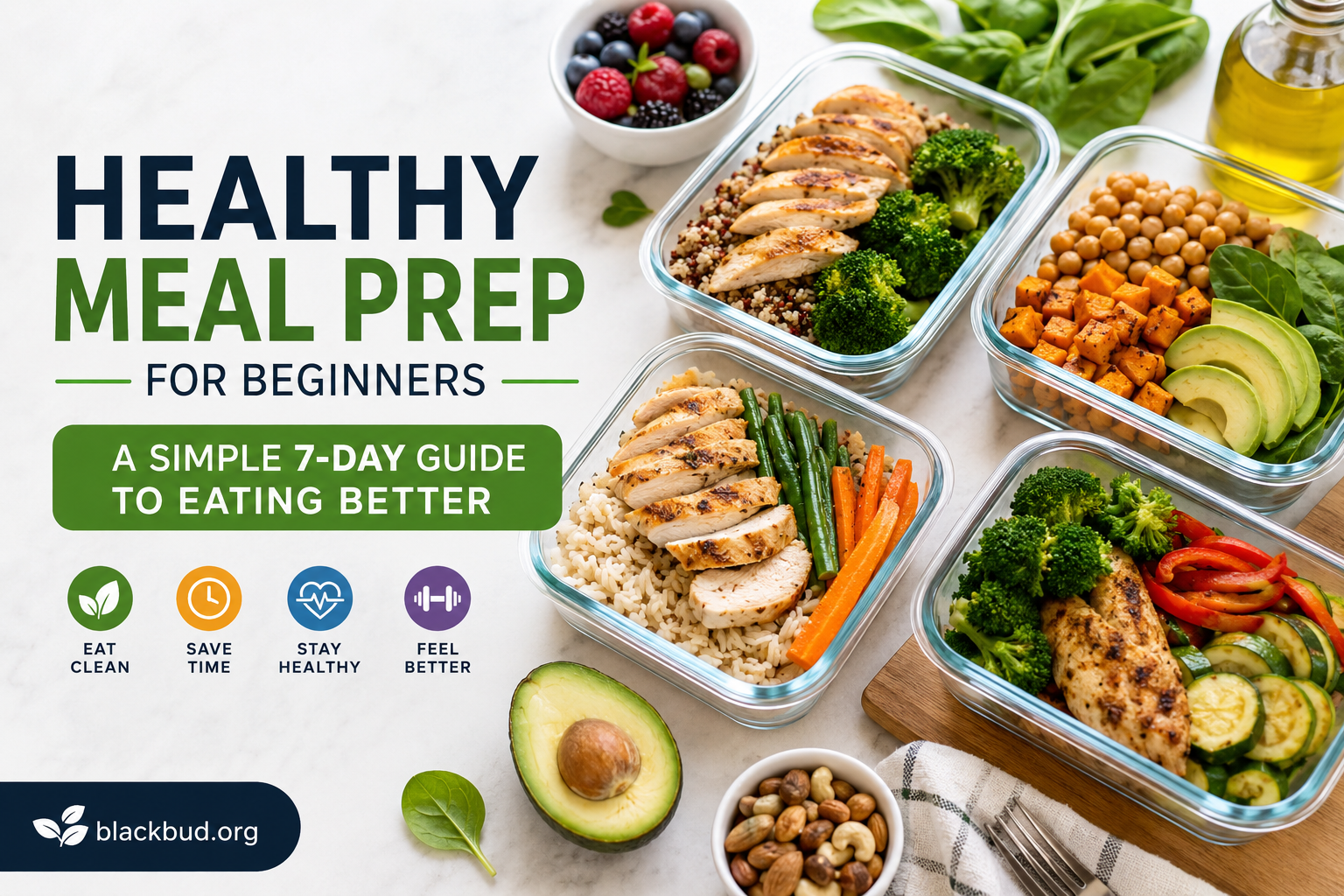
Healthy eating does not have to mean complicated recipes, expensive ingredients, or spending hours in the kitchen every day. For beginners, meal preparation—or meal prep—is one of the simplest ways to make nutritious eating more convenient and consistent.
The basic idea is straightforward: choose a few balanced meals, prepare key ingredients in advance, store them safely, and assemble meals throughout the week. A healthy eating pattern should emphasize variety, balance, moderation, and minimally processed foods. The World Health Organization recommends diets built around vegetables, fruits, legumes, whole grains, nuts, and other nutrient-dense foods while limiting excess free sugars, sodium, saturated fat, and industrial trans fats.
This beginner-friendly 7-day plan provides a practical framework you can adapt to your preferences, budget, schedule, and dietary needs.
What Is Healthy Meal Prep?
Healthy meal prep means preparing some or all of your meals or ingredients ahead of time.
You do not necessarily need to cook seven identical meals on Sunday. Instead, prepare versatile ingredients that can be mixed and matched.
For example, one batch of roasted vegetables can be used in:
- Grain bowls
- Wraps
- Salads
- Omelets
- Dinner plates
This approach saves time while reducing the temptation to rely on convenience foods when you’re busy.
The Basic Formula for a Balanced Meal
A simple way to plan meals is to combine four elements:
1. Vegetables and Fruits
Include a variety of colorful vegetables and whole fruits. Fresh, frozen, and appropriately selected canned produce can all contribute to a healthy diet. WHO recommends that adults and children over age 10 aim for at least 400 grams of fruits and vegetables per day.
Examples include:
- Broccoli
- Spinach
- Carrots
- Bell peppers
- Tomatoes
- Cucumber
- Apples
- Bananas
- Berries
- Oranges
2. Protein
Protein helps make meals satisfying and provides essential nutrients.
Good options include:
- Eggs
- Chicken
- Fish
- Greek yogurt
- Lentils
- Chickpeas
- Beans
- Tofu
- Tempeh
- Nuts and seeds
USDA’s MyPlate guidance recommends varying protein sources, including seafood, beans, peas, lentils, nuts, seeds, soy products, eggs, and lean meats and poultry.
3. Whole-Food Carbohydrates
Carbohydrates can be an important source of energy. Favor minimally processed or whole-grain choices such as:
- Oats
- Brown rice
- Quinoa
- Whole-wheat bread
- Barley
- Millet
- Potatoes
- Sweet potatoes
WHO recommends getting carbohydrates primarily from whole grains, vegetables, fruits, and pulses.
4. Healthy Fats
Small amounts of unsaturated fats can add flavor and nutritional value.
Try:
- Avocado
- Nuts
- Seeds
- Olive oil
- Peanut butter
- Tahini
The quality of dietary fat matters; WHO recommends favoring unsaturated fats over saturated and industrial trans fats.
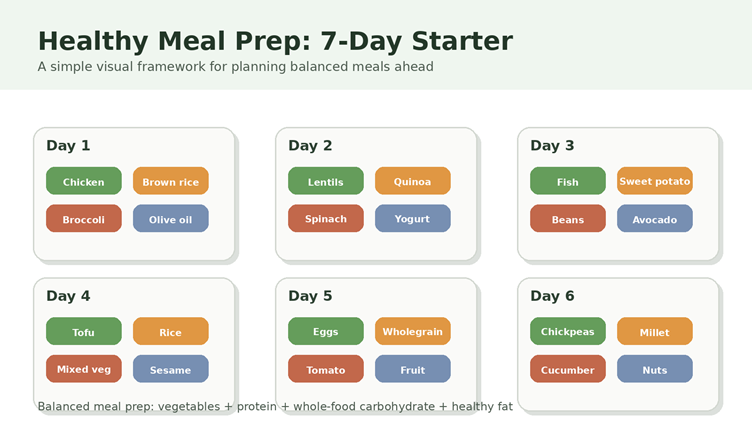
Your 7-Day Healthy Meal Prep Plan
The following plan is designed as a flexible example rather than a strict diet. Portion sizes should be adjusted according to individual energy needs, appetite, activity level, and dietary requirements.
Day 1: Simple Chicken Grain Bowl
Breakfast: Oatmeal with banana, berries, and nuts.
Lunch: Grilled chicken, brown rice, broccoli, carrots, and a small amount of olive-oil-based dressing.
Snack: Plain yogurt with fruit.
Dinner: Lentil soup with a whole-grain toast and side salad.
Prep tip: Cook extra brown rice and vegetables so they can be reused later in the week.
Day 2: Lentil and Vegetable Day
Breakfast: Vegetable omelet with whole-grain toast.
Lunch: Lentil and quinoa bowl with spinach, cucumber, tomatoes, and yogurt-based dressing.
Snack: Apple with a small serving of peanut butter.
Dinner: Chicken or tofu stir-fry with mixed vegetables and brown rice.
Prep tip: Cook a large batch of lentils and divide them into individual portions.
Day 3: Fish and Sweet Potato
Breakfast: Greek yogurt topped with oats, berries, and seeds.
Lunch: Baked fish with roasted sweet potato and green vegetables.
Snack: Carrot and cucumber sticks with hummus.
Dinner: Chickpea and vegetable salad with whole-grain bread.
Prep tip: Roast several sweet potatoes at once. They can be used for lunch bowls, salads, or quick dinners.
Day 4: Easy Vegetarian Meals
Breakfast: Overnight oats with banana and chia seeds.
Lunch: Chickpea grain bowl with quinoa, roasted vegetables, and avocado.
Snack: Fruit and unsalted nuts.
Dinner: Tofu and vegetable stir-fry with brown rice.
Prep tip: Keep cooked grains, roasted vegetables, and cooked legumes separate so you can create different combinations.
Day 5: Quick and Practical
Breakfast: Scrambled eggs with spinach and whole-grain toast.
Lunch: Chicken and vegetable whole-wheat wrap.
Snack: Yogurt and fruit.
Dinner: Lentil curry with brown rice and a vegetable side.
Prep tip: Use herbs, garlic, ginger, lemon, chili, or spices to change the flavor of previously prepared ingredients.
Day 6: Flexible Leftover Day
Breakfast: Oatmeal with fruit and seeds.
Lunch: Leftover grain bowl using vegetables, protein, and your preferred dressing.
Snack: Fresh fruit with nuts.
Dinner: Vegetable soup with beans and whole-grain toast.
Prep tip: Make Saturday a “use what you have” day. This can reduce food waste and keep meal prep economical.
Day 7: Light Preparation and Reset
Breakfast: Yogurt, fruit, oats, and nuts.
Lunch: Large mixed vegetable and chickpea salad with whole grains.
Snack: Fruit or sliced vegetables with hummus.
Dinner: Baked chicken, tofu, or fish with vegetables and potatoes.
Prep tip: Use Sunday evening to prepare ingredients for the following week rather than cooking every meal from scratch.
A Simple 60–90 Minute Meal Prep Routine
Beginners often make meal prep harder than necessary. You can start with a simple routine.
Step 1: Choose Two Proteins
For example:
- Chicken + lentils
- Fish + chickpeas
- Tofu + eggs
Step 2: Prepare Two Carbohydrate Sources
Choose options such as:
- Brown rice
- Quinoa
- Oats
- Sweet potatoes
- Whole-wheat wraps
Step 3: Prepare Three or Four Vegetables
Roasting or steaming several vegetables together saves time.
Try:
- Broccoli
- Carrots
- Bell peppers
- Cauliflower
Step 4: Prepare Two Simple Sauces
For example:
Yogurt dressing: Plain yogurt + lemon + herbs.
Simple vinaigrette: Olive oil + lemon juice or vinegar + herbs.
Keeping sauces separate can help prevent salads and vegetables from becoming soggy.
Step 5: Portion and Label
Divide ingredients into containers and label them with the preparation date. Store foods appropriately and refrigerate perishable foods promptly.
How to Keep Meal Prep Safe
Food safety is just as important as nutritional quality.
Wash produce appropriately, keep raw meat separate from ready-to-eat foods, cook foods thoroughly, and refrigerate perishable foods promptly. Use clean containers and avoid leaving prepared perishable food at room temperature for extended periods.
If you are preparing meals for children, older adults, pregnant people, or anyone with specific medical or dietary requirements, follow appropriate food-safety and professional dietary guidance.
Common Beginner Meal-Prep Mistakes
Preparing Too Much Food
Cooking seven completely different meals can become exhausting. Start with two proteins, two carbohydrate sources, and several vegetables.
Making Every Meal Identical
Eating the same meal repeatedly can quickly become boring. Change sauces, herbs, vegetables, or serving styles instead.
Ignoring Portion Flexibility
There is no single portion size that works for everyone. Appetite, body size, physical activity, age, and individual nutritional requirements vary.
Forgetting Snacks
If snacks are not planned, it is easy to reach for highly processed convenience foods. Keep simple choices available, such as fruit, yogurt, vegetables, nuts, or hummus.
Focusing Only on Calories
Healthy eating is about more than calories. Food quality, variety, fiber, protein, micronutrients, and overall dietary pattern all matter.
Make Healthy Meal Prep Easier
A few practical habits can make meal preparation more sustainable:
- Keep a basic grocery list.
- Buy frozen vegetables when fresh produce is inconvenient.
- Cook ingredients in batches.
- Use leftovers intentionally.
- Keep healthy snacks visible and convenient.
- Freeze suitable meals when you know you will not eat them soon.
- Rotate recipes every few weeks.
- Use herbs and spices instead of relying heavily on salt.
- Choose minimally processed foods more often.
USDA’s MyPlate guidance similarly emphasizes variety across fruits, vegetables, grains, protein foods, and dairy or fortified alternatives, while encouraging people to choose foods lower in added sugars, saturated fat, and sodium.
Downloadable Meal-Prep Visuals
PNG Image 1 – 7-Day Healthy Meal Prep Guide:
Download the high-resolution PNG
PNG Image 2 – Healthy Meal-Prep Container Guide:
Download the high-resolution PNG
Frequently Asked Questions
Is meal prep suitable for beginners?
Yes. Beginners can start with just one or two prepared meals rather than planning an entire week. The goal is to make healthier choices easier, not to create a complicated cooking schedule.
Do I need expensive meal-prep containers?
No. Clean, food-safe containers with secure lids are sufficient. You can use containers you already own as long as they are appropriate for food storage.
Can I meal prep if I don’t eat meat?
Absolutely. Lentils, beans, chickpeas, tofu, tempeh, eggs, nuts, seeds, and dairy or fortified alternatives can be incorporated depending on your dietary pattern.
Is meal prep good for weight management?
Meal prep can make it easier to plan balanced meals and control what ingredients are included, but weight management depends on overall dietary intake, physical activity, sleep, health status, and other individual factors. It should not be treated as a guaranteed weight-loss method.
Conclusion
Healthy meal prep does not require perfection. The most effective approach for beginners is to keep things simple: prepare a few nutritious ingredients, combine vegetables with protein and whole-food carbohydrates, include healthy fats, and create enough variety to keep meals enjoyable.
Start with one preparation session this week. Cook a batch of vegetables, prepare one or two protein sources, make a whole-grain or other carbohydrate base, and portion everything into convenient meals. Once the routine becomes comfortable, you can gradually expand your recipes and preparation system.
