

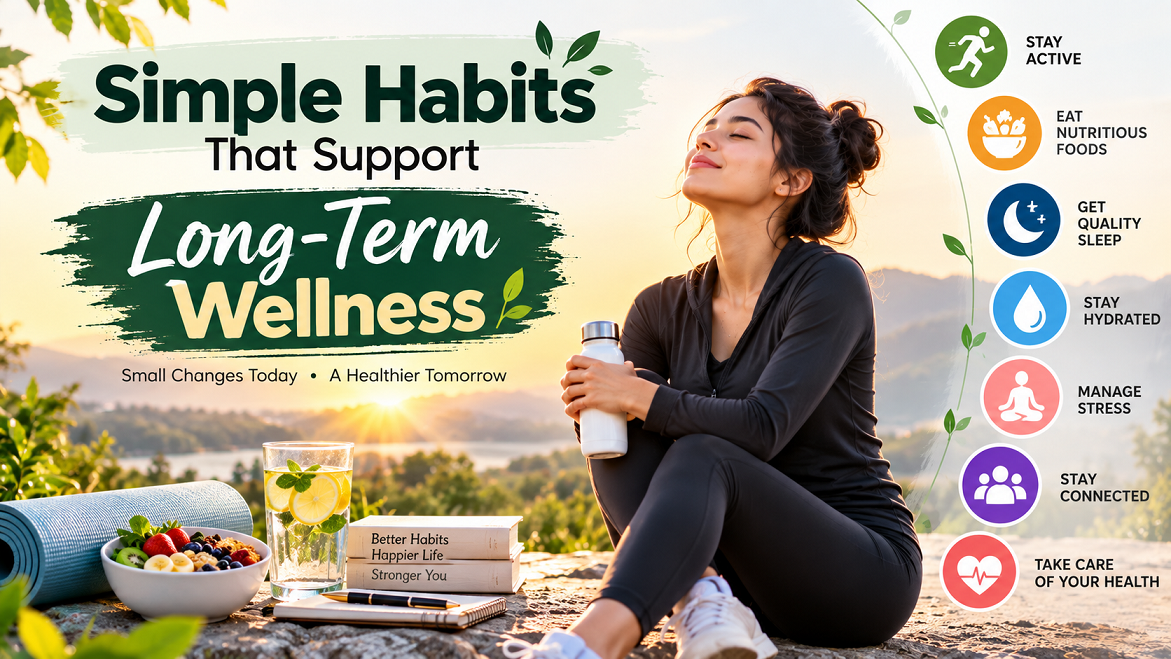
Long-term wellness rarely comes from a dramatic transformation. More often, it is built through ordinary choices repeated consistently: moving your body, eating nourishing foods, getting adequate sleep, managing stress, maintaining relationships, and keeping up with preventive healthcare.
Modern health guidance increasingly emphasizes sustainable lifestyle patterns rather than quick fixes. The World Health Organization (WHO), for example, identifies healthy eating, physical activity, avoiding tobacco, adequate sleep, and social connection as important components of self-care and well-being.
The good news is that many of these habits can be incorporated into a normal working day without requiring an expensive gym membership, complicated diet, or extreme schedule.
1. Make Regular Movement Part of Your Day
Physical activity is one of the simplest ways to support long-term health. It doesn’t have to mean intense workouts. Walking, cycling, household activities, recreational sports, stretching, and strength exercises can all contribute to an active lifestyle.
WHO recommends that adults aged 18–64 accumulate at least 150 minutes of moderate-intensity physical activity per week, or 75 minutes of vigorous activity, along with muscle-strengthening activities on at least two days per week. More activity can provide additional benefits.
Make movement easier
Instead of relying entirely on motivation, attach activity to things you already do:
- Walk during a phone call.
- Take stairs when practical.
- Take a short movement break during long periods of sitting.
- Walk after lunch or dinner.
- Perform simple strength exercises two or more days per week.
- Choose activities you genuinely enjoy.
For someone with a desk job, even several short walks throughout the day can make an otherwise sedentary schedule more active.
2. Build Meals Around Nutritious Foods
Healthy eating doesn’t require eliminating every food you enjoy. A sustainable approach focuses on the overall dietary pattern.
The American Heart Association recommends emphasizing vegetables, fruits, whole grains, legumes, nuts, fish and other nutritious protein sources while limiting foods high in added sugars, sodium, and unhealthy fats.
Try the simple plate approach
A practical everyday meal might include:
- Plenty of vegetables
- A serving of whole grains or another high-fiber carbohydrate
- Protein such as beans, lentils, eggs, fish, poultry, tofu, or yogurt
- A modest amount of healthy fat
- Water or another suitable unsweetened beverage
The exact combination can vary according to culture, budget, dietary requirements, and personal preferences.
Rather than attempting a perfect diet, focus on making the healthier choice more often.
3. Protect Your Sleep Schedule
Sleep is not simply downtime. It is an important part of physical and emotional well-being.
The CDC recommends that adults aged 18–60 get at least seven hours of sleep per night, while recommendations vary somewhat for older adults.
Create a consistent sleep routine
A few practical habits can make adequate sleep easier:
- Go to bed and wake up around the same times each day.
- Give yourself enough time for sleep rather than treating it as leftover time.
- Keep your bedroom comfortable, dark, and quiet.
- Reduce stimulating activities close to bedtime.
- Get natural light during the day.
- Address persistent sleep problems with a healthcare professional.
Consistency is particularly useful because a healthy routine is easier to maintain than repeatedly trying to recover from severe sleep deprivation.
4. Drink Enough Fluids
Hydration supports normal body functions, including temperature regulation and physical performance.
Rather than obsessing over a universal water target, pay attention to thirst, activity level, weather, diet, and individual circumstances. People who exercise heavily or spend time in hot environments may have substantially different fluid requirements.
A simple habit is to keep water accessible throughout the day and drink regularly rather than waiting until you are extremely thirsty.
5. Take Short Breaks From Prolonged Sitting
Even people who exercise regularly can spend much of their working day sitting.
If your work involves a computer, create opportunities to stand and move. For example, you might:
- Stand while reading a short message.
- Walk around during phone conversations.
- Stretch between meetings.
- Take a few minutes to walk every hour or so.
- Use stairs when appropriate.
Harvard Health similarly recommends incorporating small activities into the day rather than viewing wellness exclusively through the lens of formal exercise.
6. Develop Simple Stress-Management Habits
Stress is an unavoidable part of life, but having practical ways to respond to it can support overall well-being.
Your strategy doesn’t have to involve elaborate meditation programs. Consider:
- Slow breathing for a few minutes.
- Taking a walk outdoors.
- Writing down tasks that are occupying your mind.
- Practicing mindfulness.
- Spending time on enjoyable hobbies.
- Maintaining reasonable boundaries around work.
- Talking with someone you trust.
The goal isn’t to eliminate every stressful experience. Instead, build regular opportunities for recovery and relaxation into your routine.
7. Stay Connected With Other People
Wellness isn’t exclusively physical.
Family, friends, colleagues, community groups, and other meaningful relationships can provide companionship, emotional support, and a sense of belonging. Harvard Health’s recent review of longevity research identifies social connection alongside movement, nutrition, sleep, and stress management as an important lifestyle pattern associated with healthy aging.
Make connection intentional
If your schedule is busy, keep it simple:
- Call a friend while walking.
- Eat a meal with family.
- Schedule a weekly conversation with someone important to you.
- Participate in a community or recreational activity.
- Spend less time passively scrolling and more time interacting with people.
Small, repeated interactions can be easier to sustain than waiting for occasional major social events.

8. Avoid Tobacco and Be Thoughtful About Alcohol
Avoiding tobacco is one of the most consequential lifestyle choices a person can make for long-term health.
Alcohol deserves a similarly thoughtful approach. “Moderation” should not be interpreted as meaning alcohol is necessary for health; people who don’t drink do not need to start drinking.
Individual circumstances also matter. Certain medications, health conditions, pregnancy, and personal history can make alcohol inappropriate.
9. Keep Up With Preventive Healthcare
Healthy habits complement—not replace—professional healthcare.
Depending on your age, sex, family history, risk factors, and local medical guidance, preventive care may include routine checkups, vaccinations, dental care, vision examinations, blood pressure monitoring, and recommended screening tests.
A useful habit is to keep a simple record of appointments and follow recommendations from qualified healthcare professionals.
10. Make Your Habits Easy to Repeat
One of the most practical lessons from behavior change is that consistency matters more than an occasional burst of enthusiasm.
Instead of setting a goal such as:
“I will completely change my lifestyle this month.”
Try:
“I will walk for 20 minutes after work on Monday, Wednesday, and Friday.”
The second goal is specific, measurable, and connected to a routine.
Use habit stacking
Connect a new behavior to an established one:
- After brushing your teeth → spend two minutes stretching.
- After lunch → take a short walk.
- After finishing work → prepare tomorrow’s healthy snack.
- Before bed → put your phone away and begin your wind-down routine.
This reduces the amount of decision-making required.
11. Focus on Progress, Not Perfection
Nobody follows a perfect routine every day.
Travel, deadlines, family responsibilities, illness, celebrations, and unexpected events can disrupt even well-established habits. Missing one workout or eating an indulgent meal doesn’t erase months of healthy behavior.
A better approach is to return to your normal routine at the next reasonable opportunity.
Harvard Health’s guidance on healthy habits similarly emphasizes sustainable, everyday behaviors rather than perfection.
A Simple Daily Wellness Framework
A practical day might look something like this:
Morning
- Wake at a consistent time.
- Get some natural light.
- Drink water.
- Eat a nutritious breakfast if you prefer one.
- Include some movement.
During work
- Break up long periods of sitting.
- Choose balanced meals.
- Keep water accessible.
- Take brief mental breaks.
Evening
- Eat a balanced dinner.
- Take a relaxed walk if convenient.
- Spend some time connecting with family or friends.
- Reduce stimulating activities before bed.
Night
- Follow a consistent wind-down routine.
- Aim for sufficient sleep.
- Prepare for the following day so that healthy choices are easier.
This isn’t a rigid prescription. The most effective routine is one that fits your health needs, responsibilities, culture, schedule, and preferences.
Frequently Asked Questions
How many healthy habits should I start with?
Start with one or two. For example, you could begin with a daily walk and a consistent bedtime. Once those behaviors become easier, gradually add another habit.
Do I need intense exercise to stay healthy?
No. WHO guidance emphasizes that physical activity of different intensities provides health benefits, and some activity is better than none. Adults should work toward recommended weekly activity levels according to their abilities and circumstances.
Is healthy eating about avoiding all processed food?
Not necessarily. A healthy dietary pattern can include minimally processed foods. The focus should be on overall nutritional quality and regularly choosing vegetables, fruits, whole grains, legumes, nuts, and other nutritious foods while limiting foods high in added sugars, sodium, and unhealthy fats.
What if I don’t have time for a complete wellness routine?
Start with small changes. A short walk, a healthier meal choice, a consistent bedtime, or a few minutes of relaxation can be more realistic than attempting to overhaul your entire lifestyle overnight.
Conclusion
Long-term wellness is built through ordinary habits repeated over time. Regular movement, nutritious food, adequate sleep, hydration, stress management, meaningful social connection, avoidance of tobacco, and appropriate preventive healthcare form a practical foundation for a healthier lifestyle.
The key is not to create a perfect routine. Create a sustainable one.
Choose a few behaviors that fit naturally into your life, make them easy to repeat, and gradually build from there. Small actions may seem insignificant on an individual day, but consistency can turn them into a meaningful part of lifelong health.
