

Anxiety is a normal human response to stress, uncertainty, and perceived danger. Everyone experiences anxious thoughts or physical tension from time to time. However, when anxiety becomes persistent, difficult to control, or starts interfering with work, relationships, sleep, or everyday activities, it may be a sign of an anxiety disorder.
The good news is that anxiety can often be managed effectively. A combination of practical coping strategies, healthy routines, psychological techniques, and professional support can help people respond to anxious feelings more effectively. This guide explains evidence-informed anxiety coping techniques that can be incorporated into everyday life.
Important: This article is for educational purposes and does not replace diagnosis or treatment from a qualified healthcare professional.
What Is Anxiety?
Anxiety involves feelings such as worry, apprehension, nervousness, or fear. It can also produce physical symptoms, including muscle tension, sweating, trembling, difficulty concentrating, sleep problems, rapid breathing, or feeling constantly “on edge.”
Occasional anxiety is not necessarily a medical problem. The concern increases when symptoms persist, become difficult to control, or interfere with normal activities.
The goal of coping techniques is therefore not necessarily to eliminate every anxious feeling. Instead, effective coping focuses on reducing unnecessary distress, improving emotional regulation, and helping you continue with meaningful activities despite anxiety.
1. Practice Slow, Controlled Breathing
One of the simplest techniques to try when anxiety rises is controlled breathing.
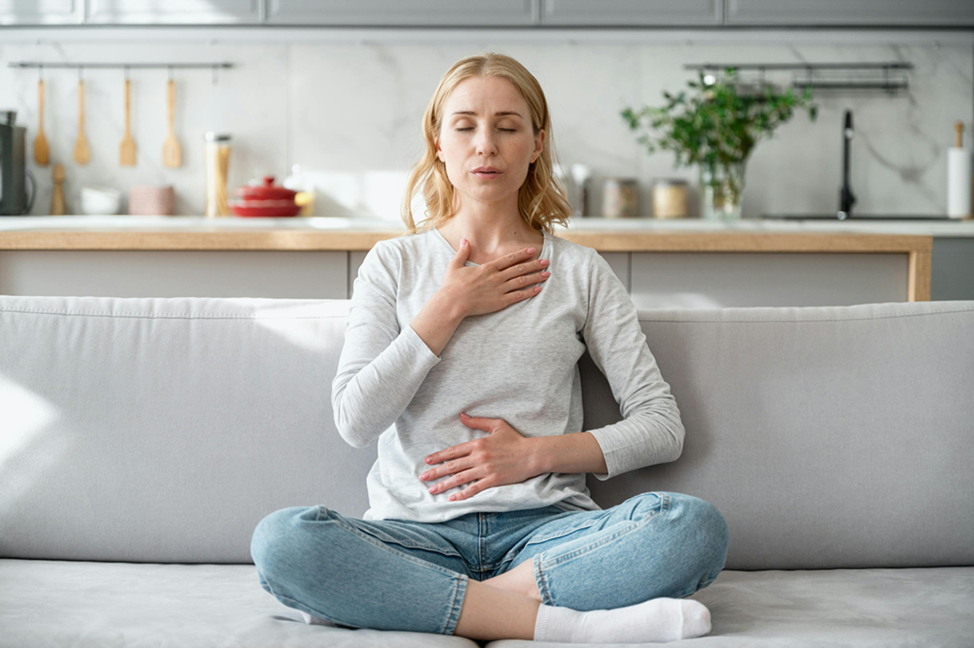
The NHS recommends breathing gently and regularly, allowing the breath to move comfortably toward the abdomen rather than forcing deep breaths. A simple approach is to breathe in gently through the nose and breathe out slowly, repeating the process for several minutes.
A simple breathing exercise
- Sit somewhere comfortable.
- Relax your shoulders.
- Breathe in gently through your nose.
- Allow your abdomen to expand naturally.
- Exhale slowly and comfortably.
- Continue for around five minutes.
Real-world example: Before a presentation, interview, examination, or difficult conversation, spend several minutes focusing on slow breathing rather than repeatedly rehearsing worst-case scenarios.
If breathing exercises make you dizzy or uncomfortable, stop and return to normal breathing.
2. Use Grounding Techniques
Grounding shifts attention away from anxious thoughts and toward the present environment.
A useful technique is the 5-4-3-2-1 exercise:
- Name 5 things you can see.
- Identify 4 things you can physically feel.
- Notice 3 things you can hear.
- Identify 2 things you can smell.
- Notice 1 thing you can taste.
The purpose is not to prove that your anxious thoughts are wrong. Instead, grounding gives your attention something concrete to focus on.
Mindful observation is another option: choose an object nearby and spend a minute carefully noticing its shape, texture, color, and other characteristics. NHS psychological resources include similar observation and breathing exercises for managing anxiety.
3. Challenge Unhelpful Thoughts
Anxiety can encourage the mind to predict negative outcomes with a high degree of certainty.
For example:
Anxious thought:
“I’m going to make a mistake, and everyone will think I’m incompetent.”
Try asking:
- What evidence supports this thought?
- What evidence does not support it?
- Am I assuming the worst possible outcome?
- What would I say to a friend in the same situation?
- Is there a more balanced explanation?
This approach is closely related to cognitive behavioral therapy (CBT), an extensively researched psychological treatment for anxiety disorders. CBT helps people recognize unhelpful patterns of thinking and behavior and develop more adaptive responses.
4. Avoid Making Avoidance Your Main Strategy
Avoiding everything that triggers anxiety can provide short-term relief, but persistent avoidance may maintain anxiety over time.
For example, someone who fears public speaking might continually avoid presentations. Although this reduces anxiety temporarily, it also prevents the person from discovering that they may be capable of handling the situation.
In CBT, exposure-based approaches can help people gradually face feared situations in a structured and supportive way. Exposure should be appropriate to the individual and is best undertaken with professional guidance when anxiety is severe.
5. Build a Consistent Sleep Routine
Poor sleep can make emotional regulation more difficult and may intensify feelings of anxiety.
Useful habits include:
- Keeping a consistent sleep and wake schedule.
- Creating a relaxing pre-bed routine.
- Limiting stimulating activities close to bedtime.
- Keeping the bedroom comfortable and suitable for sleep.
Healthy sleep habits are among the lifestyle measures recommended as part of managing anxiety, although lifestyle changes alone should not be considered a replacement for appropriate treatment.
6. Exercise Regularly
Physical activity can be a useful part of an overall anxiety-management plan.
You do not necessarily need an intense workout. Walking, cycling, swimming, stretching, recreational sports, or another activity you enjoy can make exercise easier to maintain consistently.
NIMH identifies exercise and other stress-management strategies as potentially helpful for reducing anxiety symptoms and supporting treatment.
Practical approach: Instead of setting an unrealistic goal such as exercising for an hour every day, start with a manageable routine that you can maintain.
7. Pay Attention to Caffeine and Other Triggers
Caffeine can contribute to feelings such as restlessness, rapid heartbeat, and nervousness in some people. If you notice that coffee, energy drinks, or other caffeinated products make your anxiety worse, reducing your intake may be worth trying.
NIMH specifically recommends avoiding excess caffeine as one practical strategy for managing stress and anxiety.
Keep a simple journal for a week and record:
What happened → What I felt → What I consumed → How intense the anxiety was
This can help you identify personal patterns rather than assuming that every anxious episode has the same cause.
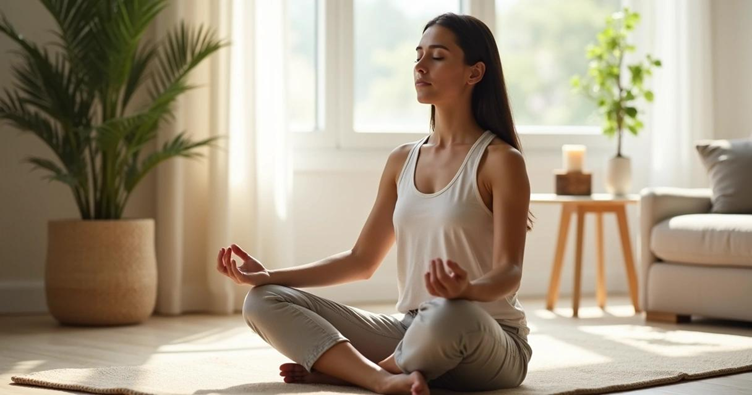
8. Practice Mindfulness
Mindfulness involves deliberately paying attention to the present moment without immediately judging or fighting what you notice.
For example, during a five-minute mindfulness exercise, you might focus on:
- Your breathing.
- Physical sensations.
- Sounds around you.
- Thoughts as they appear and disappear.
- Your surroundings.
Mindfulness and relaxation techniques are also used within psychological treatment approaches.
The aim isn’t to force your mind to become empty. Instead, it is to notice thoughts without automatically following every anxious prediction.
9. Stay Connected With Supportive People
Anxiety can encourage people to withdraw, but appropriate social support can be valuable.
Consider talking with:
- A trusted friend.
- A family member.
- A counselor or therapist.
- A doctor or other qualified healthcare professional.
- A peer support group.
NIMH notes that some people benefit from support groups and recommends communicating honestly with trusted people when experiencing anxiety.
A simple message such as “I’ve been feeling unusually anxious lately and could use someone to talk to” can be a useful first step.
10. Know When Professional Help Is Appropriate
Self-help techniques can be useful, but they are not always sufficient.
Consider seeking professional support if anxiety:
- Regularly interferes with work, school, or relationships.
- Causes significant sleep problems.
- Leads you to avoid important activities.
- Feels difficult to control.
- Continues for an extended period.
- Causes significant physical or emotional distress.
Evidence-based treatments for anxiety disorders include psychotherapy, with CBT commonly used, and medication when appropriate. Treatment decisions should be individualized with a qualified healthcare professional.
If anxiety symptoms are new, severe, or accompanied by concerning physical symptoms, medical evaluation may also be appropriate because anxiety-like symptoms can have other causes.
A Simple Anxiety Coping Plan
When anxiety suddenly increases, try this sequence:
Pause → Breathe → Ground → Identify the thought → Choose the next small action.
For example, if you’re anxious before an important meeting:
- Stop for two minutes.
- Take slow, comfortable breaths.
- Notice your surroundings.
- Identify the thought: “I must perform perfectly.”
- Replace it with a realistic statement: “I can prepare well and handle one step at a time.”
- Attend the meeting rather than automatically avoiding it.
Over time, practicing these skills can make them easier to access when anxiety appears.
Conclusion
Anxiety coping is not about never feeling worried or nervous. It is about developing practical skills that help you respond to anxiety without allowing it to control your decisions and daily life.
Slow breathing, grounding, healthier sleep habits, regular physical activity, mindfulness, balanced thinking, social support, and appropriately addressing avoidance can all play a role. When anxiety becomes persistent or significantly disrupts everyday functioning, professional treatment can provide additional support and evidence-based strategies.
Most importantly, there is no single coping technique that works perfectly for everyone. Start with one or two manageable strategies, practice them consistently, and seek professional guidance when anxiety becomes difficult to manage independently.
