

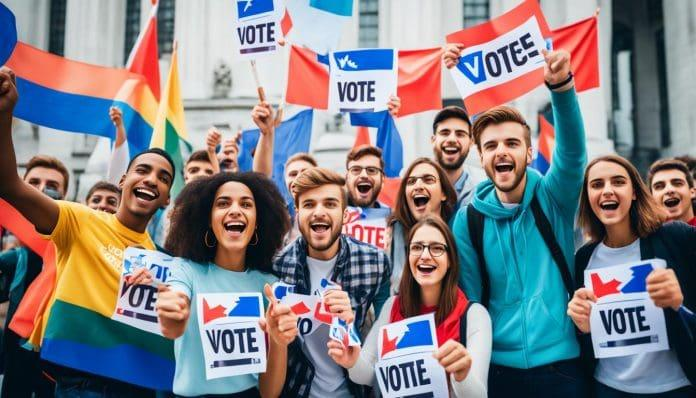
Politics is entering a new generational phase. In 2026, young people—particularly members of Generation Z—are influencing political conversations not only through elections, but also through digital activism, community organizing, protests, civic technology and new forms of political communication.
This does not mean that every young voter shares the same ideology or political priorities. Gen Z is politically diverse, and its views vary significantly by country, economic circumstances, gender, education, culture and age. What is changing is how many young people participate in political life and what they expect from political institutions.
The United Nations Development Programme (UNDP) reported in 2026 that youth-led movements and digital forms of participation are reshaping political and civic engagement around the world. At the same time, young people continue to face barriers to formal participation, including lower electoral turnout and limited representation in decision-making institutions.
The result is a political landscape in which young citizens are increasingly demanding not simply the right to vote, but a meaningful role in shaping policies, leadership and the future of democracy.
Why Youth in Politics Matters in 2026
Young people represent a substantial share of the world’s population, making their participation increasingly important to elections and democratic institutions.
However, demographic importance does not automatically translate into political power. OECD research shows that younger voters generally participate in elections at lower rates than older voters. Across OECD countries, turnout among 18–24-year-olds is, on average, 12 percentage points lower than among adults aged 25–50.
This creates an important contradiction: young people can represent a major electoral constituency while still being underrepresented at the ballot box and in political institutions.
The challenge for democracies is therefore not simply to attract young voters during election campaigns. It is to create political systems in which young people feel their participation produces meaningful results.
Gen Z Is Changing How Political Engagement Works
Politics Has Moved Beyond the Ballot Box
Traditional political participation has often centered on voting, joining political parties and attending political meetings. Gen Z has expanded that definition.
Young people can now participate through:
- Online campaigns and digital petitions
- Social-media discussions and political content
- Community organizations
- Youth-led protests
- Civic technology platforms
- Student organizations
- Volunteering and grassroots campaigns
- Public consultations and policy initiatives
- Independent political journalism and creator-led discussions
UNDP’s 2026 research highlights this shift, noting that some young people who participate less in formal electoral processes are active through digital activism, community initiatives and social movements.
This distinction matters. Lower voter turnout should not automatically be interpreted as political apathy. A young person who does not vote may nevertheless be highly engaged in political issues through other channels.
Social Media Has Become a Political Infrastructure
For Gen Z, political communication increasingly takes place where they already spend time: digital platforms.
Political parties and candidates now compete not only through television debates, newspapers and campaign rallies, but also through short videos, livestreams, podcasts, memes and creator collaborations.
The advantage is accessibility. A young person can encounter a political issue, research it, discuss it with peers and organize around it without belonging to a traditional political organization.
But this creates serious challenges as well.
Algorithms can reward emotionally powerful content over carefully researched information. Political misinformation can spread quickly, while manipulated videos and AI-generated content can make verification more difficult.
Therefore, digital political participation requires media literacy, source verification and strong standards for electoral integrity.
From Followers to Political Influencers
One of the most important developments is the emergence of young people as political communicators in their own right.
A young creator with a large online audience can sometimes reach more people than a traditional political organization. This changes the relationship between voters and political leaders.
Instead of asking only, “Which party do you support?”, young voters may ask:
- Does this candidate understand the issues affecting my generation?
- Are political promises supported by evidence?
- Can I directly question the candidate?
- Does the candidate communicate transparently?
- What has the candidate actually achieved?
- Is the campaign authentic or simply optimized for social media?
This does not eliminate traditional political institutions. Instead, it creates another layer of political accountability.
Gen Z and the Changing Priorities of Elections
Young voters are not a single political bloc. Nevertheless, several issues frequently appear in discussions about youth political engagement.
Jobs and Economic Security
Employment opportunities, wages, housing affordability, education costs and economic mobility can strongly influence younger citizens because many are entering adulthood during periods of economic uncertainty.
Political parties that want long-term youth support therefore need policies that address practical economic concerns rather than relying solely on generational slogans.
Education and Skills
Education remains closely connected to youth politics.
Young voters increasingly encounter a labor market shaped by artificial intelligence, automation and rapidly changing digital skills. Political debates around education are consequently expanding beyond university access to include vocational training, digital literacy, entrepreneurship and lifelong learning.
Climate and the Environment
Climate policy is another area in which younger generations have become highly visible.
For many young citizens, climate policy is not simply an environmental issue. It intersects with employment, energy prices, transportation, urban planning, public health and long-term economic security.
Digital Rights and Online Freedom
A generation raised with smartphones and social networks also faces political questions surrounding data privacy, online safety, artificial intelligence, platform regulation and freedom of expression.
These issues are likely to become increasingly important as governments develop policies for AI and digital platforms.
Youth Are Also Challenging Traditional Leadership
Political leadership has historically been dominated by older generations. This creates a representation gap when younger citizens make up a large portion of society but have limited influence within formal institutions.
International IDEA has repeatedly highlighted the underrepresentation of youth in political decision-making. Its work argues that young people need genuine opportunities to participate in formal politics rather than being treated simply as campaign audiences.
The solution is not necessarily to replace older politicians with younger politicians. Effective democracy benefits from intergenerational leadership.
Young leaders can bring new perspectives on technology, culture and emerging economic challenges, while experienced policymakers can provide institutional knowledge.
The strongest democratic systems create opportunities for both.
Real-World Examples of Youth Political Influence
Nepal: From Youth Mobilization to Voting
Nepal provides an important example of how youth activism can move toward formal political participation.
UNDP reported in March 2026 that the country’s elections brought hundreds of thousands of first-time voters into the electoral process. The organization highlighted the experience of young people who became politically engaged following youth-led mobilization around corruption and governance concerns.
The example illustrates an important principle: political activism and electoral participation do not have to be competing forms of engagement. Activism can sometimes motivate citizens to participate more directly in elections.
India: Political Campaigns Are Adapting to Gen Z
India also demonstrates how political communication is evolving.
In 2026, political leaders and parties increasingly targeted younger audiences through platforms such as Instagram and Snapchat, using shorter videos, informal communication and culturally familiar digital formats. Reuters reported that Prime Minister Narendra Modi’s political outreach included a stronger focus on Instagram and youth-oriented content following Gen Z-led protests.
The broader lesson is not that Gen Z belongs to a particular political ideology. Rather, political organizations are recognizing that younger citizens expect political communication to exist within the digital environments they already use.
The Biggest Challenge: Turning Attention Into Representation
Youth participation becomes meaningful only when it influences decisions.
A young person may sign a petition, attend a demonstration or post political content online. But if political institutions do not provide pathways for those concerns to reach policymaking, frustration can grow.
UNDP’s 2026 analysis emphasizes the importance of creating institutional pathways that translate youth participation into meaningful political influence.
That can include:
- Youth advisory councils
- Student and community representation
- Youth participation in policymaking
- Accessible public consultations
- Civic education
- Youth leadership programs
- Transparent political recruitment
- Greater opportunities for young candidates
- Digital participation platforms
The goal should be to move from youth consultation to youth co-creation.
What Political Parties Need to Understand
Political organizations seeking long-term youth support need to rethink engagement.
Authenticity Matters
Young voters can distinguish between genuine engagement and campaign messaging designed purely for social media.
A candidate who communicates online but ignores questions from young constituents may quickly lose credibility.
Policy Matters More Than Generational Branding
Using youthful language or popular platforms is not enough.
Young citizens ultimately need to see credible answers on employment, education, housing, technology, climate and governance.
Listening Should Continue After Election Day
Youth engagement should not disappear once votes have been counted.
Political parties and elected representatives can build stronger relationships by maintaining regular consultations, publishing progress reports and explaining why certain policies succeed or fail.
The Risks of Digital-First Politics
The digital transformation of youth politics also creates risks.
Misinformation
False political claims can spread rapidly, especially when content is designed to provoke anger or fear.
Political Polarization
Social platforms can encourage people to interact primarily with information that reinforces existing beliefs.
Deepfakes and AI-Generated Content
Artificial intelligence is making it increasingly difficult for ordinary users to determine whether political audio, video or images are authentic.
Online Harassment
Young political activists, particularly women and marginalized groups, can face harassment and intimidation online.
These risks make digital literacy an essential component of modern civic education.
How Young People Can Participate Responsibly
Young citizens do not need to become professional politicians to influence democracy.
Practical participation can begin with simple actions:
- Verify political claims before sharing them.
- Compare multiple credible sources rather than relying on a single social-media account.
- Understand local issues, not only national politics.
- Participate in elections when eligible.
- Engage respectfully with people who disagree.
- Join community or civic organizations.
- Ask candidates specific questions about measurable policies.
- Track whether elected representatives fulfill major promises.
These habits turn political interest into informed citizenship.
What Democracy Can Learn From Gen Z
Perhaps the most important lesson is that democratic participation is evolving.
Gen Z is not necessarily rejecting democracy. In many cases, young people are demanding a democracy that feels more responsive, transparent and accessible.
International IDEA notes that young people are often underrepresented in formal political institutions while simultaneously using alternative forms of political participation. Its research also emphasizes the importance of civic education and meaningful opportunities for young people to participate in decision-making.
The challenge for governments is therefore to connect these new forms of participation with established democratic institutions.
A healthy democracy should not force citizens to choose between voting, activism, digital engagement and community participation. It should provide legitimate pathways for all of them.
Conclusion
Youth in politics in 2026 is about far more than young people casting ballots.
Gen Z is changing the language of political communication, experimenting with new forms of activism, demanding greater transparency and challenging traditional ideas about political leadership. At the same time, young people continue to face barriers that limit their participation in elections and formal institutions.
The future of democracy will depend partly on whether governments and political organizations can convert youthful political energy into meaningful representation.
The most effective response is neither to romanticize Gen Z nor to dismiss it as inexperienced. Instead, democratic institutions should listen to young people, provide credible avenues for participation, strengthen civic education and give them genuine opportunities to influence decisions.
If that happens, youth participation can become more than an election-season strategy. It can become a long-term investment in stronger, more inclusive and more responsive democracy.
