


Technology headlines can sometimes feel distant—filled with artificial intelligence breakthroughs, cybersecurity incidents, new devices, regulatory disputes, and billion-dollar investments. Yet many of these developments have a direct effect on ordinary people.
As of September 29, 2026, several technology stories point toward a common shift: technology is moving from tools that simply respond to users toward systems that can increasingly anticipate requests, make decisions, access information, and perform tasks on a user’s behalf. At the same time, privacy, cybersecurity, transparency, and human control are becoming more important.
For everyday users, the key question is not simply “What new technology was announced?” but rather “What does this change mean for my phone, money, work, privacy, and daily life?”
1. AI Is Moving From Chat bots to Digital Agents
One of the biggest technology trends today is the development of AI agents.
Traditional AI assistants generally wait for a question. Agentic AI is designed to take a series of actions to accomplish a goal. For example, instead of asking an AI to find a hotel, a future-oriented agent could potentially search options, compare prices, complete forms, and help organize the booking process.
Recent technology developments show companies increasingly building AI into everyday devices and services. Qualcomm, for example, is promoting smartphones designed around “agentic AI,” where AI could become a more central way of interacting with applications.
What does this mean for ordinary users?
It could make routine digital tasks easier.
Imagine telling your phone:
“Find me the cheapest suitable train option for Friday and put the details in my calendar.”
Instead of opening several apps yourself, an AI agent could eventually coordinate those steps.
However, convenience comes with responsibility. The more authority an AI system receives, the more important it becomes to understand what accounts, files, messages, payment information, and devices it can access.
2. AI Privacy Is Becoming a Practical Issue
Privacy is no longer simply a technical concern discussed by cybersecurity professionals. It is increasingly relevant to ordinary consumers.
Recent debates around AI services and digital platforms demonstrate why personal information matters. For example, Google is challenging European Commission orders involving access to certain services and user data, arguing that sharing sensitive search information could create privacy and security risks. The European Commission has argued that its safeguards address those concerns.
For users, the lesson is straightforward: the information you provide to digital services has value.
That includes:
- Search history
- Location information
- Photos
- Voice recordings
- Emails
- Shopping activity
- Financial information
- Health-related information
- Personal conversations
A simple privacy habit
Before giving an AI application access to an account, ask:
- What information can it access?
- Does it actually need that access?
- Can I revoke the permission later?
- Is sensitive information being uploaded?
- Can I use the service without connecting my most important accounts?
These questions take only a few seconds but can significantly improve digital privacy.
3. Cybersecurity Headlines Matter Even If You Are Not a “Tech Person”
Cybersecurity vulnerabilities frequently appear in technology news, but users sometimes assume these problems only affect large companies.
That assumption can be dangerous.
In September 2026, Google disclosed that a vulnerability in Pixel smartphone software had been exploited in limited, targeted attacks. The vulnerability could potentially allow attackers to move beyond the modem’s security boundaries, and reports indicated that exploitation could occur without requiring the victim to click a malicious link.
The broader lesson is more important than the specific device:
Even trusted devices can contain security vulnerabilities.
What should ordinary users do?
Keep operating systems and applications updated.
Also:
- Enable automatic security updates where available.
- Use strong, unique passwords.
- Enable two-factor authentication.
- Avoid installing applications from questionable sources.
- Be careful with unexpected login requests.
- Regularly review account activity.
- Back up important files.
Microsoft’s September 2026 security updates also emphasize the changing security environment created by AI agents and the need for stronger controls around agent activity.
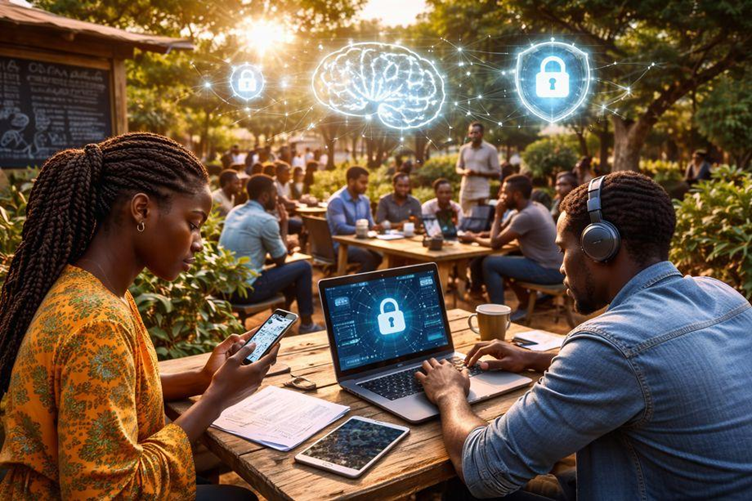
4. Smart Glasses Could Change How We Interact With Technology
Another major theme in today’s technology coverage is the growth of AI-powered wearable devices.
Smart glasses and other wearable AI products are being developed to provide information through cameras, microphones, speakers, displays, and voice-based assistants.
Reuters recently reported growing privacy concerns surrounding AI-powered glasses and similar devices because they can potentially record audio or video in public and private environments.
Why does this matter?
A smartphone is usually visible when someone is taking a photo or recording video.
Wearable devices can be much less obvious.
This creates new questions about consent and social etiquette.
For users, a useful rule is simple: if a device has a camera or microphone, understand when it is active and what information it can collect.
5. AI Could Change Online Shopping
AI is also moving into commerce.
Instead of searching through dozens of products, users could increasingly ask AI systems to find products based on a description, compare options, and potentially assist with purchasing.
But financial transactions introduce a different level of risk.
Several major banks have warned about potential fraud, scams, privacy problems, and consumer-protection challenges associated with AI shopping agents.
What should shoppers remember?
Don’t automatically assume that an AI recommendation is impartial.
An AI system may have access to commercial information, product rankings, advertisements, or retailer integrations that influence what it presents.
Before purchasing expensive products:
- Compare multiple sources.
- Check the retailer yourself.
- Confirm the final price.
- Review shipping and return policies.
- Never share unnecessary banking credentials.
- Verify payment requests independently.
AI can make shopping faster, but faster does not always mean safer or better informed.
6. AI Is Already Affecting Work
Technology headlines about AI sometimes focus on futuristic possibilities, but AI is already influencing ordinary workplaces.
Google’s September 2026 AI & Economy research, for example, shows AI being used across occupations and industries. The company reports particularly significant AI use in creative industries in India, where arts, design, and media occupations represent a substantial share of work-related AI usage.
For an ordinary employee, this does not necessarily mean that an entire job will disappear.
More commonly, individual tasks may change.
For example
A marketing professional might use AI to:
- Generate initial content ideas
- Analyze large datasets
- Summarize research
- Create first drafts
- Automate repetitive reports
The human still needs to check accuracy, make strategic decisions, understand customers, and take responsibility for the final result.
This makes AI literacy increasingly useful across many careers—not just software development.
7. Human Judgment Is Becoming More Valuable, Not Less
One interesting consequence of increasingly capable AI is that human judgment becomes particularly important when the system can act independently.
AI can process enormous amounts of information quickly, but users still need to determine:
- Whether information is trustworthy
- Whether an answer makes sense
- Whether an action is appropriate
- Whether confidential information should be shared
- Whether a recommendation fits their circumstances
This is especially important for financial, legal, medical, employment, and security-related decisions.
AI should often be treated as a decision-support tool rather than an unquestionable authority.
8. What Ordinary Users Should Do Right Now
You don’t need to become a cybersecurity expert or AI engineer to benefit from today’s technology.
A practical checklist is enough.
Update your devices
Install operating-system and application security updates promptly.
Review permissions
Check which apps have access to your camera, microphone, location, contacts, photos, and files.
Strengthen account security
Use unique passwords and two-factor authentication for important accounts.
Be selective with AI
Don’t paste confidential business information, passwords, financial details, or sensitive personal documents into an AI tool unless you understand how that information is handled.
Verify important AI-generated information
AI can produce useful answers, but important facts should be checked against reliable sources.
Learn basic AI skills
Understanding how to write good prompts, verify responses, recognize limitations, and protect personal information is becoming a practical digital skill.
Technology Headlines Are Really About Everyday Choices
The most important technology developments of 2026 are not necessarily about futuristic gadgets. They are about who controls technology, what information technology can access, and how much responsibility users give automated systems.
AI agents may save time. Wearables may make computing more convenient. Smarter smartphones may simplify everyday tasks. Automated shopping may reduce effort. At the same time, cybersecurity threats and privacy challenges require greater awareness.
The right response is neither blind enthusiasm nor unnecessary fear.
Instead, ordinary users can take a practical approach: use technology where it genuinely provides value, understand what information it requires, maintain strong security habits, and keep humans involved when the consequences matter.
Technology is becoming more powerful, but informed users remain an essential part of making that technology useful, secure, and trustworthy.
