






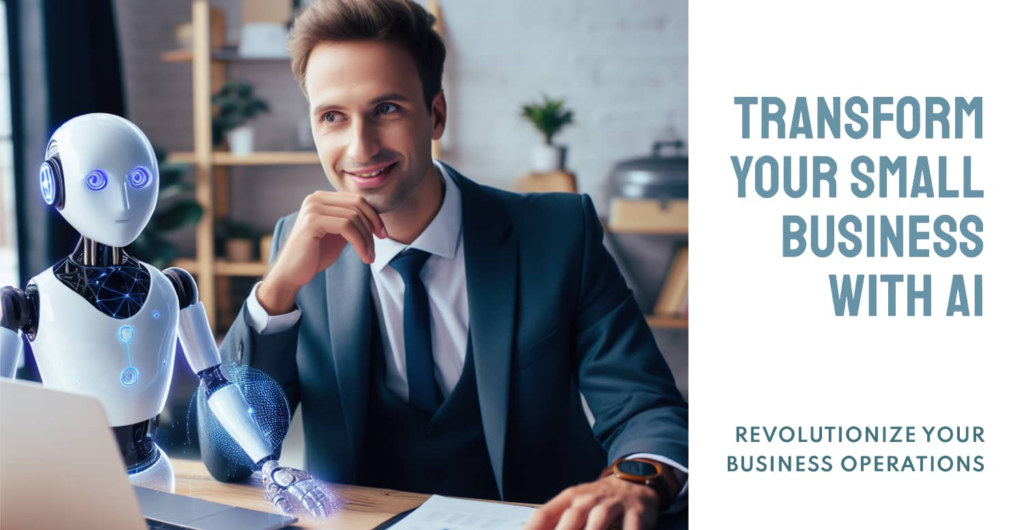
Artificial Intelligence (AI) is no longer confined to tech giants or Fortune 500 companies. In 2026, AI tools and systems have become increasingly accessible, affordable, and practical for small business owners — enabling them to automate tasks, personalize customer experiences, unlock operational insights, and compete more effectively in crowded markets. Today’s small enterprises leverage AI not as a futuristic add-on but as a strategic engine for growth and efficiency.
What AI Means for Small Businesses
At its core, AI refers to computer systems capable of performing tasks that previously required human intelligence — such as language understanding, pattern recognition, decision-making, and prediction. These capabilities are now integrated into business software, platforms, and services accessible to small and medium-sized enterprises (SMEs).
AI for small businesses spans many technologies, including:
- Machine Learning: Tools that analyze data to recognize patterns and make predictions.
- Natural Language Processing: Used in chatbots and customer support interfaces.
- Predictive Analytics: Forecasts trends, demand, and performance.
- Automation Engines: Handle repetitive or rule-based tasks (e.g., scheduling, invoicing).
Core Ways AI Is Transforming Small Business Operations
Automating Routine Tasks
One of the most practical benefits of AI is automation. Small business owners often juggle multiple roles — from managing schedules to processing paperwork. AI tools can take over repetitive tasks, freeing up owner and team time for strategic work such as customer engagement or product development.
Examples include:
- Automated scheduling and calendar management
- AI-driven bookkeeping and invoice processing
Email sorting and response drafting
Such automation saves time and reduces human error, improving day-to-day efficiency.


Enhancing Customer Experience
AI delivers personalized interactions that help small businesses build stronger relationships with customers:
- Chatbots answer basic queries and guide users through websites 24/7.
- Recommendation Engines tailor product suggestions based on buyer behavior.
- Sentiment Analysis Tools can interpret customer feedback in real time.
These features elevate service quality without requiring large support teams. According to industry observations, AI-enhanced customer service has become a cornerstone of competitive small business strategy.
Improving Marketing and Sales
AI is transforming how small businesses approach marketing and sales:
- AI-guided analytics help identify customer preferences and optimize campaigns.
- Automated content tools assist with blog posts, social media, and email newsletters.
- Predictive sales forecasting allows owners to understand demand patterns and make pricing or inventory decisions.
By using AI to tailor messaging and target audiences more precisely, small enterprises can increase engagement and return on marketing investment.
Data-Driven Decision Making
Data is a powerful asset — but without the right tools, it’s often underused. AI excels at analyzing large datasets to extract actionable insights:
- Spotting trends across sales history
- Identifying seasonal demands
- Revealing opportunities for cost savings
Small business owners can make better strategic decisions when AI provides clear, evidence-backed insights rather than relying solely on intuition.
Inventory and Workflow Optimization
Inventory management has traditionally been a challenge for small retailers and service providers. AI systems can forecast demand and automate reordering when stock falls below preset levels. By minimizing overstock and understock situations, businesses save on holding costs and avoid lost sales.
In internal workflows, AI platforms like low-code automation tools streamline processes such as data capture, notifications, and lead nurturing — dramatically improving speed and accuracy.
Real-World Examples of AI in Small Business
- A boutique retailer implements an AI chatbot to handle customer queries and order requests, reducing manual workload and response times.
- A local café uses predictive analytics to optimize inventory based on weather trends and historical footfall, cutting waste and ensuring popular items remain in stock.
- An online service provider leverages AI email tools to personalize outreach and tailor offers based on customer behavior, boosting engagement rates.
These applications illustrate how AI scales from simple automation to strategic insights that drive measurable growth.
Challenges and Practical Considerations
AI offers significant benefits, but successful adoption requires thoughtful planning:
- Data Quality: AI insights depend on clean, structured data.
- Integration Costs: Some tools may require upfront investment or technical support.
- Employee Training: Teams need familiarity with new systems to maximize value.
- Ethical Use: Businesses should ensure that customer privacy and data protection policies are respected.
Addressing these considerations proactively helps businesses avoid common pitfalls and build long-term technology strategies.
Leveraging AI Responsibly
To get started with AI:
- Identify clear use cases — begin with tasks that consume the most time or resources.
- Choose scalable tools that fit your budget and integrate with existing systems.
- Measure impact — track performance improvements against defined business goals.
- Educate your team — promote understanding and trust in AI systems.
Conclusion
Artificial intelligence has moved from being a luxury for large corporations to a practical, value-driven tool for small businesses. By automating routine workloads, enhancing customer interactions, enabling smarter marketing, and providing data-driven insights, AI empowers small enterprises to operate more efficiently and compete with larger players. As AI continues to evolve, businesses that embrace its capabilities thoughtfully and responsibly will be better positioned for innovation and growth in the digital economy.


