

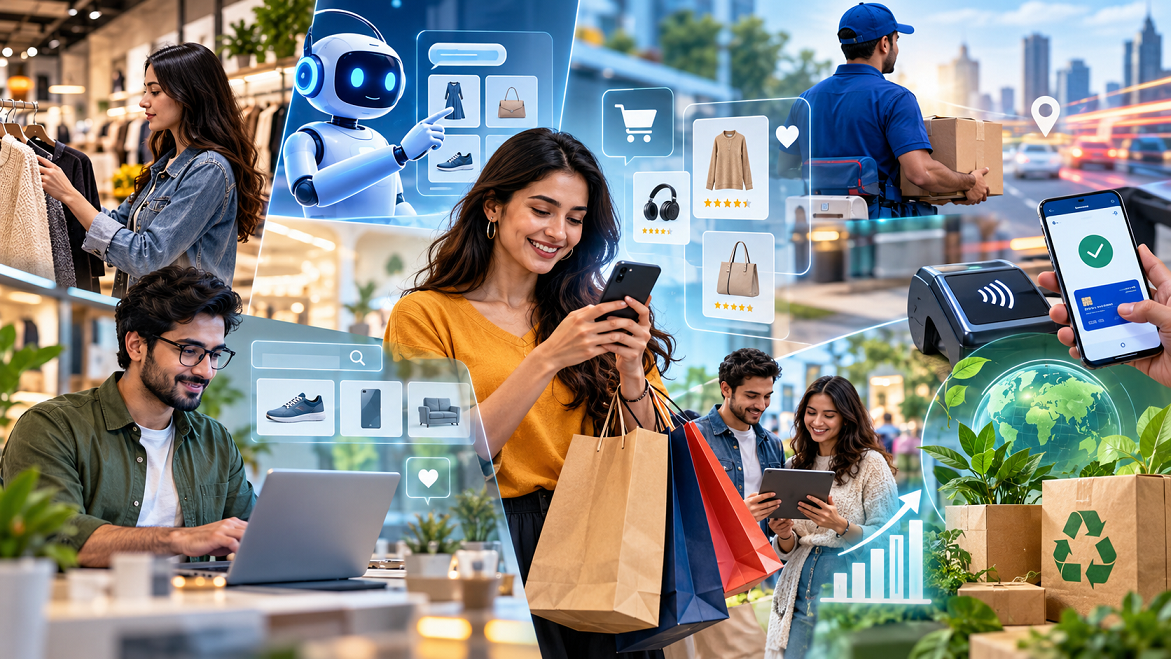
Consumer behavior is changing quickly. The way people discover products, compare prices, make purchasing decisions, interact with brands, and evaluate value is being reshaped by technology, economic pressures, and changing expectations.
Recent research from Deloitte, McKinsey, and other major industry sources points to several important developments in 2026: consumers are becoming more deliberate about value, artificial intelligence is entering the shopping journey, convenience is becoming increasingly important, and experiences and personalization are influencing purchasing decisions.
For businesses, understanding these trends is not simply about following headlines. It is about recognizing how customers are changing and adapting products, services, marketing, and customer experiences accordingly.
1. Consumers Are Becoming More Focused on Value
One of the clearest consumer trends is the growing importance of value for money.
Value does not necessarily mean choosing the cheapest product. Consumers increasingly consider the complete proposition: price, quality, durability, customer service, convenience, loyalty benefits, and overall experience.
Deloitte’s 2026 Global Retail Industry Outlook describes value-seeking as a structural shift, reporting that four in ten Americans surveyed demonstrate deal-driven or cost-conscious behavior. The research also found that non-price factors can account for a substantial portion of consumers’ perceptions of brand value.
What this means for businesses
Companies can respond by making their value proposition clearer rather than simply cutting prices.
For example, a retailer might offer:
- Better-quality private-label products
- Loyalty rewards
- Bundled products
- Flexible delivery options
- Transparent pricing
- Longer-lasting products
- Helpful customer support
A customer who pays slightly more for a product that lasts longer may still consider it better value.
2. AI Is Changing How People Discover Products
Artificial intelligence is moving from an experimental technology into the consumer shopping journey.
Consumers are increasingly using generative AI tools to research products, compare options, understand specifications, and narrow down choices. Deloitte reported in early 2026 that 23% of surveyed consumers already used generative AI for product discovery while shopping.
This creates an important change for businesses: being visible in traditional search may no longer be the only discovery challenge.
AI assistants can summarize products and make recommendations based on a user’s requirements.
The rise of AI-assisted shopping
Imagine someone asking:
“I need comfortable running shoes under ₹8,000 that are suitable for beginners.”
Instead of visiting several websites, the consumer may increasingly ask an AI assistant to identify suitable products.
That means product descriptions, specifications, reviews, pricing information, availability, and structured product data need to be accurate and easy for machines to understand.
Deloitte’s research also identifies the movement from conventional search toward AI-mediated shopping as an important development in retail.
3. Personalization Is Becoming a Normal Expectation
Consumers are exposed to personalized recommendations every day.
Streaming platforms recommend entertainment. Online retailers recommend products. Food-delivery applications suggest restaurants. Advertising platforms tailor messages according to browsing and purchasing behavior.
As AI improves, personalization is becoming increasingly sophisticated.
The goal is not simply to show customers more products. Effective personalization attempts to reduce the amount of effort required to find something relevant.
A practical example
Consider an online clothing store.
Instead of showing every visitor the same homepage, the site could use appropriate customer data to highlight:
- Previously viewed categories
- Relevant sizes
- Seasonal products
- Complementary items
- Previously purchased styles
However, personalization needs to be balanced with transparency and responsible data practices. Consumers should understand how their information is being used, particularly when AI is involved.

4. Convenience Continues to Influence Purchasing Decisions
Modern consumers often value time as much as money.
Fast delivery, easy returns, digital payments, one-click purchasing, mobile ordering, and convenient customer support can significantly reduce friction in the buying process.
This is particularly visible in India’s rapidly evolving digital commerce environment. A 2026 Google-Deloitte report projected substantial growth in India’s e-commerce market and highlighted digital discovery, creator influence, and quick commerce as important forces shaping the market.
Convenience does not mean that every customer needs the fastest possible delivery. It means businesses should identify unnecessary friction and remove it.
For example, a complicated checkout process can cause customers to abandon purchases even when they genuinely want the product.
5. Omnichannel Shopping Is Becoming More Integrated
The traditional distinction between online and offline shopping is becoming less meaningful.
Consumers may discover a product on social media, research it through an AI assistant, visit a physical store, compare prices on their smartphone, and eventually purchase through an app.
This is an omnichannel customer journey.
Deloitte’s research highlights the continued importance of integrating physical and digital experiences as consumer expectations evolve.
What an integrated experience looks like
A strong omnichannel strategy might allow customers to:
- Browse products online.
- Check local availability.
- Visit a store.
- Receive personalized assistance.
- Purchase through mobile or in-store checkout.
- Track delivery digitally.
- Return or exchange through another channel.
The objective is to make the journey feel like one connected experience rather than several disconnected systems.
6. Social and Creator-Led Commerce Are Growing
Social media is no longer used only for brand awareness.
It increasingly acts as a discovery and purchasing environment.
Creators can introduce products through demonstrations, reviews, tutorials, live streams, and personal recommendations. In India, Google and Deloitte’s 2026 research highlighted creator influence as an important component of the country’s changing commerce environment.
For brands, this means traditional advertising is only one part of the customer journey.
Authentic demonstrations can sometimes provide consumers with more useful information than conventional promotional messages.
Businesses should therefore evaluate creators not only by follower count but also by:
- Audience relevance
- Engagement quality
- Content credibility
- Product-category fit
- Transparency around commercial relationships
7. Consumers Want Better Experiences, Not Just Transactions
Price remains important, but the customer experience can influence whether consumers return.
Deloitte’s 2026 consumer research describes retail as moving increasingly toward experience-driven interactions. Examples include physical retail spaces designed as lifestyle destinations and brands using experiences to create stronger customer connections.
An experience can be simple.
A clothing retailer might provide knowledgeable assistance and easy exchanges. A coffee shop might create a comfortable environment. An online business might offer exceptionally clear product information and responsive support.
The common factor is reducing frustration while creating reasons for customers to remember the brand.
8. Sustainability Is Becoming More Practical
Sustainability remains part of the consumer conversation, but the discussion is becoming increasingly connected to tangible product and business decisions.
Consumers may consider:
- Product durability
- Packaging
- Repair ability
- Reuse
- Resale
- Materials
- Supply-chain practices
- Energy efficiency
Deloitte identifies resale, supply-chain sustainability, technology, and evolving ESG requirements as important areas within retail sustainability.
For businesses, credible sustainability communication matters. Environmental claims should be specific, evidence-based, and transparent rather than vague marketing language.
9. Trust and Transparency Matter More in an AI-Driven Market
As consumers encounter more AI-generated recommendations, content, advertising, and customer service, trust becomes increasingly important.
Consumers need confidence that product information is accurate and that businesses are handling their data responsibly.
This is particularly relevant when AI systems influence purchasing decisions.
For example, an online retailer should ensure that an AI chat bot does not provide incorrect information about:
- Prices
- Product specifications
- Return policies
- Availability
- Delivery timelines
- Discounts
Deloitte’s 2026 research on India’s consumer economy similarly identifies trust, transparency, and governance as increasingly important alongside AI-driven growth.
10. Consumers Are Becoming More Resourceful
Another important development is the rise of the resourceful consumer.
Instead of automatically purchasing the most expensive or newest option, consumers may compare alternatives, look for promotions, consider second-hand products, repair existing goods, or delay purchases.
This does not necessarily indicate that consumers have stopped spending. Rather, purchasing decisions are becoming more deliberate.
McKinsey’s 2026 State of the Consumer research identifies the resourceful consumer alongside technology-driven purchasing, health, and the experience economy as major forces influencing consumer behavior.
For businesses, this creates an opportunity to communicate why a product deserves its price.
What Businesses Should Learn From These Consumer Trends
The biggest lesson is that consumers are not changing in just one direction.
A customer can simultaneously want:
- Lower prices
- Better quality
- Faster service
- Personalization
- Sustainability
- Convenience
- Human support
- Greater transparency
Businesses therefore need to think about the complete customer experience.
A useful approach is to regularly examine five questions:
1. Is our value proposition clear?
Can customers quickly understand why they should choose the product?
2. Is purchasing easy?
Look for unnecessary steps in discovery, checkout, payment, delivery, and returns.
3. Can customers find reliable information?
Accurate product information is increasingly important for both human shoppers and AI-powered discovery.
4. Are we using customer data responsibly?
Personalization should improve the experience without compromising trust.
5. Are we listening to customers?
Consumer trends are useful, but direct customer feedback remains one of the most valuable sources of business insight.
Conclusion
The most important consumer trends in the news point toward a marketplace that is becoming more value-conscious, digitally assisted, personalized, convenient, experience-oriented, and trust-sensitive.
Artificial intelligence is changing product discovery, while economic pressures are encouraging consumers to examine value more carefully. At the same time, omnichannel shopping, creator-led commerce, sustainability, and customer experience continue to influence how people interact with brands.
Businesses do not need to follow every trend blindly. The more useful approach is to understand the underlying consumer needs: people want products that provide meaningful value, experiences that save time and effort, information they can trust, and interactions that feel relevant to them.
Companies that continually listen to customers, measure real behavior, communicate transparently, and improve the fundamentals of their customer experience will be better positioned to respond as consumer expectations continue to evolve.
