

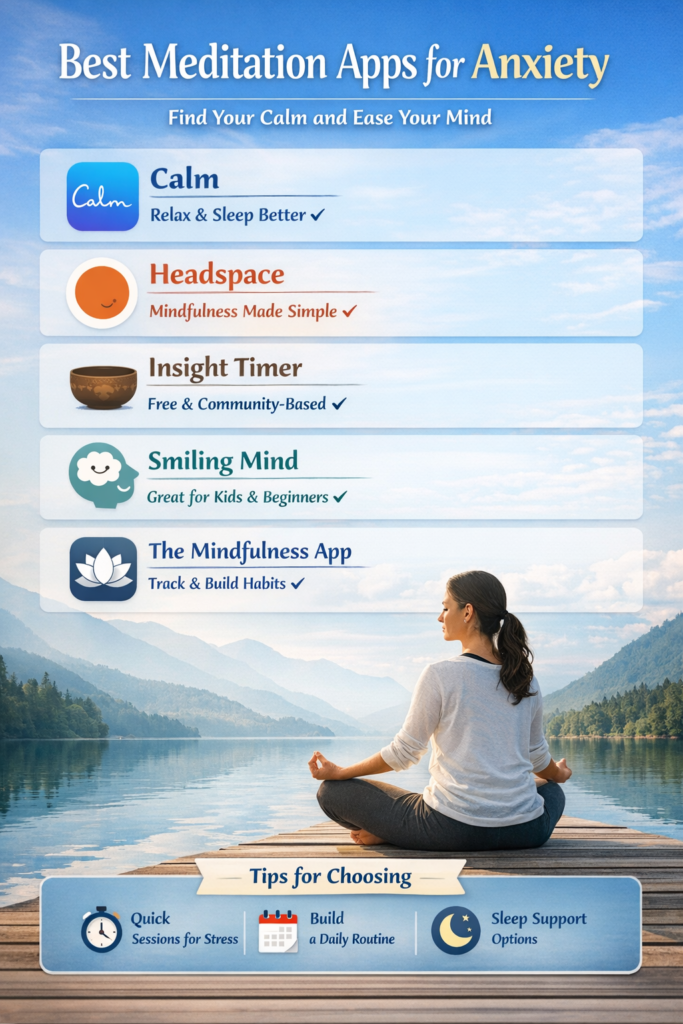
Anxiety can feel overwhelming, persistent, and hard to manage—but modern tools like meditation apps are helping millions find relief and build resilience. Research shows that consistent use of meditation and mindfulness techniques can reduce stress and support emotional balance. Meditation apps make these practices approachable, especially for beginners and people with busy schedules.
This article explores the best meditation apps for anxiety, explains their unique strengths, and offers real-world guidance on choosing the right one for you.
Why Meditation Apps Work for Anxiety
Meditation and mindfulness practices train your attention, regulate your breathing, and help you observe thoughts without judgment. Over time, this reduces reactive stress responses and can lower the intensity of anxious thoughts. While apps aren’t a substitute for clinical care, they’re a useful companion for everyday anxiety management.
Top Meditation Apps for Anxiety Relief
Below, we break down leading mental wellness apps that are especially effective for reducing anxiety and building long-term emotional habits.
1. Calm – The All-Around Stress and Anxiety Support
Best for: Holistic stress relief, guided meditation, sleep support
- What it offers: Calm provides guided meditations, breathing exercises, relaxing soundscapes, and sleep stories that support relaxation and mental recovery throughout the day.
- Why it matters: Scientific research indicates apps like Calm can help reduce stress and improve mindfulness and self-compassion, boosting users’ sense of calm in daily life.
- Real-world use: Use Calm’s “Daily Calm” in the morning to start with intention, then a short breathing session at midday to reset during stressful moments.
2. Headspace – Mindfulness for Everyday Life
Best for: Beginners and structured meditation learning
Headspace is known for its approachable and playful teaching style, offering exercises tailored to stress, anxiety, sleep, and focus. Its guided courses help users build a consistent meditation habit, making mental wellness a daily routine rather than an occasional escape.
- Tip: Try building a 10-minute daily routine with Headspace to strengthen focus and ease anxious tendencies over time.
3. Insight Timer – Free and Community-Driven Practice
Best for: Budget-friendly and diverse meditation styles
Insight Timer offers thousands of guided meditations from different traditions, all free. Its range includes mindfulness practices tailored to stress, anxiety, and emotional regulation.
- Practical tip: Explore short guided meditations in moments of acute anxiety, then longer courses to deepen practice over weeks.
4. Smiling Mind – Mindfulness for All Ages
Best for: Young adults, students, and beginners
Smiling Mind is a free app developed with educators and psychologists, focusing on accessible mindfulness training for users of all ages. Its bite-sized practices fit easily into daily life—ideal for people who want simple routines without subscription commitments.
5. The Mindfulness App – Structured Courses and Tracking
Best for: Habit build-up and guided frameworks
The Mindfulness App provides guided content tailored to stress and anxiety relief, along with reminders and session tracking to help you stay consistent.
How to Choose the Right App
Focus on Your Needs
Different apps serve different purposes:
- Quick anxiety relief: Short meditations (3–5 minutes) are perfect for immediate stress moments.
- Habit building: Daily series and reminders help make meditation a long-term tool for resilience.
- Sleep-related anxiety: Apps that include sleep stories or soundscapes (like Calm or Headspace) can ease nighttime racing thoughts.
Consistency Beats Length
Even brief daily sessions improve anxiety symptoms over time. Think of meditation like physical exercise: daily engagement—even just a few minutes—yields stronger results than occasional long sessions.
Integrate with Your Routine
Pair meditation with existing habits—like after brushing your teeth or during a coffee break—to create consistency without extra effort.
Practical Examples
Morning Reset Routine
- Open Headspace and select a 10-minute guided meditation for stress.
- After your session, write one mindful reflection in a journal app like Daylio (mood tracking helps reinforce awareness).
Midday Calm Break
- Use Calm’s breathing exercise when you feel tension building at work.
- Close your eyes, follow the prompts for 3–5 minutes, and return to your tasks refreshed.
Nighttime Wind-Down
- Choose a Calm sleep story or relaxing soundscape.
- Practice deep breathing while listening to ease the mind toward rest.
Final Thoughts
Meditation apps aren’t a cure-all, but they’re powerful tools you can use daily to reduce anxiety and sharpen your emotional regulation. Whether you choose Calm for its immersive experience or Insight Timer for its free community offerings, the key is consistency and intentional practice.
Regular meditation builds resilience, supports emotional awareness, and helps you respond to stress with clarity and calm.
