

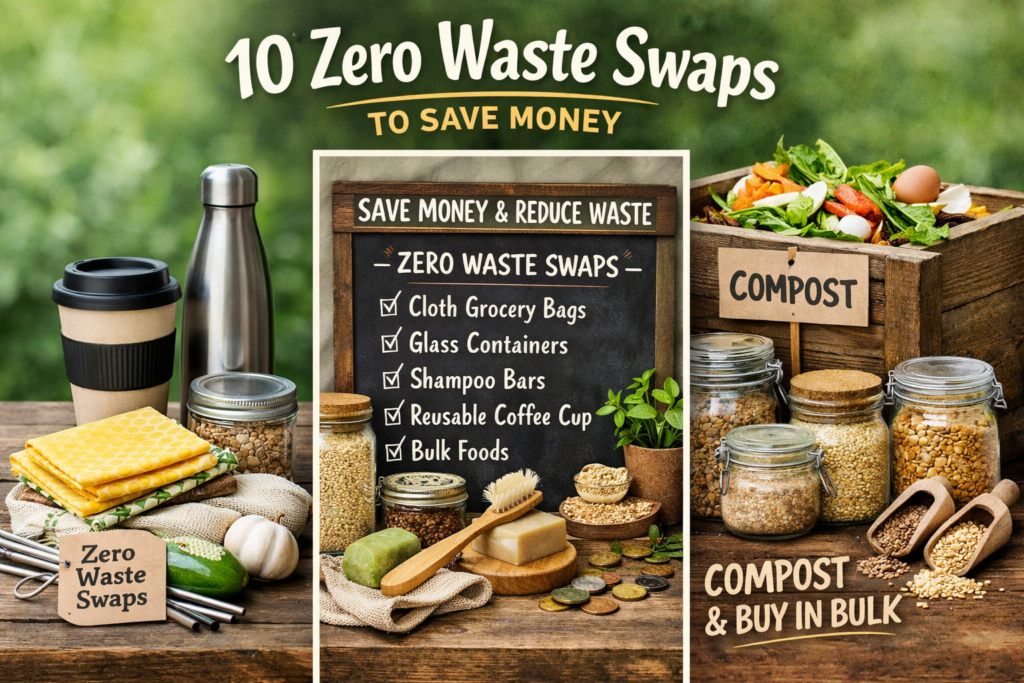
Modern life generates a surprising amount of waste — from single-use plastics to disposable food packaging — and that waste often comes with a high price tag. Adopting practical zero-waste swaps can lower monthly expenses, cut long-term purchasing costs, and contribute to a healthier environment. These changes rely on the core principles of reducing, reusing, and refusing unnecessary items — a strategy that’s both economically savvy and ecologically responsible.
What Is a Zero Waste Swap?
A zero-waste swap replaces a disposable product with a reusable or refillable alternative. These swaps not only reduce landfill and packaging waste but also often yield significant cost savings over time. According to financial and lifestyle experts, making mindful choices around consumption can help reduce spending and food waste, leading to real budget benefits.
Everyday Swaps That Pay Off
1. Reusable Water Bottle
Instead of buying bottled water regularly, invest in a durable, reusable bottle. Over a year, eliminating even a few single-use bottles can add up, especially when you take advantage of water refill stations or home filtration systems.
2. Cloth Grocery & Produce Bags
Plastic grocery bags are cheap to buy but expensive to continuously replace. A set of cloth or mesh bags lasts much longer and keeps you from paying per bag at checkout. Reusable produce bags also help avoid single-use plastics in the produce section.
3. Beeswax Wraps Instead of Plastic Wrap
Replacing disposable plastic wrap with reusable beeswax wraps is a powerful swap in the kitchen. These wraps cling to bowls or food items and can be washed and reused hundreds of times, cutting the ongoing costs of cling film and reducing plastic waste.
4. Glass or Stainless Food Storage Containers
Instead of constantly buying disposable storage bags or flimsy plastic containers, quality glass or stainless-steel containers are more durable and safer for long-term food storage. They prevent leaks and extend the life of leftovers, reducing food waste.
5. Reusable Coffee Cup
For daily coffee drinkers, disposable cups add up quickly. Many coffee shops also offer discounts to customers who bring their own cup — a dual boost for your budget and the planet.
Beyond the Kitchen: Zero Waste in Daily Life
6. Bamboo or Wooden Utensils
Disposable cutlery and bamboo utensils are great swaps when eating on the go. A set of reusable cutlery is affordable and pays for itself when you avoid purchasing disposable forks, knives, or chopsticks.
7. Bar Soap and Shampoo Bars
Liquid soaps and shampoos packaged in plastic can be expensive over time. Bar versions produce less waste and often cost less per use than bottled options.
8. Cloth Napkins & Towels
Paper towels and napkins are essentially single-use products. Switching to cloth versions means fewer purchases, reduced waste, and a more intentional household cleaning routine.
9. Bulk Buying with Refillable Containers
Purchasing staples like grains, beans, and spices in bulk — and filling reusable jars — eliminates packaging waste and often costs less per unit than prepackaged versions. Bulk buying also encourages mindful shopping and reduces impulse purchases.
10. Composting Food Scraps
While not a product swap, composting food scraps significantly reduces food waste and the need to buy bagged soil amendments or fertilizers. Compost enriches garden soil naturally and can reduce gardening expenses while cutting organic waste from your trash.
Practical Tips to Get Started
- Prioritize swaps one at a time: Begin with items you use frequently.
- Choose quality over cheap disposables: A modest initial investment in reusable items often leads to long-term savings.
- Involve your household: Shared responsibility makes these habits stick.
- Track your savings: Monitor purchases before and after each swap to see real financial benefits.
Conclusion
Zero waste swaps are about smarter consumption, not perfection. Each reusable choice reduces waste and often saves money, especially when small daily purchases accumulate over time. These changes can help you live more intentionally while contributing to both your financial health and environmental sustainability. Consistency — not perfection — is the key to reaping the economic benefits of a zero-waste lifestyle.
