

In a culture that prizes speed, efficiency, and constant connectivity, the concept of slow living offers a deliberate alternative—one that values intentionality, presence, and meaning. Slow living isn’t about doing everything at a snail’s pace; it’s about aligning daily life with deeper values, reducing unnecessary stress, and creating mental space for what truly matters. This lifestyle movement has roots in the slow movement, which began with the Slow Food philosophy in Italy in the 1980s and extends into broader cultural practices emphasizing quality over quantity.
What Is Slow Living?
Slow living is a mindset and lifestyle choice that encourages individuals to approach life with intention, focus, and awareness. Instead of racing through tasks, it prioritizes being present, savoring experiences, and making conscious choices that reflect one’s values and well-being.
Origins and Philosophy
The slow movement originated as a response to the growing pace of modern life and consumer culture. It emphasizes doing things thoughtfully and fully, rather than simply completing more in less time. Although the movement began with food culture, its principles now extend into home life, work, travel, and personal relationships.
Core Principles
- Intentionality: Choosing activities that matter and align with personal values.
- Presence: Being fully engaged in the current moment rather than multitasking.
- Quality over Quantity: Prioritizing depth and meaning over speed and efficiency.
- Mindfulness: Cultivating awareness of thoughts, emotions, and surroundings.
Why Slow Living Matters Today
Modern life is fast. It thrives on instant communication, packed schedules, and constant notifications. These conditions may fuel efficiency, but they also contribute to stress, distraction, and burnout.
Mental Health and Well-Being
Research consistently shows that slowing down can reduce stress and foster clarity. Practices aligned with slow living—such as mindfulness, mindful eating, or simply taking breaks from screens—have been linked with improved emotional regulation, reduced anxiety, and greater life satisfaction.
Enhanced Cognitive Function
When life is less rushed, the brain has room to consolidate memories, reflect, and process thoughts deeply—leading to better focus and creativity.
Stronger Connections
Rushing from one task to the next often results in superficial interactions. Slow living encourages deeper engagement with others, strengthening relationships by prioritizing quality time over hurried conversations.
Practical Steps to Embrace Slow Living
Adopting slow living doesn’t require a dramatic lifestyle overhaul. It’s about consistent, intentional adjustments that bring greater balance. Here’s how to begin:
1. Redefine Your Morning
Start your day with purpose instead of chaos. A relaxed routine—like savoring your coffee, journaling, or simply sitting by a window—can set a calm tone for the entire day.
2. Digital Boundaries
Smartphones and constant alerts fragment attention. Designate specific screen-free periods, such as during meals or the first hour after waking, to reduce distraction and be truly present.
3. Mindful Eating
Eating slowly without distractions heightens enjoyment and supports digestion. Focus on the flavors, textures, and nourishment in each bite instead of swallowing food while multitasking.
4. Meaningful Hobbies
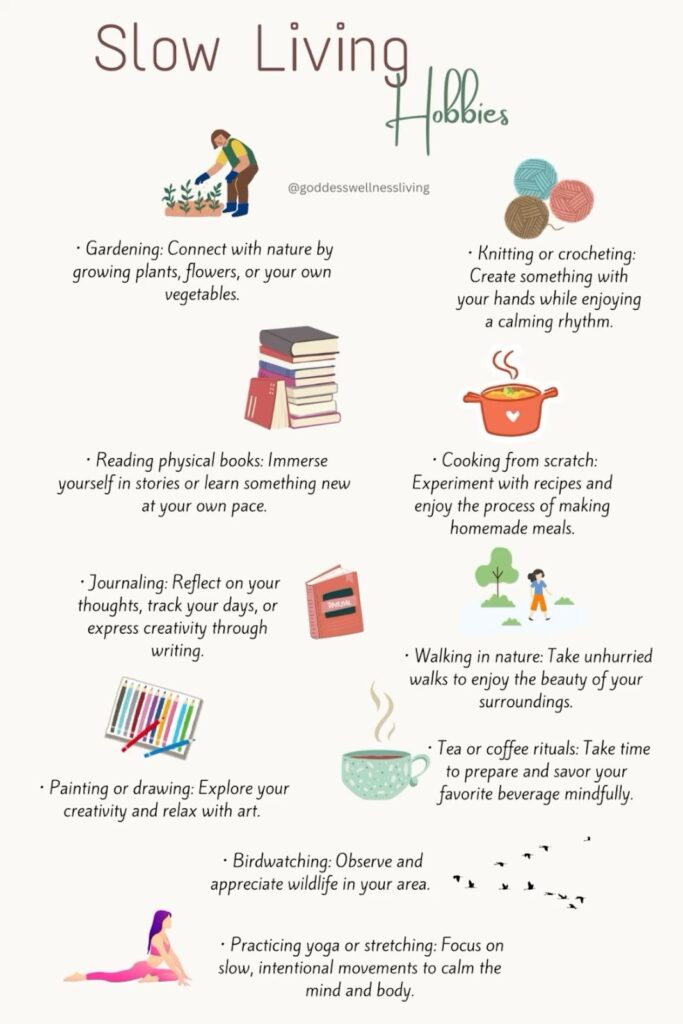
Engage in activities that aren’t time-driven goals but sources of joy—like gardening, reading, crafting, or walking in nature. These slow activities cultivate presence and reduce stress.
5. Reflective Practices
Incorporating moments of reflection—through meditation, journaling, or quiet walks—helps ground your thoughts and deepen self-awareness.
Real-World Applications
Individuals and communities around the world are adopting slow living principles with measurable benefits:
- Work Culture: Some companies are experimenting with results-oriented work and flexible schedules to reduce burnout and foster creativity.
- Urban Planning: Initiatives like Cittaslow promote slowing city life to improve the quality of life and community cohesion.
- Family Life: Intentional family dinners, outdoor activities, and device-free time strengthen bonds and create lasting memories.
Conclusion
In a world where speed is often celebrated, the art of slow living offers a powerful invitation to rethink how we navigate our days. It doesn’t reject modern life—it reshapes it by placing meaning, presence, and intention at the center. By embracing practices that honor quality over quantity, individuals can cultivate deeper well-being, stronger relationships, and a more fulfilling experience of life. The art of slow living reminds us that life is not a race to finish, but a journey to be lived with awareness and grace.
