

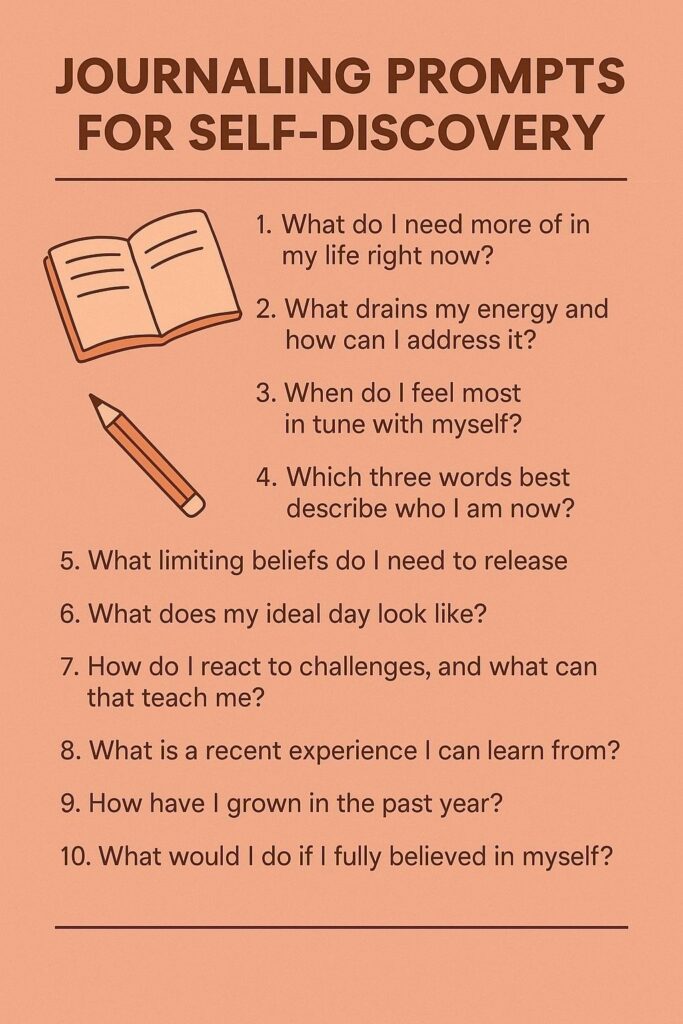
Self-discovery is the ongoing process of exploring your thoughts, beliefs, values, and emotions to better understand who you are and what drives you. One of the most effective tools in this journey is journaling—an intentional writing practice that encourages reflection and clarity. Unlike free-writing without direction, journaling with prompts offers structured questions that make it easier to delve into your inner world and uncover meaningful insights. This article breaks down how to use prompts for self-exploration, why they work, and practical examples you can try today.
Why Use Prompts for Self-Discovery?
Journaling prompts serve as starting points—thought-provoking questions that get you thinking more deeply than you might on your own. They help remove the blank-page barrier, encourage focused introspection, and can reveal patterns in your thinking and behavior that might otherwise go unnoticed. Research in positive psychology shows that structured writing can boost self-awareness, emotional understanding, and personal growth.
How Journaling Promotes Self-Understanding
Increasing Emotional Awareness
By responding to introspective questions, you begin to observe your feelings as they arise, documenting not just what you feel but why you feel it. This heightened awareness supports better emotional regulation and self-compassion.
Clarifying Values and Beliefs
Prompts that explore values, purpose, and life direction help you clarify what truly matters to you. This can guide decision-making and goal-setting with greater alignment to your authentic self.
Identifying Patterns and Growth
Over time, journaling builds a record of your inner life. Revisiting entries lets you notice recurring themes—strengths you rely on, beliefs you’ve outgrown, and areas where you’ve made progress.
Effective Prompt Categories
To make journaling both structured and meaningful, prompts can be grouped by theme:
1. Identity and Beliefs
These prompts help you explore who you are at your core.
- What are my core values, and why are they important to me?
- How would I describe myself to a stranger?
- When do I feel most confident, and what contributes to that feeling?
2. Emotional Insight
These focus on inner experiences and emotional patterns.
- How did I feel today, and what triggered that emotion?
- What emotions am I hesitant to acknowledge, and why?
- What brings me peace or comfort when I’m overwhelmed?
3. Life Purpose and Goals
These questions encourage visioning and self-alignment.
- What does a fulfilling life look like to me?
- What am I most passionate about, and how can I make space for it?
- Where do I see myself in five years?
4. Past, Present, and Future Reflection
Exploring different timeframes deepens self-awareness.
- What life experience shaped me most?
- What are three things I’m grateful for right now?
- If I could talk to my future self, what would I ask?
Practical Tips for Using Prompts
Choose a Comfortable Format
You can journal in a physical notebook or a digital app—what matters is regular engagement, not the medium.
Set a Consistent Routine
Consistency helps cultivate a habit. Try writing at the same time each day—morning or evening—to make reflection part of your rhythm.
Reflect, Don’t Judge
Your journal is a private space. Write freely without judgment or expectation of perfection. The goal is insight, not flawless prose.
Look Back Occasionally
Re-reading past entries can show emotional shifts and patterns in your behavior over time. This reflection often yields the deepest self-discovery.
Real-World Example
Imagine you’re feeling stuck in your career but can’t articulate why. A prompt like “What values are most important to me in a job?” can reveal that creativity and autonomy matter more than stability. Once you recognize this, your next prompt—“What steps can I take to align my work with these values?”—can spark actionable ideas, such as exploring projects outside your usual scope or pursuing further training.
Conclusion
Journaling prompts are a powerful companion on the path to self-discovery. They make introspection accessible, guide deep reflection, and support emotional clarity. Whether you’re just beginning or have journaled for years, combining thoughtful prompts with regular writing can reveal aspects of yourself you might otherwise overlook. Start with a few questions that resonate with you and let your journaling journey unfold—your future self will thank you.
