

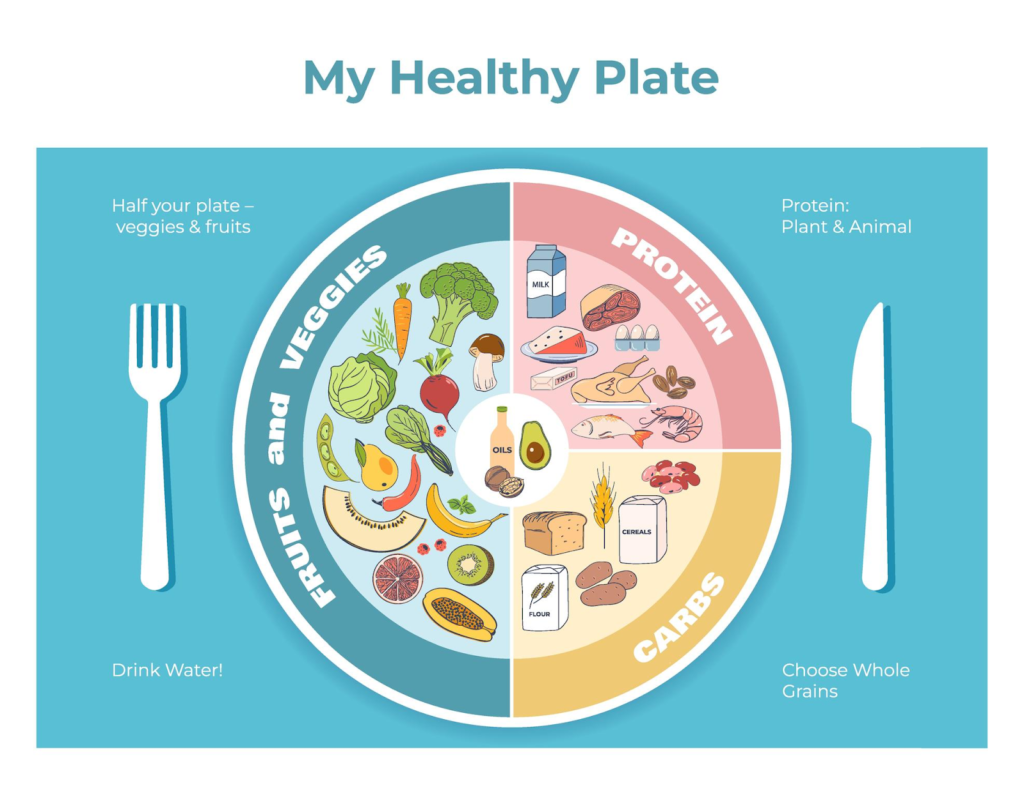
A clear, practical, expert-driven overview to help you eat smarter, feel better, and optimize your health
Good nutrition remains one of the most powerful tools for lifelong health. In 2026, as lifestyles and food environments evolve worldwide, understanding what a balanced diet truly means has never been more important. This guide cuts through confusion with science-backed explanations, practical examples, and actionable tips that anyone can follow.
What Is a Balanced Diet?
A balanced diet provides the nutrients your body needs to function optimally—without excesses or gaps.
At its core, a balanced diet:
- Meets your energy needs (calories) without overconsumption
- Delivers essential nutrients like carbohydrates, proteins, fats, vitamins, and minerals
- Supports growth, repair, immunity, and daily functioning
This isn’t about strict rules or elimination diets—it’s about nutrient diversity and portion awareness.
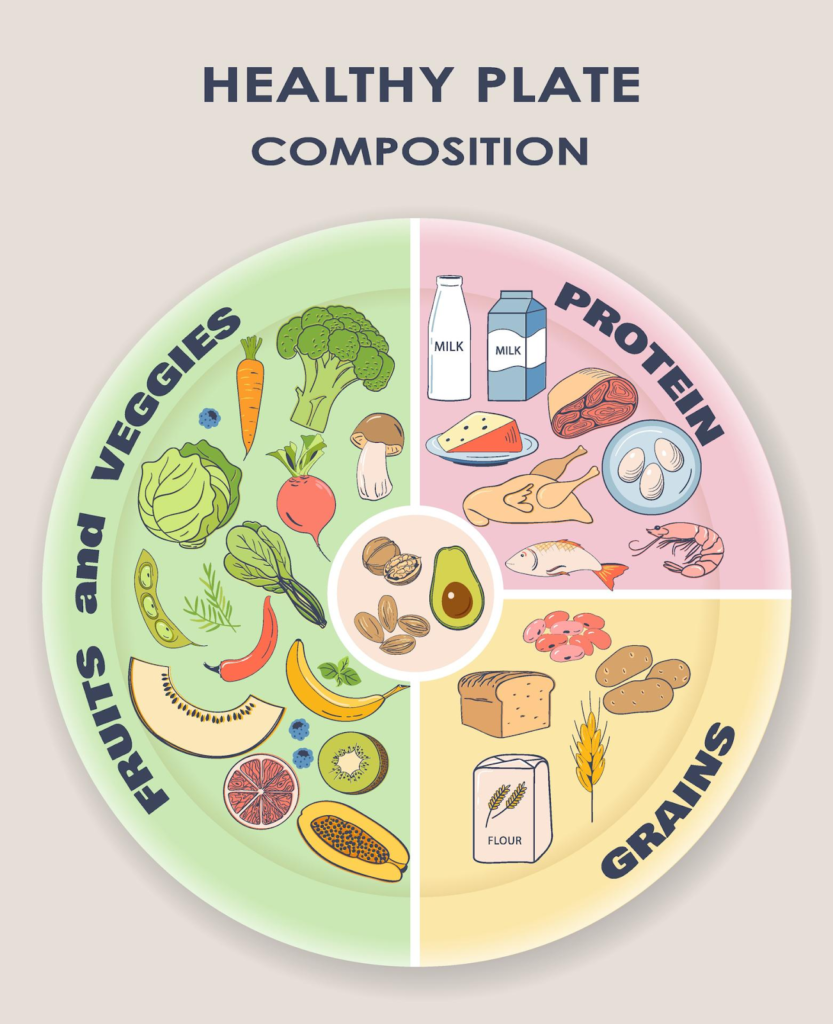
Building Blocks of a Balanced Plate
A balanced diet includes foods from all major food groups. Each plays a unique role:
Carbohydrates: Your Body’s Main Energy Source
- Found in: whole grains (brown rice, oats), starchy vegetables (sweet potatoes), legumes
- Role: fuel for your brain, muscles, and daily activity
- Tip: Prioritize complex carbs over refined sugars for sustained energy
Example: A morning bowl of steel-cut oats with berries and seeds provides slow-burning energy and fiber.
Proteins: Repair and Build
- Found in: lean meats, fish, eggs, dairy, legumes, tofu, nuts
- Role: builds muscle, supports immunity, stabilizes blood sugar
- Aim for varied sources—plant and animal—when possible
Practical meal: Grilled chicken, quinoa, and steamed broccoli.
Healthy Fats: Energy and Nuance
- Found in: avocados, olive oil, nuts, seeds, fatty fish (salmon, sardines)
- Role: supports brain function, hormone production, and nutrient absorption
- Focus on unsaturated fats; limit trans fats and oversized portions of saturated fat
Fruits and Vegetables: Micronutrient Powerhouses
- Packed with: vitamins, minerals, antioxidants, fiber
- Goal: Half your plate at most meals
- Variety matters—for example: leafy greens, colorful peppers, berries, citrus
Water: Often Overlooked but Essential
- Facilitates digestion, temperature regulation, and nutrient transport
- Aim for at least 6–8 cups daily; more if active or in hot climates
How Much Should You Eat?
Portion Awareness
Instead of strict calorie counting, focus on intuitive portions:
| Food Group | Daily Portion Guide (Typical Adult) |
| Vegetables | 2½ to 3 cups |
| Fruits | 1½ to 2 cups |
| Grains | 6 to 8 servings (half whole grains) |
| Protein foods | 5 to 6½ ounces |
| Dairy or alternatives | 3 servings |
| Oils/fats | ~5 to 7 teaspoons |
Portion sizes vary by age, activity level, and health conditions. Consult a dietitian for personalized recommendations.)
Balanced Meal Blueprint: The 2026 Plate Model
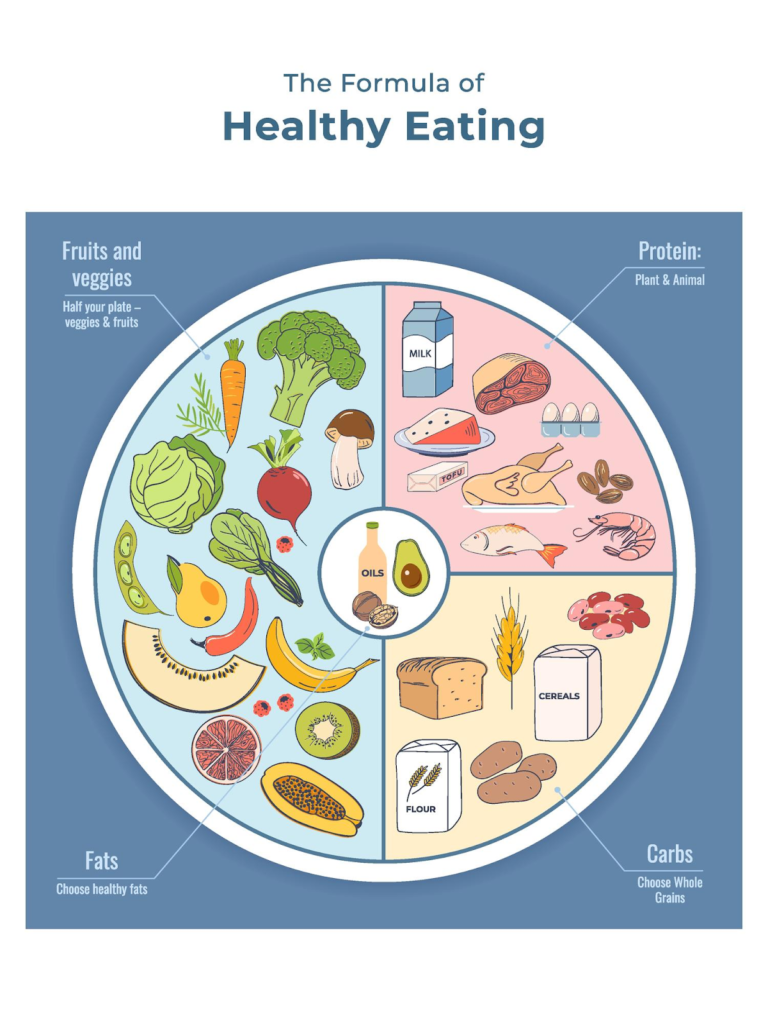
Here’s a simple visual approach to building meals that nourish:
Half Your Plate: Fruits + Vegetables
Aim for color and diversity—reds, greens, purples, oranges.
One-Quarter: Whole Grains or Starchy Veg
Examples: brown rice, whole wheat pasta, quinoa, sweet potato.
One-Quarter: Lean Protein
From plants or animals—mix it up.
Add Healthy Fats & Hydration
Olive oil dressing, seeds, and plenty of water.
Special Considerations
For Active Adults and Athletes
You may need:
- More calories overall
- Carbs around workouts
- Slightly higher protein for repair
Example strategy:
Pre-workout: banana + Greek yogurt
Post-workout: lean protein + brown rice + veggies
For Older Adults
Focus on nutrient density and muscle maintenance:
- Higher protein per meal (20–30g)
- Bone-supporting nutrients (calcium, vitamin D)
- Hydration
For Vegetarians and Vegans
Ensure adequate:
- Protein from legumes, tofu, tempeh
- Iron from lentils, spinach + vitamin C source
- Omega-3s from flaxseed, chia, walnuts
Translating Nutrition Into Real Life
Here are habits that help turn knowledge into results:
Meal Planning and Prep
- Cook once, eat twice: make larger batches
- Use frozen veggies—they’re nutritious and convenient
- Plan snacks around protein and fiber (e.g., apple + nuts)
Mindful Eating
- Eat without screens
- Slow down to recognize fullness
- Choose quality over quantity
Smart Swaps
| Less Favorable | Better Choice |
| Sugary cereal | Oatmeal with fruit |
| Potato chips | Roasted chickpeas |
| Soda | Sparkling water with citrus |
Backed by Science
Nutrition science evolves, but solid principles remain constant:
- Dietary diversity supports gut health
- Whole foods deliver more micronutrients than processed counterparts
- Balance beats extremes for sustainable health
For evidence-based guidance on nutrient recommendations, check the U.S. National Institutes of Health Office of Dietary Supplements
Both organizations emphasize nutrient balance, food variety, and limiting added sugars and ultra-processed foods—cornerstones of a healthy diet for 2026 and beyond.
Common Myths Debunked
Myth: Carbs Are Bad
Reality: Whole grains and complex carbs are essential energy sources.
Myth: Fat Makes You Fat
Reality: Healthy fats help satiety and hormone balance; the issue is excess calorie intake, not fat itself.
Myth: Supplements Can Replace Food
Reality: Supplements can help fill gaps but are no substitute for whole foods.
Conclusion: Your Balanced Diet in 2026
A balanced diet isn’t a fad—it’s a lifestyle rooted in nutrient variety, portion awareness, and real food choices. By following practical frameworks and listening to your body’s needs, you build resilience, energy, and long-term health.
Remember:
- Focus on colorful plates
- Prioritize whole, minimally processed foods
- Adapt portions to your life stage and activity level
Eating well isn’t perfection—it’s consistent good choices. Let this guide be your roadmap to healthful nutrition in 2026 and beyond.
