

Artificial intelligence (AI) has shifted from a niche research discipline into one of the most powerful drivers of innovation across industries. Breakthrough announcements — official reports of significant advances in AI research, tools, and applications — capture moments when technology leaps forward in ways that reshape markets, scientific discovery, or daily life. These announcements not only signal progress in algorithms and hardware but also often herald new real-world capabilities that were previously out of reach.
This article explores what constitutes an AI breakthrough announcement, highlights recent examples and real-world applications, and explains the broader significance of these developments.
What Is an AI Breakthrough?
An AI breakthrough announcement refers to a verified, public disclosure of a substantial advancement in artificial intelligence. These announcements typically come from research labs, technology companies, academic institutions, or collaborative scientific teams. They describe progress that moves beyond incremental improvement to deliver meaningful new capabilities, measurable performance gains, or novel applications.
Breakthroughs can occur across multiple areas:
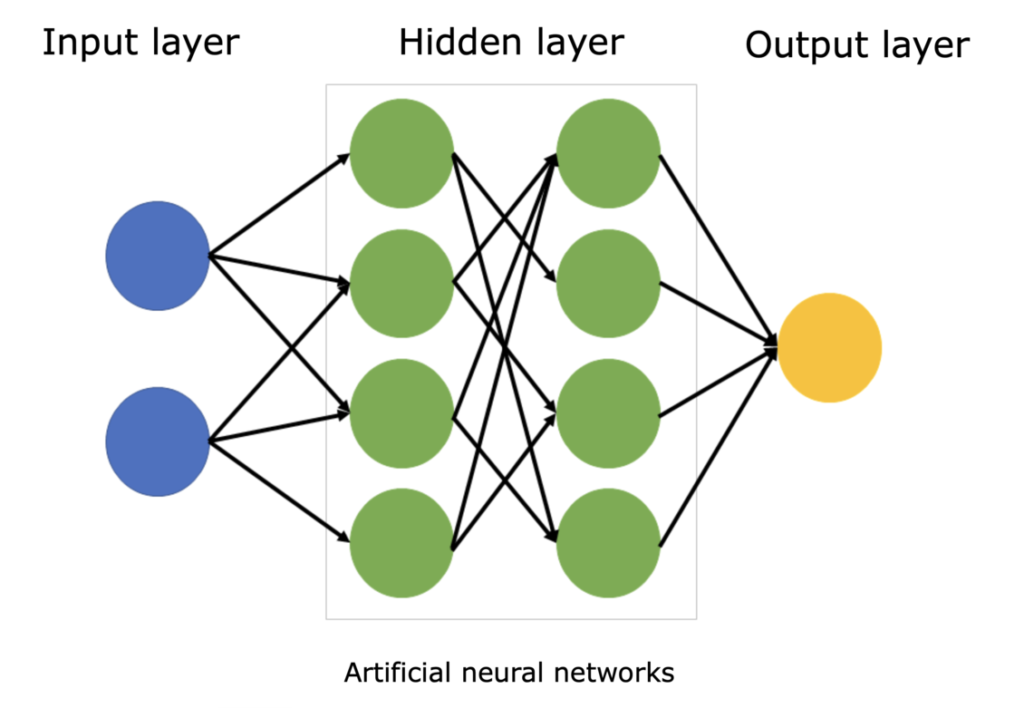
- Algorithmic innovation: new neural network architectures or training techniques
- Model performance: systems that outperform previous benchmarks
- Practical applications: technology deployed to solve industry or societal challenges
Such announcements help establish progress benchmarks and inform developers, businesses, and policymakers about emerging capabilities and limitations.
How AI Breakthroughs Are Announced
Major AI breakthroughs are often introduced through:
- Company and research lab blogs or press releases that explain the advance and provide technical details.
- Peer-reviewed research papers that receive scrutiny from the scientific community before publication.
- Media coverage and keynote presentations at industry conferences that summarize results for a broader audience.
High-authority sources, like the Google AI Blog, regularly publish summaries of research breakthroughs and AI innovations across products and science. Another key source for tracking progress is academic research platforms that detail emerging work across domains such as language models, robotics, and biomedical AI.
Recent Examples of Breakthrough Announcements
Here are several areas where AI breakthrough announcements have made headlines:
Advanced Language and Reasoning Models
In recent years, large multimodal models have progressed beyond text-only capabilities to reason across text, images, and other data types. These models solve tasks that combine understanding across media and show more sophisticated generalization. For instance, leading research teams have highlighted improvements in reasoning and multimodal understanding in their flagship systems.
Scientific and Healthcare Discoveries
AI is increasingly used to accelerate scientific discovery. For example, systems have been developed that can analyze medical imaging with greater accuracy than human experts, opening avenues for early disease detection and personalized treatment planning. Other breakthrough reports describe the use of AI to reconstruct biological processes or optimize treatment strategies. These announcements illustrate how AI extends beyond information processing into high-impact scientific applications.
Infrastructure and Hardware
Breakthroughs are not limited to software. Advances in AI hardware — including next-generation GPUs and specialized processors — directly enable faster training and more efficient deployment of large models. Such infrastructure announcements are essential because they expand the practical limits of model size and performance while controlling costs.
Real-World Applications of Breakthrough AI
When an AI breakthrough is announced, industry and society often begin to see tangible applications quickly. Here are some examples:
Healthcare and Medicine
AI’s ability to analyze complex biological data enables early detection of diseases, optimizes treatment plans, and accelerates drug discovery — transforming traditional healthcare workflows. Systems trained on medical imaging can detect subtle patterns that human clinicians might miss.
Scientific Research and Discovery
AI helps researchers sift through massive datasets across disciplines, from physics to genomics. For instance, models that can identify structural patterns in proteins have accelerated progress in understanding biological functions and designing novel therapeutics.
Business and Productivity
AI breakthroughs in natural language understanding are powering virtual assistants, automated content generation, customer support bots, and smarter enterprise tools that reduce human workload and speed decision-making.
Everyday Consumer Tech
Large language models and multimodal systems are now embedded in search engines, digital assistants, creative tools, and mobile apps, improving everything from query results to personalized recommendations.
The Impact of Breakthrough Announcements
Setting Expectations and Innovation Pathways
Breakthrough announcements serve as markers of progress. They help industry, academia, investors, and the public understand where AI is headed and what applications are now feasible. By defining new benchmarks, these announcements stimulate competition and guide resource allocation.
Ethical and Societal Considerations
As AI capabilities grow, societies must address questions of fairness, privacy, accountability, and safety. Breakthroughs often trigger discussion about ethical AI governance, regulation, and responsible use — ensuring that advances benefit humanity without exacerbating harm.
Innovation Ecosystems and Collaboration
Breakthroughs often emerge from collaborative ecosystems involving universities, private labs, and open-source communities. Sharing methods and results accelerates collective progress and can democratize access to cutting-edge capabilities.
Conclusion
Breakthrough announcements in artificial intelligence encapsulate significant steps forward in technology, signaling when research transforms into a practical, impactful capability. From enhancing healthcare diagnostics to expanding scientific discovery, the real-world influence of AI continues to grow rapidly. Tracking and understanding these announcements helps professionals and the broader public navigate the evolving landscape responsibly and insightfully.
