

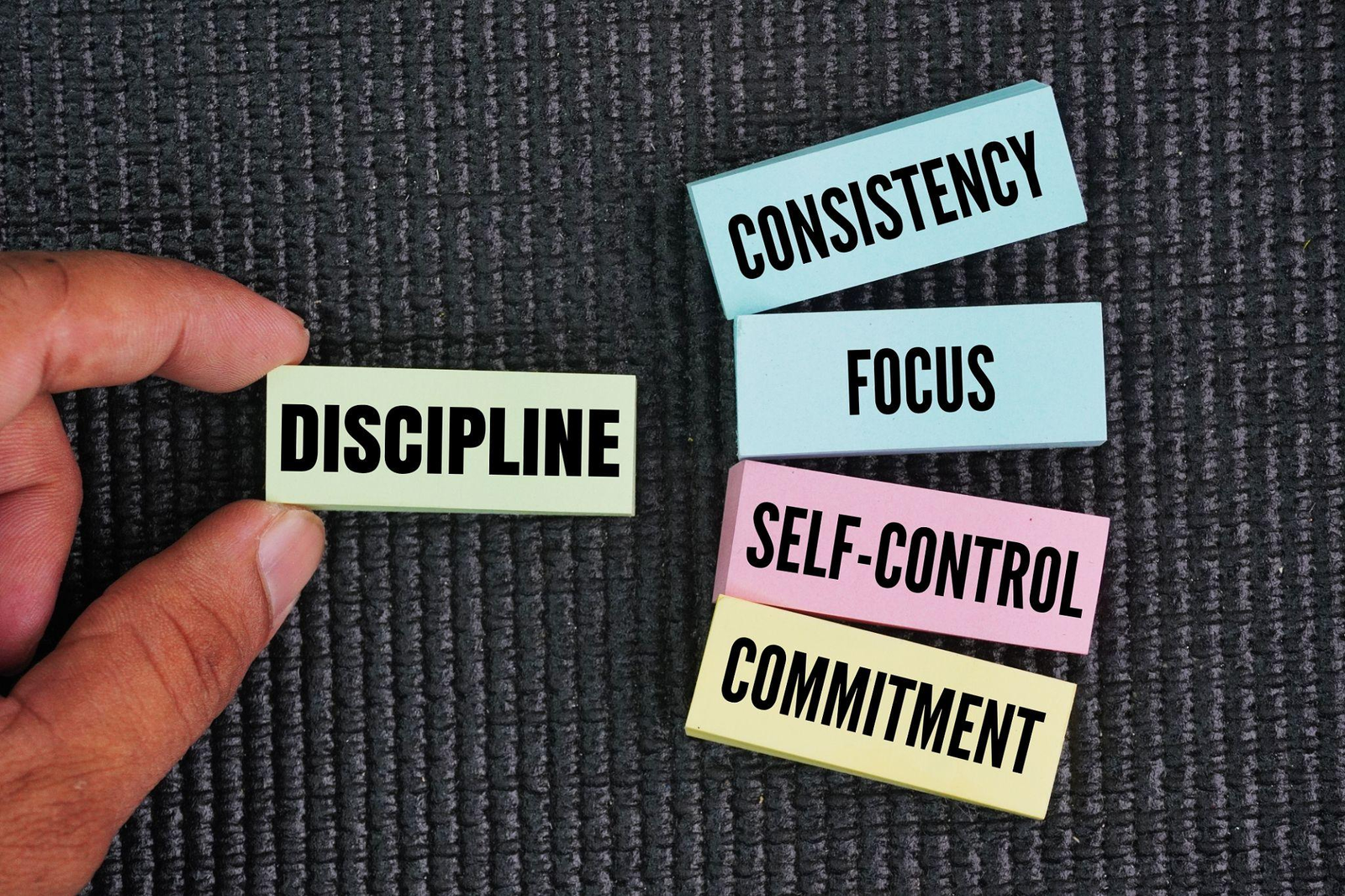
Self-discipline is one of the most valuable skills for achieving meaningful goals. Whether you want to advance your career, start a business, improve your health, learn a new skill, or simply become more productive, discipline helps you take consistent action even when motivation is low.
The good news is that self-discipline is not simply something people are born with. It can be strengthened through deliberate practice, better routines, and an environment that makes productive behavior easier. Research on self-control and habit formation also suggests that successful goal pursuit often depends less on repeatedly fighting temptation and more on developing beneficial habits and supportive environments.
Here are 10 practical habits that can help you build stronger self-discipline and stay focused on your goals.
What Is Self-Discipline?
Self-discipline is the ability to regulate your thoughts, emotions, and behavior so that your actions remain aligned with your longer-term goals.
It does not mean working constantly, suppressing every emotion, or never enjoying yourself. Instead, it means being able to make intentional choices when short-term comfort conflicts with something you value more in the long run.
For example, a disciplined student may choose to study for an hour before watching a movie. A business owner may finish an important task before checking social media. A person trying to improve their fitness may follow a planned workout even when they do not feel particularly motivated.
Self-discipline is therefore closely connected with self-regulation, which includes monitoring behavior, evaluating progress, and adjusting actions when necessary.
Why Self-Discipline Matters for Goal Achievement
A goal gives you direction, but discipline turns that direction into repeated action.
Research on goal-setting has consistently emphasized the importance of clear and appropriately challenging goals. Specific goals give people a clearer target and help direct effort toward measurable outcomes.
However, having a goal is only the beginning. Consider two approaches:
- Vague: “I want to become better at writing.”
- Specific: “I will write 500 words every weekday from 8:00 to 8:30 a.m.”
The second goal gives you a defined behavior, time, and measurable target. That clarity makes disciplined action much easier.
10 Powerful Habits to Build Self-Discipline
1. Set Clear and Specific Goals
Self-discipline becomes easier when you know exactly what you are trying to accomplish.
Instead of creating broad goals such as “get healthier” or “grow my business,” translate them into specific actions.
Practical example
Instead of:
“I want to read more.”
Try:
“I will read 10 pages after dinner every evening.”
A clear goal reduces uncertainty and provides an obvious next step. Goal-setting research supports the value of specific goals, particularly when people understand and accept the target.
2. Start With Small Commitments
One of the biggest mistakes people make when developing discipline is attempting to change everything simultaneously.
A better approach is to begin with a behavior that is small enough to repeat consistently.
If you want to exercise, start with 10–15 minutes rather than immediately committing to a demanding two-hour routine. If you want to write a book, begin with 200–300 words a day.
Small actions reduce resistance and give you repeated opportunities to practice consistency.
3. Create a Daily Routine
Routines reduce the number of decisions you need to make throughout the day.
For example:
- 7:00 a.m. — Wake up
- 7:15 a.m. — Exercise
- 8:00 a.m. — Breakfast
- 9:00 a.m. — Begin priority work
- 1:00 p.m. — Lunch
- 6:00 p.m. — Review the day
- 10:30 p.m. — Prepare for sleep
The exact schedule is less important than creating a structure that works for your circumstances.
Research on habits suggests that repeating desired behaviors in stable contexts can gradually make those behaviors more automatic.
4. Use the “If-Then” Strategy
Do not wait until a problem occurs to decide what you will do.
Create an “if-then” plan in advance.
For example:
- If I feel like checking social media while working, then I will put my phone away and continue for another 10 minutes.
- If I miss my morning workout, then I will exercise after work.
- If I feel overwhelmed by a large project, then I will work on it for just 15 minutes.
This approach turns an intention into a predetermined response. Research on implementation intentions indicates that linking a specific situation with a planned behavior can support goal-directed action.
5. Remove Distractions From Your Environment
Self-discipline should not depend entirely on resisting temptation.
If your phone constantly interrupts your concentration, put it in another room. If social media consumes your work breaks, log out or use website restrictions. If television prevents you from studying, create a separate study space.
This is an example of strategic self-control: changing the environment so that the desired behavior becomes easier.
Recent work highlighted by the American Psychological Association also emphasizes designing environments and contexts that cue productive habits rather than relying entirely on motivation.
6. Practice Deep Focus
Multitasking can make important work feel fragmented. Instead, create dedicated periods for focused work.
Try a simple system:
- Choose one important task.
- Define what “finished” means.
- Remove unnecessary notifications.
- Work for 25–50 minutes.
- Take a short break.
- Repeat if necessary.
For example, instead of spending an hour switching between email, social media, and a report, dedicate 40 minutes exclusively to the report.
The objective is not to work endlessly. It is to give your most important task your full attention for a defined period.
7. Track Your Progress
What gets measured becomes easier to evaluate.
Use a simple habit tracker, calendar, notebook, or spreadsheet to record whether you completed your planned behavior.
For example:
| Habit | Mon | Tue | Wed | Thu | Fri |
| Exercise | ✓ | ✓ | — | ✓ | ✓ |
| Reading | ✓ | ✓ | ✓ | ✓ | ✓ |
| Deep work | ✓ | — | ✓ | ✓ | ✓ |
Tracking provides feedback. It also helps you identify patterns—for example, discovering that you consistently skip important tasks on particular days.
Self-monitoring is a core part of self-regulation because it allows you to compare actual behavior with your desired standard.

8. Learn to Delay Immediate Rewards
Many discipline problems involve a conflict between an immediate reward and a longer-term benefit.
Examples include:
- Watching videos instead of studying
- Spending money instead of saving
- Sleeping late instead of exercising
- Checking notifications instead of completing important work
You do not have to eliminate enjoyable activities. Instead, put them after a meaningful task.
For example:
“After I complete my 45-minute work session, I can spend 15 minutes checking social media.”
This creates a clear relationship between effort and reward.
9. Review Your Day and Correct Mistakes
Self-discipline does not mean achieving perfection.
Even highly organized people have unproductive days. What matters is how quickly you recognize the problem and adjust.
At the end of each day, ask:
- What did I accomplish?
- What distracted me?
- Which habit worked?
- What caused me to lose focus?
- What can I change tomorrow?
This short review turns mistakes into information.
For example, if you repeatedly fail to exercise at 6 a.m., the answer may not be “I need more discipline.” The schedule itself may be unrealistic. Moving the workout to the evening could be a better solution.
10. Follow the “Never Miss Twice” Principle
Missing one day does not destroy a habit. The bigger risk is allowing one missed day to become a pattern.
If you skip a workout today, return tomorrow. If you fail to study tonight, restart the next available session.
Think of discipline as the ability to return to the desired behavior—not the requirement to perform perfectly every day.
Research on habit formation shows that consistency of behavior in a stable context is important as habits develop, although the process varies between individuals and behaviors.
A Simple Self-Discipline System You Can Start Today
You do not need a complicated productivity system.
Try this five-step approach:
Step 1: Choose One Important Goal
Pick one goal that deserves your attention for the next 30 days.
Step 2: Define One Daily Behavior
Convert the goal into an action you can repeat.
Goal: Improve writing skills.
Daily behavior: Write 300 words every weekday.
Step 3: Choose a Trigger
Attach the behavior to an existing part of your routine.
Example: “After my morning coffee, I will write for 30 minutes.”
Step 4: Remove One Major Distraction
Put your phone away, block distracting websites, or prepare your workspace before starting.
Step 5: Track and Review
Record whether you completed the behavior and review your progress once a week.
This system works because it combines clear goals, repeated behavior, environmental design, and feedback—the core elements needed for sustainable self-regulation.
Common Self-Discipline Mistakes to Avoid
Trying to Change Everything at Once
Too many simultaneous goals can create unnecessary complexity. Start with one or two important behaviors.
Depending Only on Motivation
Motivation naturally changes. Build systems that allow you to act even when you do not feel particularly motivated.
Setting Unrealistic Standards
A routine that looks impressive on paper but cannot fit your real life is unlikely to last.
Treating One Failure as Total Failure
Missing one session is a setback, not a permanent defeat. Analyze what happened and restart.
Confusing Discipline With Overwork
Self-discipline also means knowing when to rest, recover, and protect your long-term capacity. Sustainable performance requires balance.

How Long Does It Take to Build Self-Discipline?
There is no universal number of days required to develop discipline or make a behavior automatic.
Habit formation varies considerably depending on the person, behavior, environment, and consistency. Research has found that habit strength can increase substantially over several months when people repeatedly perform a desired behavior in a consistent context.
Instead of asking, “How quickly can I become disciplined?” ask:
“How can I make the desired behavior easier to repeat tomorrow?”
That question shifts attention from a fixed deadline to a sustainable process.
Final Thoughts
Self-discipline is not about forcing yourself to be productive every minute of the day. It is about creating a reliable connection between what you value and what you repeatedly do.
The most effective approach combines clear goals, small commitments, consistent routines, focused work, environmental design, progress tracking, and the ability to recover from setbacks.
Start with one goal. Choose one small daily behavior. Make distractions harder to access, track your progress, and adjust your system when something does not work.
Over time, discipline becomes less about constantly fighting yourself and more about building a life in which productive actions become easier to repeat.
The goal is not perfection. The goal is consistent progress.

1 Comment
Pingback: How to Create a Lifestyle That Feels More Intentional