

A Clear, Practical Guide to Understanding the Discipline
Data science has become one of the most talked-about fields in technology, business, and research. But what exactly is it? At its core, data science is the practice of extracting meaningful insights from data—turning raw information into knowledge that can guide decisions, fuel innovation, and solve real problems. Whether you’re a student, a professional exploring career options, or simply curious about the buzz, this article breaks down data science in a clear, engaging way.
What Is Data Science?
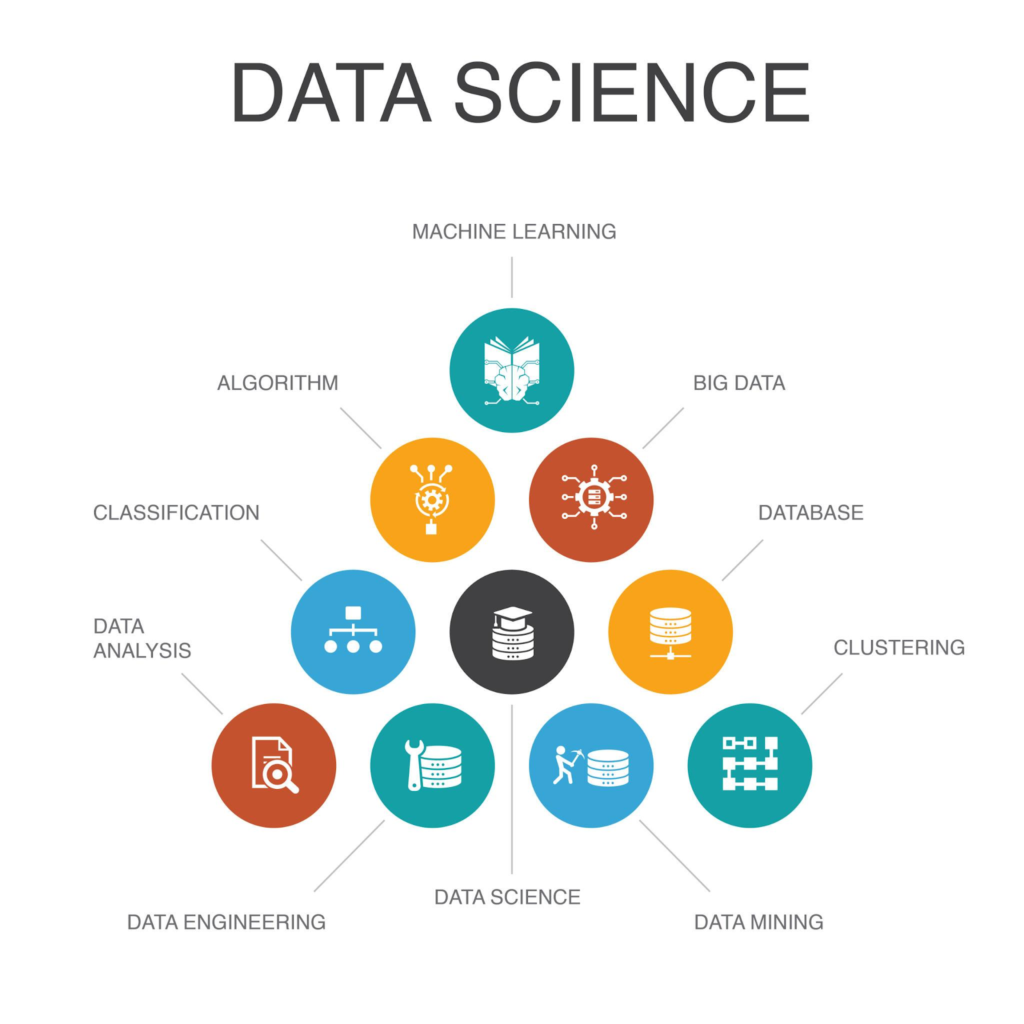
Data science is an interdisciplinary field that combines statistics, computer science, mathematics, and domain expertise to analyze data. It involves collecting, preparing, analyzing, and interpreting large volumes of data to extract insights and support decision-making.
According to the National Institute of Standards and Technology, data science integrates scientific methods, algorithms, and systems to understand phenomena through data.¹
In simpler terms:
Data science helps us make sense of data so we can predict, optimize, automate, and explain outcomes.
The Core Components of Data Science
Data science isn’t a single technique or tool—it’s a workflow that includes several key steps:
1. Data Collection
Data can come from many sources:
- Sensors (e.g., IoT devices)
- Digital platforms (e.g., websites, apps)
- Surveys and experiments
- Existing databases
The goal at this stage is to gather relevant data in sufficient quantity and quality.
2. Data Cleaning and Preparation
Real-world data is messy. It often contains:
- Missing values
- Errors or inconsistencies
- Irrelevant information
Cleaning and preprocessing prepare data for meaningful analysis. This step can take up to 80% of a data scientist’s time.
3. Data Analysis and Modeling
Here, data scientists use:
- Statistics (to summarize patterns)
- Machine learning (to build predictive models)
- Algorithms (to transform data)
This is where insights are uncovered and hypotheses are tested.
4. Interpretation and Communication
Insights alone aren’t enough. Data scientists must translate results into actionable recommendations, often using visualizations, reports, or dashboards.
Good communication connects data findings to real decisions.
Why Data Science Matters
Every modern industry generates massive amounts of data. Data science helps organizations use that data to:
- Make better strategic decisions
- Increase operational efficiency
- Improve customer experience
- Innovate products and services
In essence, it turns data into value.
How Data Science Works: A Practical Example
Let’s look at a real-world scenario:
Predicting Customer Churn in Telecom
A telecom company wants to reduce customer churn—the rate at which customers cancel their service.
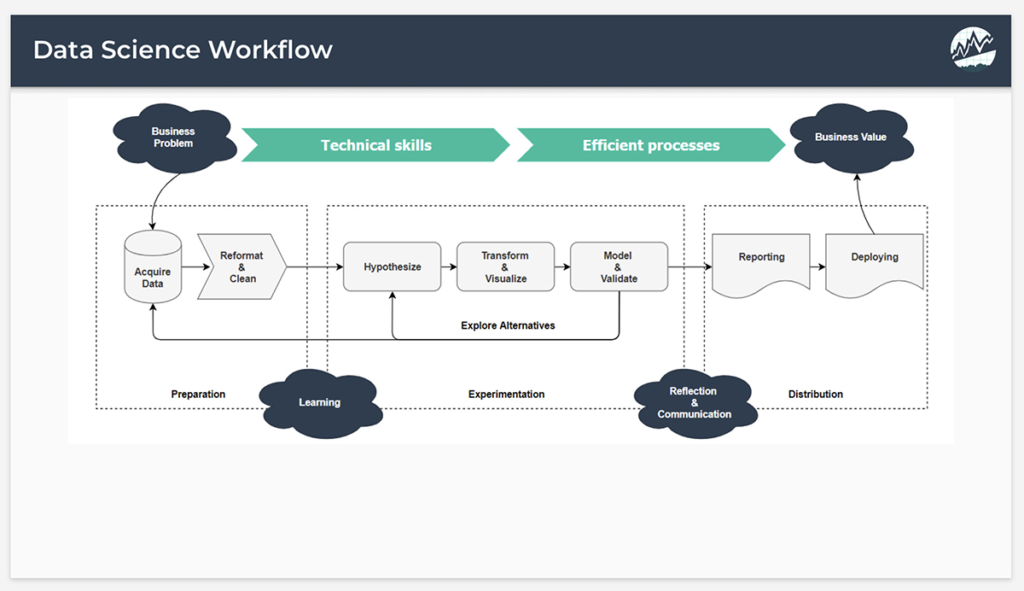
- Data Collection:
Records of customer activity, billing history, customer service interactions, and demographics are gathered. - Data Preparation:
The data is cleaned and standardized. Missing values are handled, and features like monthly usage are created. - Modeling:
A machine learning model (e.g., logistic regression) is trained to predict whether a customer will churn based on identified patterns. - Insight and Action:
The model highlights key risk factors (e.g., frequent support calls). The company uses these insights to launch targeted retention campaigns for high-risk customers.
This process shows how data science turns complex datasets into specific strategies that drive results.
Common Tools and Techniques in Data Science
Data scientists use a mix of tools depending on the task:
- Programming Languages: Python, R
- Data Manipulation: SQL, Pandas
- Machine Learning: Scikit-learn, TensorFlow
- Visualization: Matplotlib, Tableau, Power BI
- Big Data Platforms: Hadoop, Spark
These tools help manage data at scale and apply advanced analytics.
Data Science vs. Related Fields
It’s easy to confuse data science with other disciplines. Here’s how it differs:
| Field | Focus |
| Data Science | Turning data into insights and predictions |
| Analytics | Understanding historical data patterns |
| Machine Learning | Creating systems that learn from data |
| Artificial Intelligence (AI) | Simulating human intelligence in machines |
Data science overlaps with all of these, but it’s broader—it integrates them to answer questions with data.
Challenges in Data Science
Despite its impact, data science isn’t without challenges:
- Data Quality Issues: Poor data leads to unreliable insights.
- Bias and Fairness: Models can reflect existing biases in data.
- Scalability: Handling large datasets requires specialized infrastructure.
- Interpretability: Complex models can be hard to explain to non-technical stakeholders.
Addressing these challenges is part of responsible data science practice.
Careers in Data Science
Interest in data science careers has surged. Common roles include:
- Data Analyst: Interprets trends and patterns
- Data Engineer: Builds and maintains data systems
- Machine Learning Engineer: Designs predictive models
- Data Scientist: Integrates analysis, modeling, and communication
Certifications, practical projects, and strong programming skills are key to entering the field.
Conclusion
Data science is a powerful, multidisciplinary practice that transforms data into actionable insights. It fuels smarter decisions, fuels innovation across sectors, and drives tangible outcomes in business, research, and technology.
By understanding its core concepts—data collection, preparation, analysis, and communication—you can appreciate both its complexity and its practical value. Whether you’re stepping into the field or just want to understand why data science matters, this discipline is shaping how we learn from data in an increasingly data-rich world.

1 Comment
Pingback: Tech Certifications That Matter: A Practical Guide to Building