

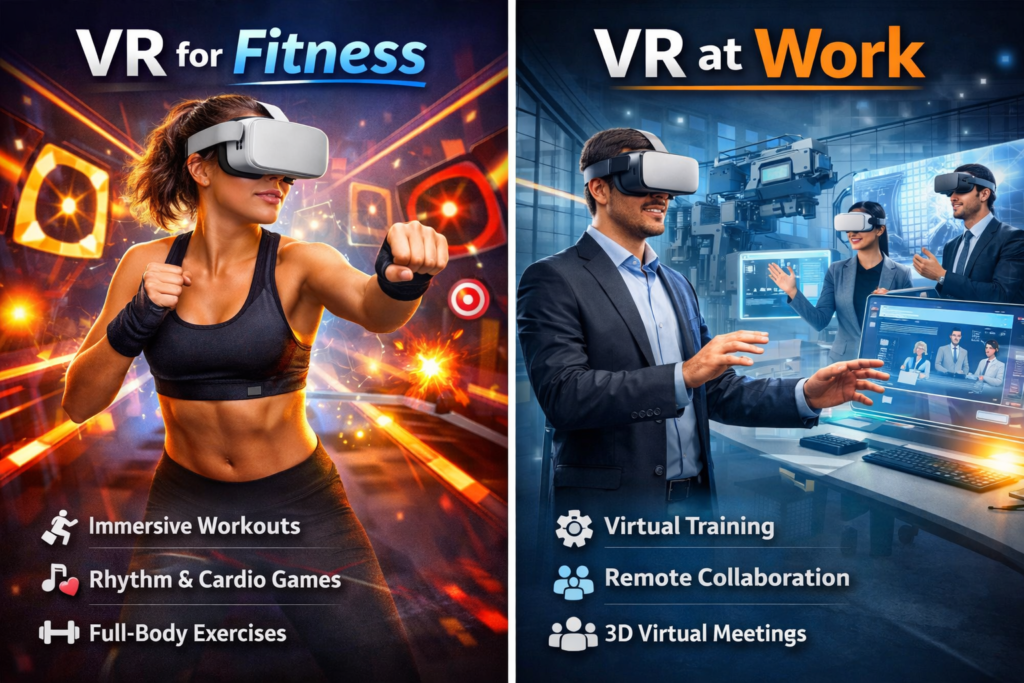
Virtual Reality (VR) has long been associated with gaming, but its applications now extend well beyond entertainment. Today, immersive VR technology is transforming how we exercise, train, and work—offering innovative solutions across fitness, corporate environments, employee training, collaboration, and more. This article explores VR’s growing role outside gaming, with clear, expert-backed insights into both fitness and workplace use cases.
VR for Fitness: Making Workouts Immersive and Effective
What Is VR Fitness?
VR fitness refers to using immersive virtual environments to engage in exercise routines that are interactive, enjoyable, and often gamified. Instead of repetitive movements on a treadmill or stationary bike, users are transported into worlds where physical activity feels like play, not a chore.
Why VR Works for Fitness
Immersion is a key advantage of VR workouts. By putting users into engaging environments—such as virtual arenas or scenic trails—VR can increase motivation and enjoyment, which are often the biggest barriers to regular exercise. Studies show that immersive VR exercise can produce physiological improvements comparable to conventional workouts, while maintaining higher engagement and willingness to continue over time.
Furthermore, VR workouts can adjust intensity and focus on various fitness goals, from cardio and balance to coordination and strength—all while helping users stay mentally engaged.
Practical Fitness Examples
- Rhythm-Based Workouts: Apps like PowerBeatsVR combine music with movement, encouraging users to punch, dodge, and move in time with the beat.
- Full-Body Activity: VR environments that require users to reach, duck, and step elevate heart rate and can rival traditional exercise in intensity.
- Gamified Training: Programs with goals, scoreboards, and progression systems help users stay committed to workout routines over the long term.
Benefits Beyond Calories
VR fitness doesn’t just help with movement—it also supports mental engagement. Immersive workouts can reduce perceived exertion and make exercise feel less strenuous and more playful, improving consistency and long-term adherence.
VR in the Workplace: Training, Collaboration, and Productivity
Redefining Work with Immersive Tech
Virtual Reality is changing how companies train employees, build teams, and conduct meetings—especially in hybrid and remote work environments. Unlike video calls or classroom lectures, VR creates a sense of “presence,” making training more experiential and effective.
Training and Skill Development
Employee training is one of the most impactful applications of VR in the corporate world:
- Faster Learning Curves: VR training can help learners grasp new skills faster than traditional methods by simulating real-world tasks in a safe, repeatable space.
- Safety Scenarios: Industries with high-risk environments—like construction or manufacturing—use VR to teach safety procedures and emergency responses without real-world hazards.
- Soft Skills: Practicing presentations, customer interactions, or leadership scenarios in VR allows employees to build confidence in realistic yet controlled settings.
Collaboration and Remote Work
VR platforms are beginning to replace flat video platforms with shared 3D workspaces, where team members can interact through avatars, manipulate virtual objects together, and collaborate in ways that feel closer to in-person interaction. This can improve engagement, knowledge sharing, and team cohesion—especially for distributed teams.
Real-World Workplace Examples
While many organizations are still exploring VR, case studies and early adopters point to measurable benefits:
- Onboarding Simulations: New employees can explore virtual office layouts and meet colleagues without stepping into a physical building.
- Technical Skill Practice: Trainees in engineering or healthcare can practice complex procedures repeatedly, boosting confidence and skill accuracy.
- Team-Building Exercises: Companies are experimenting with VR team challenges that improve communication and problem-solving under pressure.
Challenges and Considerations
Although VR provides powerful new tools, it isn’t a silver bullet. High-quality hardware investment and careful content design are essential for user comfort and meaningful outcomes. Companies also need to consider accessibility to ensure VR solutions work for diverse users.
Conclusion
Virtual Reality has matured into a versatile technology with compelling applications far beyond gaming. In fitness, it transforms workouts into immersive experiences that enhance motivation, effectiveness, and enjoyment. In the workplace, VR accelerates training, bolsters collaboration, and reshapes how teams learn and interact.
