

Artificial intelligence (AI) has unlocked powerful capabilities—from automating routine tasks to generating media that rivals human creativity. Among its most controversial innovations are deepfakes: synthetic audio, images, or videos that convincingly depict people saying or doing things they never actually did. While deepfakes have useful applications in entertainment and education, they also raise serious ethical questions about consent, privacy, trust, and the nature of digital identity. Understanding these issues is essential for anyone navigating today’s information landscape.
What Are Deepfakes and Why They Matter
Deepfakes are created using advanced AI techniques—primarily generative adversarial networks (GANs)—that learn to produce highly realistic media by training on real examples. This technology can mimic a person’s face, voice, and mannerisms with astonishing fidelity.
In their benign form, deepfakes can be used to:
- Enhance film production (e.g., realistic dubbing or de-aging actors)
- Create educational simulations
- Reconstruct historical events
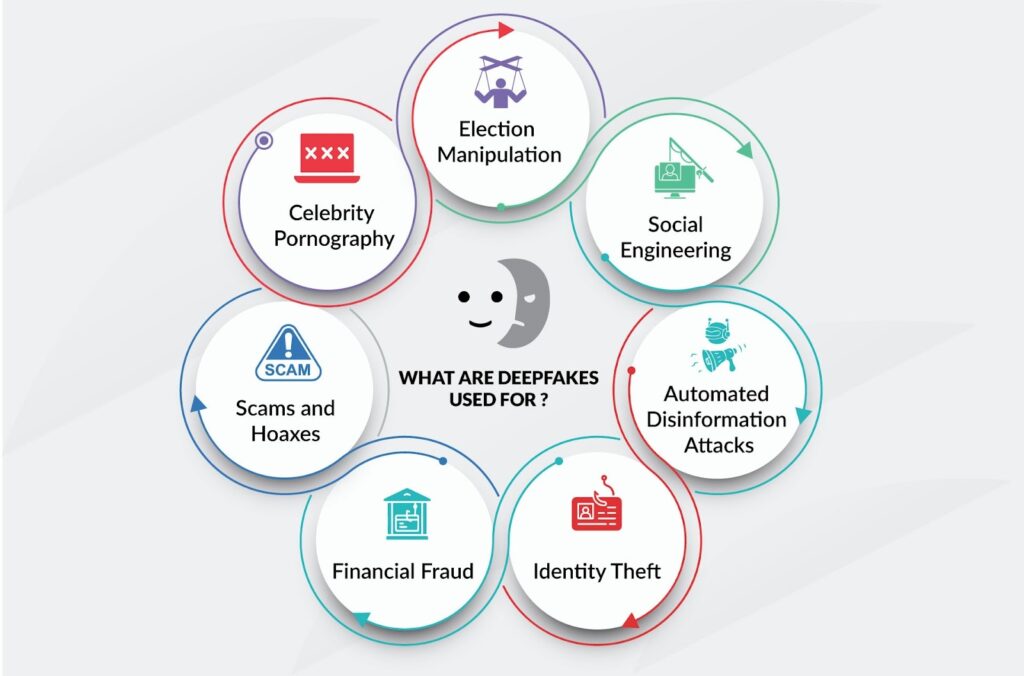
However, the potential for misuse is profound. Deepfakes can distort reality and erode trust in digital media.
Digital Identity in the Age of AI
What Is Digital Identity?
Digital identity refers to the online representation of who you are. It includes your name, photos, social profiles, and any digital data tied to you. It’s more than a username—it’s a mosaic of traits that others use to recognize and trust you online.
With deepfakes, AI blurs the line between real and artificial representations. A fake video of a public figure endorsing a product or an altered recording of someone making controversial statements can spread quickly, affecting reputations and public perception.
The Consent and Privacy Dilemma
At the heart of the ethical debate is consent. Creating a deepfake of a person without their clear permission bypasses their autonomy and control over their own likeness. Traditional media relies on consent and licensing; AI threatens to bypass those norms altogether.
This concern becomes especially acute in harmful scenarios, such as non-consensual deepfake pornography, which can cause significant psychological distress and reputational harm.
Trust, Misinformation, and Social Stability
Threats to Truth and Public Discourse
One of the greatest societal risks posed by deepfakes is misinformation. Deepfake videos or audio clips can mislead audiences and influence public opinion, especially in political contexts. For example, fabricated media may be used to impersonate leaders or misrepresent facts during elections, undermining democratic processes.
As authenticity becomes harder to verify, trust in digital media diminishes. This erosion of trust affects not just politics but journalism, business, and interpersonal communication.
Digital Identity Theft and Security Risks
Deepfakes can be weaponized to bypass biometric systems or impersonate individuals for fraud. When digital identity is compromised, financial and informational security is at risk—making identity protection a major ethical and practical concern in fields like cybersecurity and access management.
Ethical Frameworks and Responsible AI
AI ethics aims to foster responsible development and use of technology by upholding human rights and societal values. Key ethical principles apply directly to deepfakes:
Consent and Transparency
Individuals should have control over how their likeness is used. This means:
- Obtaining informed, explicit consent before generating or sharing deepfakes
- Clearly disclosing that content is synthetic, not real
These practices help protect autonomy and prevent deception.
Accountability and Governance
Developers and platforms bear responsibility for ethical deployment. This includes building tools to detect deepfakes and writing clear policies for AI use. Industry consensus and ethical guidelines can complement legal frameworks.
Legal and Policy Responses
Governments are increasingly responding with laws designed to protect individuals’ digital identities. For example, new proposals grant individuals legal control over their own digital likenesses, empowering them to demand removal of unauthorized content and seek compensation for misuse.
International efforts, such as the AAAI/ACM Conference on AI, Ethics, and Society, bring academics, technologists, and policymakers together to shape ethical AI principles that can guide deepfake governance globally.
Real-World Examples
Election Integrity
In several regions, deepfakes have been circulated to misrepresent political candidates, triggering misinformation responses from platforms and governments. This highlights the need for better detection and media literacy among the public.
Cybersecurity Applications
Organizations are integrating AI-based detection tools to identify synthetic media, reinforcing system security and mitigating fraud risks—yet this is a constant arms race as deepfake generation improves.
Conclusion
The ethics of AI, especially in the context of deepfakes and digital identity, occupies a critical crossroads between innovation and responsibility. Deepfakes exemplify the dual nature of technological advancement: they can enhance creativity and communication but also threaten individual rights, privacy, and public trust.
Balancing these forces requires a multifaceted response—ethical guidelines that emphasize consent and transparency, robust legal protections, proactive detection technologies, and broad digital literacy. With collaboration among technologists, policymakers, and civil society, it’s possible to harness the benefits of AI while safeguarding the integrity and dignity of digital identity.
